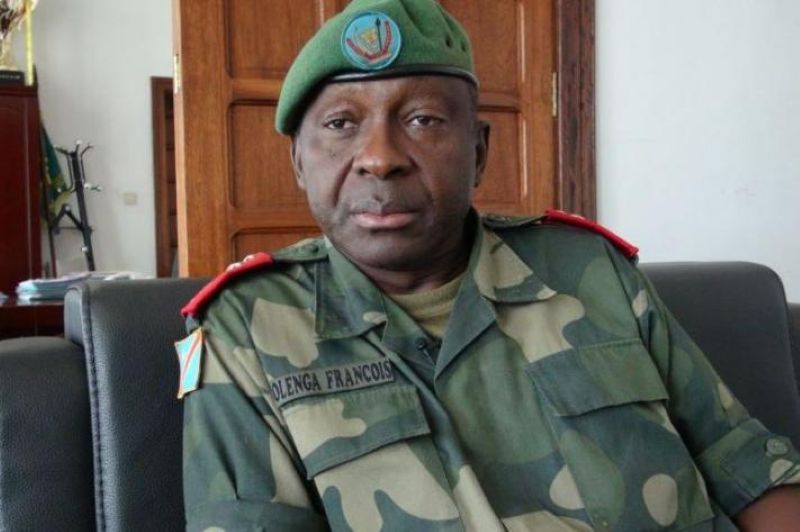
The United States’ decision to remove retired DRC four-star general François Olenga Tete from its sanctions list after nearly a decade has triggered intense public debate and speculation about the motivations behind Washington’s about-face. The move not only clears Olenga’s name but also opens fresh questions about the Democratic Republic of Congo’s ability to shape its own legal fate on the international stage.
What the delisting means for the retired general
Retired General François Olenga Tete can now travel freely to the United States and conduct business with American entities without restriction. His Safari Beach resort in N’sele can also welcome American guests and partners once again.
« The U.S. Treasury Department has officially notified me of the OFAC decision to remove General François Olenga Tete and Safari Club from the American sanctions list,» announced his attorney, Aimé Kilolo Musamba, in a September 23 statement. This relief comes after more than nine years of relentless legal battles and advocacy—including multiple trips to Washington to challenge what we always maintained were unjustified sanctions. Today, justice has prevailed.»
The lawyer’s fight for international credibility
Aimé Kilolo Musamba framed the victory as a testament to African legal professionals’ ability to navigate complex international systems. « This case proves that an African attorney can take on the legal machinery of a superpower and secure justice for their client. It should serve as inspiration for all Congolese,» he emphasized from Brussels.
DRC’s sovereignty at the center of the debate
The attorney seized the moment to call for sweeping legal reforms in the DRC. He argues that the country must cease its dependence on foreign powers—particularly the United States and European Union—for implementing sanctions against individuals linked to international crimes on Congolese soil.
Arguments for domestic sanctioning power
- Establish a national legal framework empowering Congolese institutions to impose targeted sanctions
- Ensure sanctions comply with due process and fundamental rights
- Reduce reliance on external jurisdictions for justice
- Strengthen national sovereignty in legal and political matters
« Sovereignty is also about a state’s capacity to deploy its own legal tools when defending its people and fundamental interests. The law transcends borders when pursued with skill, persistence, and determination. But international justice should not become a responsibility that Congo cedes to others,» Kilolo asserted.
Why was Olenga sanctioned in the first place?
In June 2017, Washington accused General Olenga—then head of the Republican Guard under former President Joseph Kabila—of undermining the DRC’s democratic process. The Treasury specifically cited alleged political repression, arbitrary arrests, and obstruction of UN observers during the 2016-2017 crisis that saw Kabila remain in power beyond his constitutional mandate.
The sanctions froze Olenga’s U.S. assets and prohibited American individuals and entities from conducting any business with him or his businesses, including the Safari Beach resort in N’sele—a prime tourist destination near Kinshasa.
From sanctions to rehabilitation: a step beyond justice?
The sudden reversal of sanctions raises fresh questions about Washington’s geopolitical calculations in Central Africa. Observers suggest the move may reflect broader shifts in U.S. strategy toward the Great Lakes region rather than absolution based solely on legal merits.
What comes next for DRC’s legal future?
The Olenga case is now fueling calls for a national dialogue on sanctions imposition and oversight. Legal experts and civil society groups are demanding clarity on how such decisions should be made—and by whom—in a country where accountability remains a persistent challenge.
While the general’s rehabilitation marks a legal milestone, it also places new pressure on Kinshasa to demonstrate maturity in handling international disputes and to assert its own legal sovereignty moving forward.
Comments are closed, but trackbacks and pingbacks are open.