DRC’s C64 coalition delays march and demands inclusive dialogue by August 15
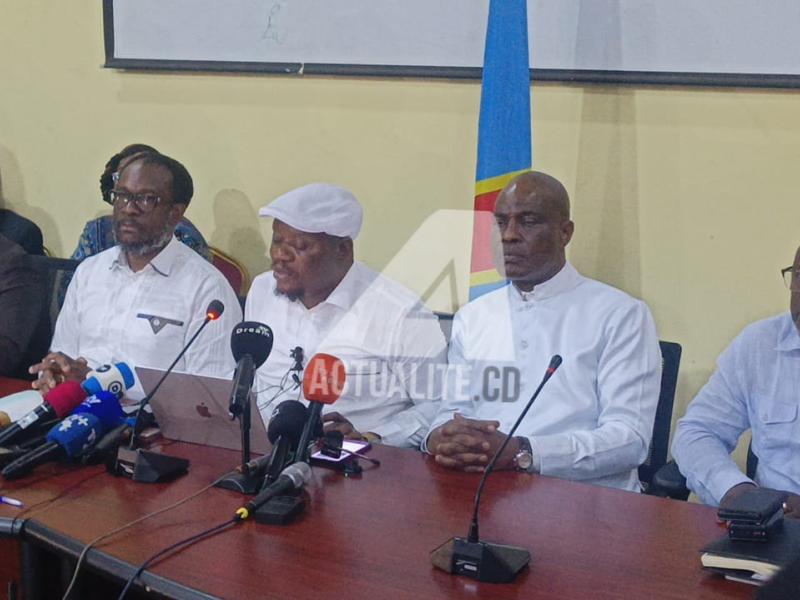
The Coalition Article 64 for the defense of constitutional order (C64) announced today the postponement of its planned peaceful march scheduled for July 22 at the Palais de la Nation in Kinshasa. The coalition, representing opposition leaders including Martin Fayulu, Jean-Marc Kabund, Moïse Katumbi, Augustin Matata, and Delly Sesanga, cited recent calls for dialogue as the reason for this strategic delay.
Dialogue overtures prompt tactical retreat
In a statement released this Monday, July 20, C64 acknowledged the intervention of religious leaders from the National Episcopal Conference of Congo (CENCO) and the Evangelical Community of Congo (ECC), who urged the coalition to give peace a chance through inclusive dialogue. The coalition also noted President Félix Tshisekedi’s commitment to organize an “inclusive, peaceful, and republican dialogue” during an audience with religious leaders on July 18.
This decision comes after intense internal consultations among C64 leadership on July 18 and 20. The coalition emphasized that this postponement represents a “gesture of responsibility” rather than a retreat from its constitutional defense mission. The coalition remains firmly opposed to any attempts to undermine the Constitution, particularly the two-term limit established in Articles 70 and 220.
Clear conditions set for dialogue
C64 has outlined specific requirements for the dialogue process. The coalition demands that:
- An inclusive national dialogue be officially convened “without delay” to address the root causes of the crisis, including foreign aggression in eastern DRC, governance failures, economic challenges, and necessary reforms for national reunification and peace consolidation
- Confidence-building measures be implemented to reassure all stakeholders
The coalition has placed responsibility squarely on the current administration, warning that any provocative actions—particularly constitutional amendments or referendum processes—will be met with strong resistance. The statement explicitly mentions potential legislation on referendums as a red line.
August 15 ultimatum triggers
C64 has set a firm deadline: if the inclusive national dialogue is not officially convened by August 15, 2026, or if announced commitments remain unimplemented, the coalition reserves the right to “take all necessary political actions” and call for renewed peaceful citizen mobilizations. In the meantime, all C64 structures—both within the DRC and in the diaspora—remain on “maximum alert and mobilization status.”
The coalition’s leadership has made it clear that their patience is limited, and their commitment to constitutional order remains unwavering. This strategic pause represents a calculated move to test the government’s willingness to engage in genuine dialogue rather than pursue unilateral constitutional changes.