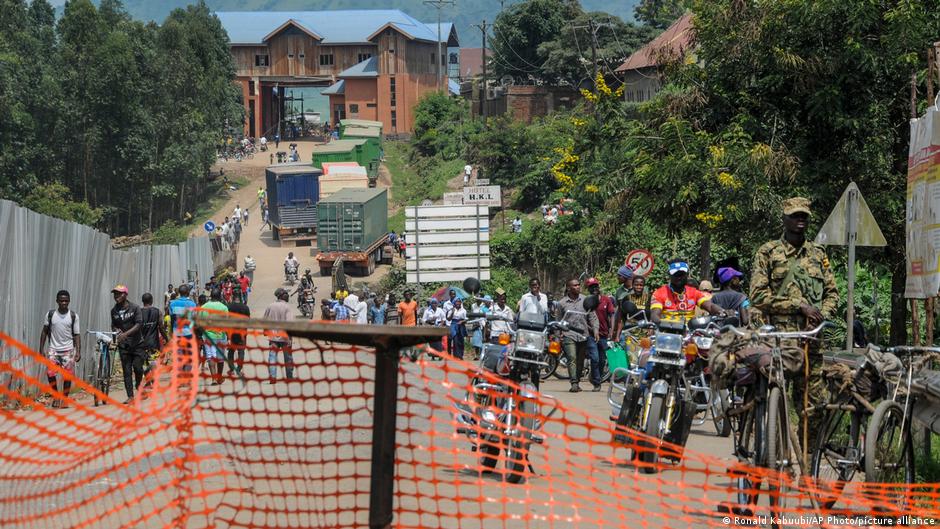
Ebola outbreak in DRC: open borders and stronger response needed to curb spread
More than 3,000 confirmed cases and nearly 1,500 deaths—the latest government figures confirm that the Ebola outbreak in the Democratic Republic of the Congo is spreading at an alarming rate. Health officials warn that the epidemic is advancing faster than containment efforts can keep up.
Julien Harneis, the United Nations’ chief coordinator for Ebola response, described the surge in cases as exponential, with infections doubling every 20 days. The current response, he noted, is struggling to match the outbreak’s pace.
Why keeping borders open is critical
Several neighboring countries imposed travel restrictions or closed land borders in response to the DRC’s 17th Ebola outbreak. Rwanda, for example, initially shut its borders entirely with the DRC, barring entry to all travelers who had recently visited the country. Though a partial reopening occurred in early July, strict screening measures—such as handwashing and temperature checks—remain in place.
Uganda also temporarily closed border crossings with the DRC, though humanitarian aid, security operations, and essential trade were exempted. Beyond Africa, Canada announced in July that it would deny entry to foreign nationals who had been in the DRC within the past 21 days, while suspending certain immigration services for the DRC, Uganda, and South Sudan.
The United Nations emphasizes that maintaining open borders is essential to ensure the rapid delivery of medical supplies, allow health workers to move freely into affected areas, and prevent the epidemic from spreading further. Blocking official border crossings, officials argue, could force people to use unmonitored routes, making it harder to track and control the virus.
How Ebola is deepening food insecurity
The World Food Programme (WFP) describes the situation as a crisis layered on top of another crisis. Ituri province, the current epicenter of the Ebola outbreak, is one of the hardest-hit regions, with nearly 1.9 million people in need of food assistance.
Butoto Bigiri Naum, director of the Congolese NGO Action for Community Development and Well-being (UGEAFI), which partners with German NGO Help in emergency Ebola response, highlights the human toll. “Some patients are not reached by humanitarian aid or government support—families are left to care for them at home. And when it comes to food, entire communities are struggling.”
Border restrictions have disrupted food supplies and agricultural inputs such as seeds and tools, creating severe shortages. According to the WFP, over 2.65 million people in Ebola-affected health zones now face acute food insecurity, including more than 628,000 in emergency situations. Women, children, and pregnant women are particularly vulnerable to rising food prices and limited access to markets.
The epidemic’s impact extends beyond immediate hunger. Fear of infection and labor shortages are pushing farmers to abandon their fields, threatening long-term food production and increasing the risk of famine. To avert disaster, the WFP is providing food aid not only to Ebola patients and their close contacts but also to frontline workers and vulnerable households.
This assistance helps families comply with isolation measures while easing the burden on communities already struggling to meet basic nutritional needs. It also reduces unnecessary travel in search of food and fosters an environment more conducive to effective public health interventions.
Comments are closed, but trackbacks and pingbacks are open.