Gabon advances public revenue modernization through tax and customs collaboration
Libreville, July 19, 2026 — A nation’s capacity to fund its growth hinges on its ability to secure revenue streams. In Gabon, this principle is taking on new urgency. By aligning the strategic objectives of Customs and Tax authorities, the government is forging a more integrated approach to public finance management.
This initiative transcends routine administrative coordination. It signals a fundamental shift toward collaborative governance where inter-agency synergy becomes a cornerstone of budgetary sovereignty, economic transparency, and fraud prevention.
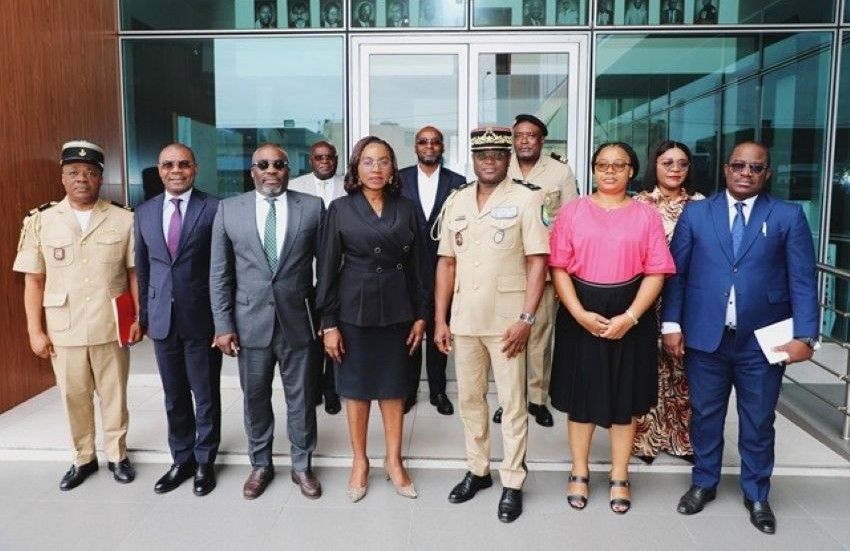
On July 14 in Libreville, the Director-General of Customs and Indirect Taxes, Brigadier General Hugues Modeste Odjangou, and the Director-General of Taxes, Édith Laure Oyaya Mbiguidi, launched a comprehensive program to strengthen operational coordination between Gabon’s two primary revenue-collection bodies. This move aligns with the government’s renewed focus on maximizing domestic resource mobilization to support major infrastructure projects, public services, and economic diversification efforts.
A new doctrine for public revenue management
Across advanced economies, fiscal and customs agencies no longer operate in silos. Data sharing, cross-referencing, and coordinated enforcement have proven critical in boosting tax yields while shrinking opportunities for evasion. Gabon is now adopting this proven model to institutionalize such collaboration.
During the working session, the two leaders outlined key priorities, including shared access to fiscal and customs intelligence, synchronized field inspections, pooled operational resources, and unified strategies to combat tax fraud, customs violations, and illicit trade networks.
This approach reflects the directives of President Brice Clotaire Oligui Nguema, who has consistently advocated for a more streamlined, results-driven administration.
In an era where every public franc matters, securing revenue streams has become central to effective governance.
A legally grounded collaboration framework
This transformation is not merely political—it is now enshrined in law. Both agencies confirmed that Arrêté n°073/MEFDPLVC of April 10, 2026, establishing the Joint Tax-Customs Commission, provides the legal foundation for this partnership. The decree mandates joint audits under CEMAC customs regulations and ensures seamless information flow between the two authorities.
This places Gabon in step with leading African nations like Rwanda, Morocco, and Côte d’Ivoire, where integrated tax-customs operations have demonstrably enhanced revenue performance while curbing tax evasion and informal economic activity.
Technical meetings are now underway to formalize the joint commission, which will oversee implementation, monitor decision execution, and coordinate future cross-agency operations.
A reform with broad implications
This partnership marks a pivotal shift in Gabon’s public sector ethos. Historically, Customs and Tax authorities operated independently, each focused on distinct mandates. Now, they share a unified vision. Together, they account for the vast majority of state revenue—making their collaboration pivotal to expanding fiscal space without overburdening compliant taxpayers.
The real target remains fraud, misreporting, opaque trade channels, and other practices that drain essential resources from the public purse—funds critical for national development.
This institutional alliance also sends a strong signal to international partners, investors, and financial institutions. It underscores Gabon’s commitment to modernizing its economic governance, securing domestic revenues, and enhancing the credibility of its financial administration.
Beyond internal restructuring, this collaboration embodies a broader ambition: to build a state capable of protecting its resources more effectively, funding national priorities through domestic revenue, and fostering a more efficient, transparent, and high-performing public administration. In this context, the partnership between Customs and Tax authorities is not just an administrative merger—it is a pillar of Gabon’s evolving financial architecture.
Related Posts