Gabon rejects Trump’s migrant plan with clear stance on sovereignty
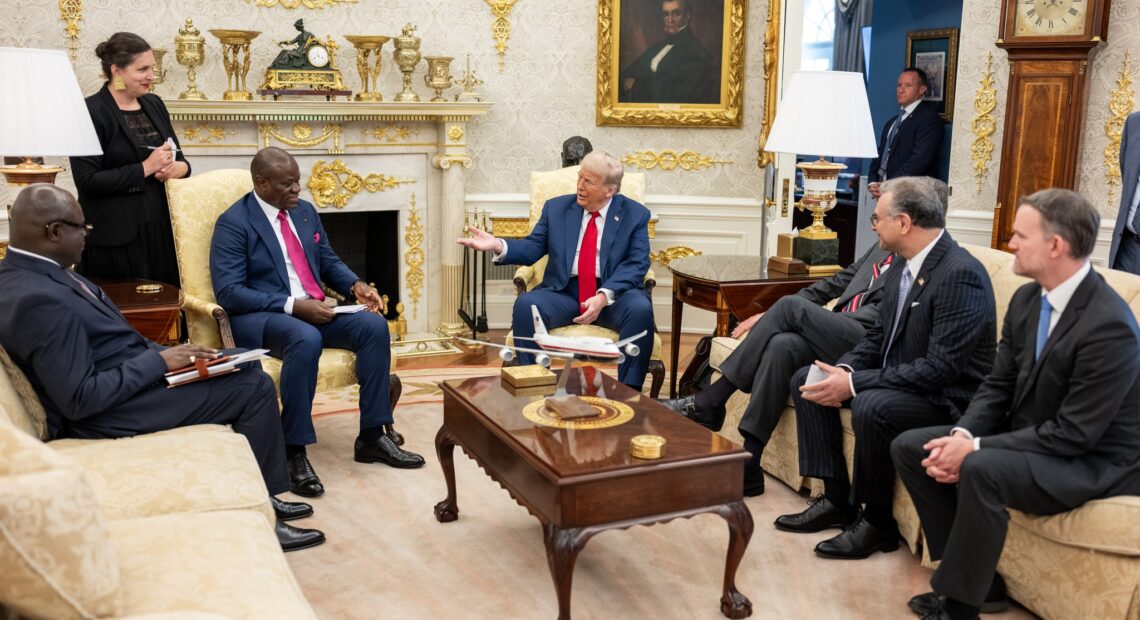
Libreville, June 4, 2026 — By firmly rejecting a proposal to host migrants expelled from the United States, Gabonese President Brice Clotaire Oligui Nguema has sent a bold political message that extends far beyond migration policy. His decision underscores a broader commitment to national sovereignty and a carefully balanced diplomatic approach.
During a televised interview, the Gabonese leader left no room for doubt. Responding to a U.S. suggestion to accept migrants facing deportation, he made his refusal unambiguous. « We did not reach an agreement on this point. I have not accepted them. I state this openly. Gabon will not sign an arrangement that does not serve our interests. It’s that simple, » declared Brice Clotaire Oligui Nguema.
This firm stance comes at a time when Western nations, particularly the U.S., are tightening migration policies and seeking third-country solutions to absorb deportees. This global trend has placed African states under increasing pressure to participate in such arrangements, with some countries already entering into controversial agreements.
Migration policy as a global challenge
The management of migration flows has emerged as one of the most pressing geopolitical issues of our time. Western nations, including the U.S. and members of the European Union, have increasingly turned to externalizing migration control by negotiating with third countries to host deportees. The United Kingdom’s agreement with Rwanda is a prominent example, and discussions on similar arrangements have taken place across Africa.
In this context, Gabon’s refusal stands out as a principled and strategic choice. It reflects a growing trend among African nations to assert greater control over their participation in international agreements.
A partnership, not submission
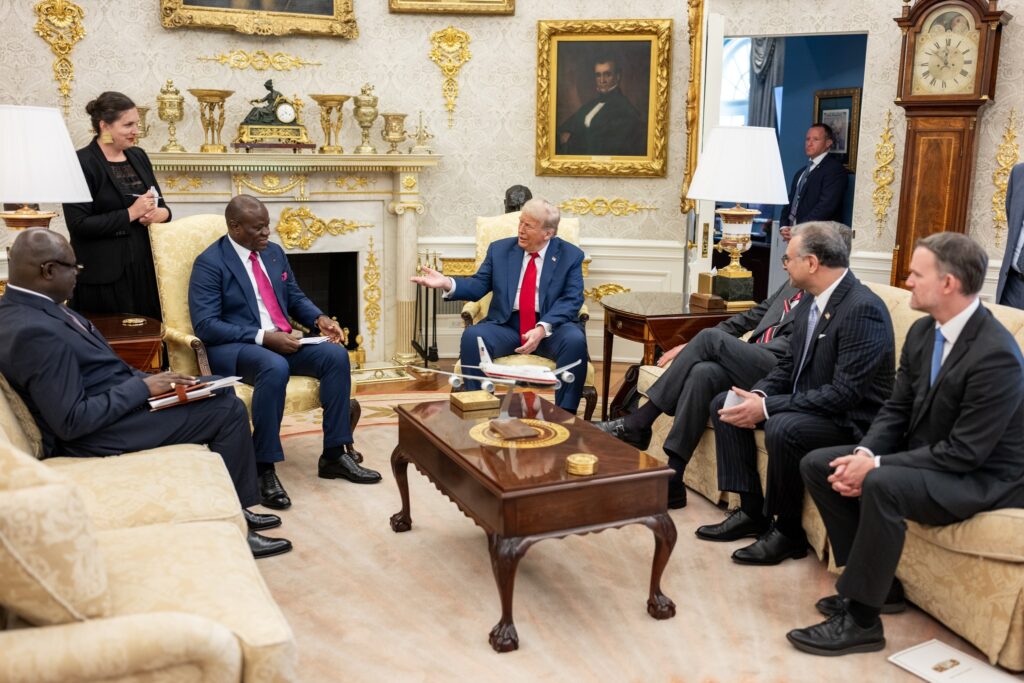
It is important to note that Libreville’s decision does not signal a rupture in relations with Washington. On the contrary, throughout the interview, the Gabonese president emphasized the strength of the Gabon-U.S. partnership. In a moment of levity, he even referred to Donald Trump as « my friend in the red tie, » illustrating both warmth and diplomatic finesse.
The message is clear: cooperation continues, but Gabon’s national interests will always come first. The president’s refusal was not a rejection of dialogue, but a firm assertion that Gabon will not compromise its priorities for the sake of external pressure.
Sovereignty as guiding principle
This decision aligns with a series of recent policy moves in Gabon that reflect a broader reassertion of national autonomy. From the local processing of manganese to renegotiating economic agreements and reclaiming the De Gaulle military base, the government is building a narrative centered on sovereignty and self-determination.
Accepting foreign deportees would have placed an unpredictable administrative, social, and financial burden on the country. With a national modernization agenda underway, Gabon’s leadership has made it clear that domestic needs take precedence. The move also resonates with widespread sentiment across Africa, where many believe the continent should not serve as a dumping ground for the migration challenges of wealthy nations.
A balanced diplomacy in action
The true significance of this episode lies in its demonstration of diplomatic maturity. Gabon has shown it is possible to reject a major power’s proposal without escalating into confrontation. This approach contrasts sharply with tensions seen elsewhere, where migration disputes often lead to open diplomatic rifts.
By publicly refusing while maintaining respectful discourse toward the U.S., Brice Clotaire Oligui Nguema projects an image of a sovereign nation capable of defending its interests without resorting to confrontation. For international observers, this move signals a shift in the dynamics between Africa and global powers: partnerships are valued, but African states now demand a greater voice and independence in decision-making.
Beyond migration, the message from Libreville is unambiguous. Gabon remains open to the world, but refuses to allow its future to be dictated by external forces. In an increasingly fragmented international landscape, this assertion of sovereignty may well define Gabon’s diplomatic identity in the years ahead.