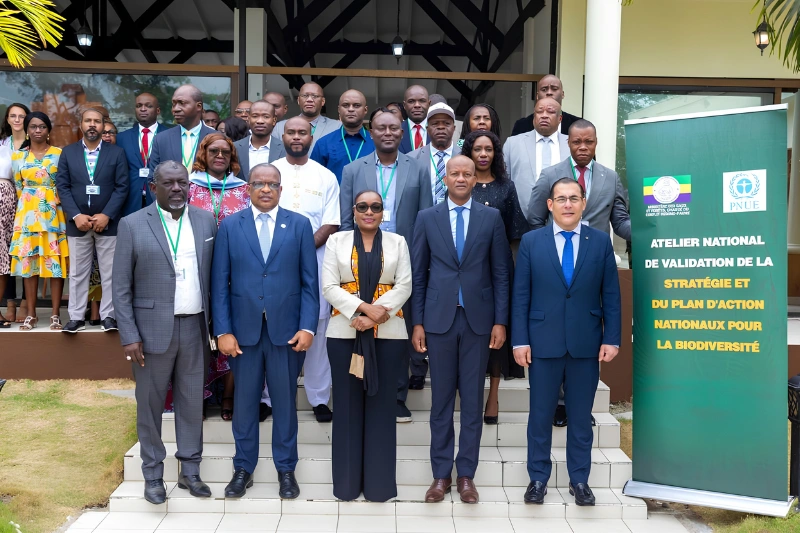
Gabon has just marked a pivotal moment in its environmental stewardship by finalizing a groundbreaking biodiversity roadmap. Following intensive deliberations in Libreville, the national validation workshop for the National Biodiversity Strategy and Action Plan (NBSAP) 2022-2030 reached its conclusion.
This landmark document serves as the nation’s guiding compass, outlining ambitious conservation targets and sustainable development pathways. Described by officials as the definitive framework to steer public policy, enhance ecosystem protection, and ensure the responsible management of Gabon’s unparalleled natural wealth, the NBSAP sets a bold agenda for the next decade.
The strategy aligns Gabon with four critical objectives by 2030: safeguarding at least 30% of terrestrial, coastal, and marine areas; restoring degraded ecosystems; mitigating biodiversity threats such as poaching, deforestation, and pollution; and securing sustainable funding for conservation efforts.
After incorporating stakeholder feedback, the finalized NBSAP will be submitted to the Government for official endorsement before being formally presented to the Executive Secretariat of the Convention on Biological Diversity (CBD). This step will solidify Gabon’s commitment to global biodiversity conservation targets.
—
—
Yet, as highlighted by Ms. Tsayi Mouvagha, the NBSAP’s coordinator, the real challenge lies ahead. The next phase will focus on widespread dissemination of the strategy to government agencies, private enterprises, local communities, and civil society groups to ensure its practical implementation nationwide.
With over 88% of its land covered by forests and 13 national parks, Gabon stands as a biodiversity hotspot. The NBSAP 2022-2030 will act as a strategic blueprint to harmonize economic growth, resource utilization, and environmental preservation.
A critical question remains: without dedicated funding mechanisms and active participation from local governments, businesses, and neighboring communities, the strategy risks remaining an unfulfilled promise.