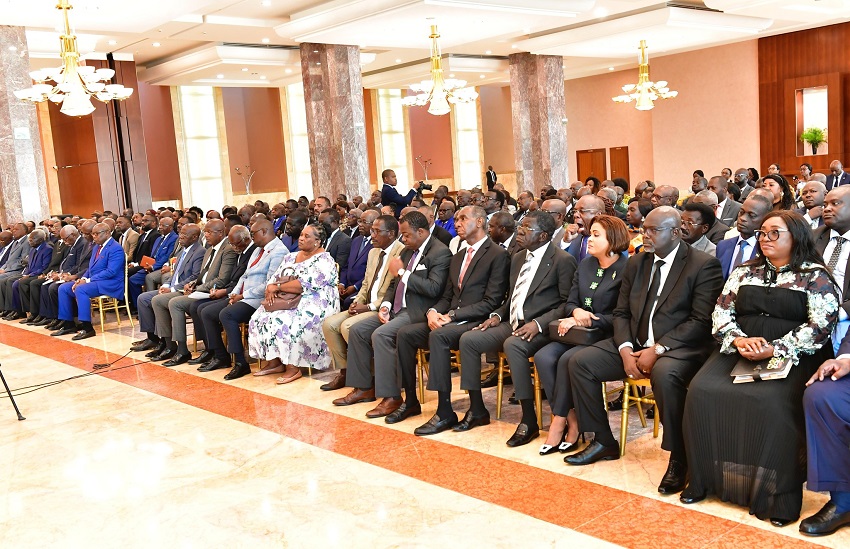
Gabon, l’exception démocratique
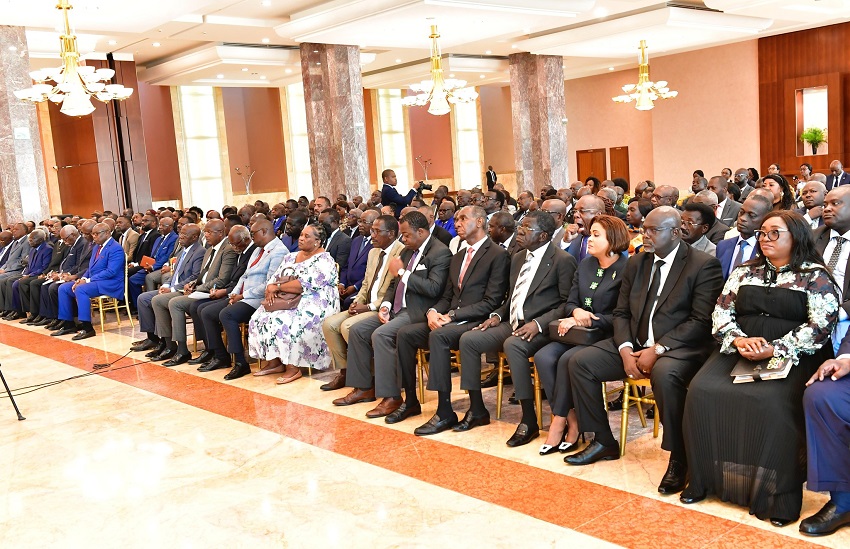
Libreville – As democracy navigates one of the most profound crises in its contemporary history, an Central African nation is now drawing the attention of international observers.
Gabon, a country long categorized among fragile and contested regimes, has recently been identified by the Swedish V-Dem Institute as one of the very few positive developments recorded globally over the past year. This is significant news for Africa politics English discussions.
In its annual report, widely recognized as one of the most credible benchmarks for democratic evaluation, based on analyses of over 200 countries, V-Dem paints a concerning picture. Democratic regression continues across all continents. States traditionally seen as institutional models are experiencing deteriorating indicators. Even the United States is listed among democracies confronting growing structural tensions.
Amidst this increasingly somber landscape, Gabon emerges as a positive anomaly. This evolution sparks considerable interest and raises important questions for pan-African current affairs.
A glimmer of hope in a world in decline
The report’s primary finding is unequivocal: the number of countries experiencing democratic decline continues to rise. Public liberties under pressure, weakened institutions, concentrated power, and the erosion of checks and balances are becoming increasingly widespread phenomena.
In this challenging context, only eleven states have managed to exit the list of countries considered to be in democratic decline this year. Gabon is notably featured in this exclusive group.
Even more significantly, V-Dem researchers explicitly name Gabon among the four main sources of democratic hope worldwide. Alongside Lebanon, Mauritius, and South Korea, Libreville is presented as an encouraging example of progress in a particularly unfavorable international environment, offering positive African news today.
This recognition is directly linked to the elections organized in 2025. Experts view this electoral process as an institutional turning point that enabled the country to embark on a different dynamic from what had been observed in previous years.
The African contrast
V-Dem’s assessment takes on particular significance when compared to developments across the rest of the continent.
Sub-Saharan Africa appears this year as the region most affected by democratic setbacks. Twelve countries recorded further deterioration in their institutional indicators. Cases like Burkina Faso, Mali, Niger, and Togo illustrate this persistent trend in African society news.
Within this regional environment marked by political instability, prolonged military transitions, or institutional tensions, Gabon clearly distinguishes itself.
Researchers also highlight an element rarely emphasized in international analyses: Gabon is now among the three countries identified as likely to achieve sustainable democratic progression in the coming years. It shares this optimistic outlook with Chad and South Korea.
The parallel drawn with Chad is not coincidental. Both states recently experienced a transition characterized by a return to constitutional order through elections after an institutional rupture.
For V-Dem, this trajectory merits particular attention as it could serve as a political laboratory observed far beyond the African continent.
Recognition, not coronation
This international distinction, however, should not be interpreted as a definitive validation of the process underway.
The report’s authors emphasize a crucial point: Gabon remains an incomplete democracy. The country ranks 114th out of 179 states evaluated in the global index. Its score remains modest, and there is still considerable progress to be made.
In other words, the country is advancing, but it is advancing from a historically low baseline. This nuance is fundamental. It serves as a reminder that the current improvement represents more the beginning of a process than a final achievement.
Researchers cite the example of Zambia, which experienced a democratic upswing before seeing its advances slow down and then erode. Recent history demonstrates that institutional progress only becomes sustainable if it is consolidated by profound reforms, an independent judiciary, free media, and transparent governance. This is precisely the challenge now facing Gabon.
Ultimately, the V-Dem report’s significance extends beyond mere international ranking. It places the country before a new responsibility. When a state is identified as one of the planet’s rare pieces of good democratic news, it is observed with heightened scrutiny.
The challenge of democratic consistency
This international recognition also places Gabonese authorities under an obligation of consistency. When a country is presented as one of the few beacons of democratic hope globally, every institutional decision is observed with increased attention. Several recent debates illustrate this reality. The temporary suspension of certain digital platforms, questions raised by the adoption of the new Nationality Code via regulation, and the judicial situation of former Prime Minister and presidential candidate Alain-Claude Bilie By nNze fuel discussions among the national public and international observers.
The issue is not to contest the state’s legitimacy to implement regulatory, security, or judicial measures. It is to determine whether these decisions are durably integrated within a framework of transparency, respect for fundamental freedoms, and institutional guarantees compatible with the democratic standards the country now seeks to embody.
The experience of several African states shows that democratic progress can quickly be undermined when institutional reforms are not accompanied by a consolidation of public liberties, political pluralism, and institutional independence. Zambia, cited by V-Dem researchers as an example of progress followed by stagnation, reminds us that democratic gains are never irreversible.
The true test begins now. The 2025 elections allowed Gabon to move out of a zone of distrust. The next step will involve demonstrating that this improvement is not a temporary episode but the foundation of a lasting transformation.
In a world where democracies more often recede than advance, Gabon now has a rare opportunity: to prove that a different trajectory remains possible. International recognition has been achieved. The consolidation of this promise remains to be built.
Comments are closed, but trackbacks and pingbacks are open.