
Gabon’s first national day for retirees: the policy machinery behind the ceremony
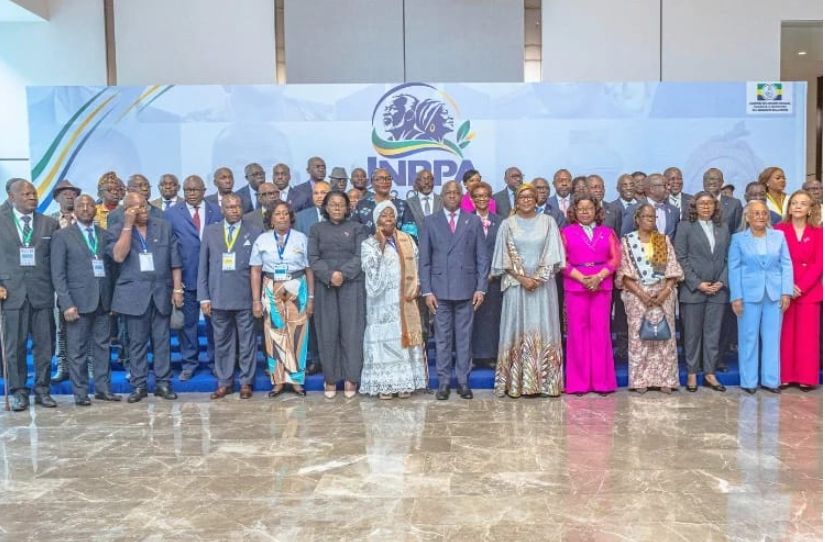
Libreville, Saturday 3 October 2026 – When Gabon staged its first National Day for Retirees and the Elderly on 1 October 2026, the ceremony at the Palais des Congrès Omar Bongo Ondimba looked like a tribute. Look closer, and it reads as something else: the opening move of a slow institutional shift. Behind the medals and the music, a machinery of decrees, digital systems and ministerial coordination had already been set in motion months earlier. This is the story of how ageing moved from the margins of Gabonese social policy to its official agenda.
A date chosen long before the speeches
The event did not emerge from a spontaneous impulse. It was formally instituted during the Council of Ministers of 25 June 2026, which fixed 1 October as an annual fixture in the national calendar. The choice was not random. It deliberately overlaps with the United Nations International Day of Older Persons, anchoring Gabon’s domestic commitment to a global framework on ageing.
The official theme – “The well-being of retirees and the elderly in the era of the Fifth Republic” – carried a dual message: recognition of a generation, but also a signal that the current political dispensation intends to claim ownership of the issue.
Two venues hosted the programme. The Cité de la Démocratie welcomed the formal ceremony, while the esplanade at Arambo was converted into an exhibition and social space, designed less for protocol than for encounters, screenings and medical consultations.
Who actually spoke, and why it matters
Vice-President of the Government Hermann Immongault represented President Brice Clotaire Oligui Nguema. His presence – rather than that of a junior minister – underscored the political weight attached to the initiative. In his address, he paid tribute to teachers, nurses, soldiers, farmers, civil servants and traders whose decades of work built the country.
But the more consequential message came from the framing. Honouring the past, he suggested, is not the same as protecting the present. The real question is structural: how does a society organise itself around those who have finished their working lives?
The answers sketched out during the day went well beyond pensions. Access to healthcare, home-help services, adapted transport, leisure facilities, accessible infrastructure and social support were all named as areas where public policy must now intervene. Ageing, in other words, is no longer a single-ministry matter. It cuts across health, urban planning, mobility, inclusion and quality of life.
The CPPF’s operational gamble
If the ceremony provided the symbolism, the Caisse des pensions et des prestations familiales des agents de l’État (CPPF) provided the substance. Under the slogan “Solidaire aujourd’hui, pour un avenir prospère”, the fund used the event to showcase concrete changes in how retirees’ rights are managed.
Three priorities stood out. First, the digitalisation of services. Second, a commitment to process pension files in under fifteen days. Third, stronger transparency in how claims are handled.
For beneficiaries, these are not abstract promises. A pension paid on time, a file resolved quickly, a procedure that can be followed without intermediaries – each of these shapes trust in the system. And that trust, in turn, determines whether retirees feel the state is a reliable partner rather than a distant administration.
Administrative modernisation matters precisely because the relationship between the state and its retirees is not limited to a monthly transfer. It rests on the administration’s capacity to recognise acquired rights, respond to individual situations, and maintain a line of confidence with people who spent a career in public service.
The bivundas village: a test case for intergenerational policy
Away from the podium, the “village des bivundas” offered a different kind of evidence. Workshops, stands, medical activities and cultural programming turned the day into a meeting space rather than a formal ceremony. Retirees were given a platform not only to receive recognition, but to transmit knowledge.
That transmission dimension resurfaced in several speeches. Michel Tsamba, secretary-general of the Ministry of Finance, Debt and Participations, framed the celebration as a tribute to those who trained and mentored others. Judith Mengue, head of the CPPF’s Estuaire provincial delegation, stressed that elders remain custodians of memory and professional know-how.
This is where the policy ambition becomes clearer – and harder. A credible strategy for older people will have to weave together social protection, health, autonomy, housing, mobility and participation in collective life. It will also have to avoid a common trap: reducing seniors to their dependency, when they can equally be a social, cultural and economic resource.
What the first edition actually set in motion
The day ended with honours, a raffle and music. The festive atmosphere was genuine. But the substantive work begins after the celebrations. The real test will be whether the state can make rights more accessible, services more efficient, and old age more dignified.
Honouring elders is an act of memory. Guaranteeing them a full place in society is a durable public policy choice – one that will be judged not on 1 October, but on every ordinary day that follows.
Comments are closed, but trackbacks and pingbacks are open.