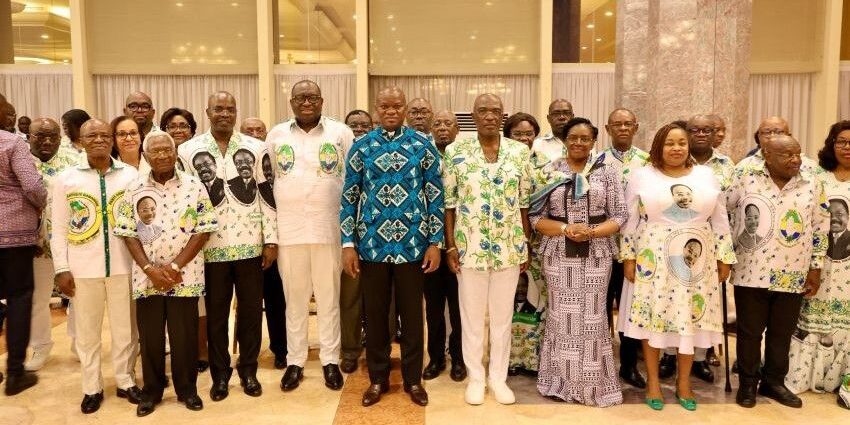
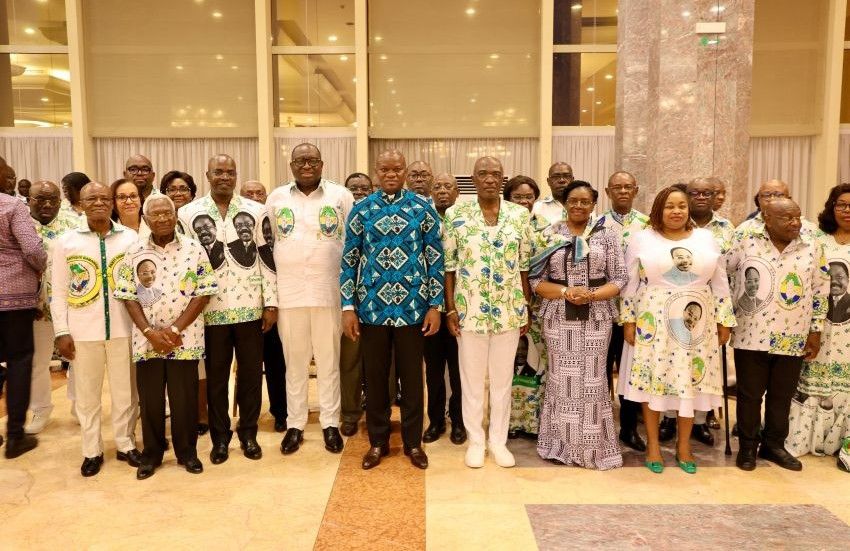
Libreville, October 31, 2026 — Gabon’s political landscape stands at a pivotal juncture as the Parti Démocratique Gabonais (PDG) makes its return to the Palais Rénovation. The historic party, once a dominant force for over five decades, faces an unprecedented reckoning. Can it unite its fractured ranks before the upcoming congress that could redefine its future?
The PDG’s delegation, led by its current leader Blaise Louembé, was received by President Brice Clotaire Oligui Nguema on October 30. The meeting carried significant weight, arriving just weeks before the party’s critical congress. Behind the formalities, deep divisions threaten to derail the PDG’s rebuilding efforts.
Two competing visions now shape the party’s trajectory: one led by Louembé’s administration, advocating for alignment with the current transition government, and another faction that remains loyal to former President Ali Bongo Ondimba. Despite their shared historical legacy under Omar Bongo Ondimba, these factions find themselves at odds over governance, party direction, and relations with national authorities.
Leadership under scrutiny: Louembé’s balancing act
Addressing the President, Blaise Louembé framed the PDG’s visit within the context of Gabon’s ongoing transition. He highlighted the challenges posed by the recent inclusive national dialogue, where calls for political party suspensions—particularly targeting the PDG—gained traction. Louembé praised the transition government’s commitment to dialogue and inclusion, reaffirming the PDG’s support for President Oligui Nguema’s leadership.
« Since the transition began, we have consistently stood by the President and the nation’s leadership, » Louembé stated after the meeting. His words underscore an attempt to position the PDG as a constructive partner in Gabon’s reconstruction. Yet, this stance does little to resolve internal disputes over the party’s leadership and the legitimacy of its upcoming congress.
Oligui Nguema’s appeal: unity over division
President Oligui Nguema responded by emphasizing the importance of national unity and collective progress. Drawing on the legacy of Omar Bongo Ondimba, whom he described as a figure of simplicity and dialogue, the President urged the PDG to prioritize Gabon’s interests above partisan conflicts. « Gabon needs unity, not division, » he declared, signaling his role as a unifying force in the nation’s political transition.
He also addressed the contentious issue of recovered assets, advocating for their reinvestment in Gabon’s youth—a stance that resonates with growing calls for economic sovereignty. While his remarks were diplomatic, they carry implications for the PDG’s ability to reconcile its competing factions.
The congress: a test of resilience and renewal
The November 27–29 congress looms as the ultimate test for the PDG. While the President expressed willingness to support the party’s preparations, structural divisions remain unresolved. The PDG’s survival hinges on its ability to bridge ideological gaps, clarify its governance model, and present a cohesive vision for Gabon’s future.
The meeting at the Palais Rénovation has opened a fragile window for dialogue. Whether the PDG can seize this moment to heal its fractures—or whether it will remain trapped in its internal strife—will be decided in the coming weeks. In a Gabon transformed since August 2023, the party’s future depends not on nostalgia for its past glory, but on its capacity to adapt, unite, and articulate a clear path forward for its members and the nation.
Comments are closed, but trackbacks and pingbacks are open.