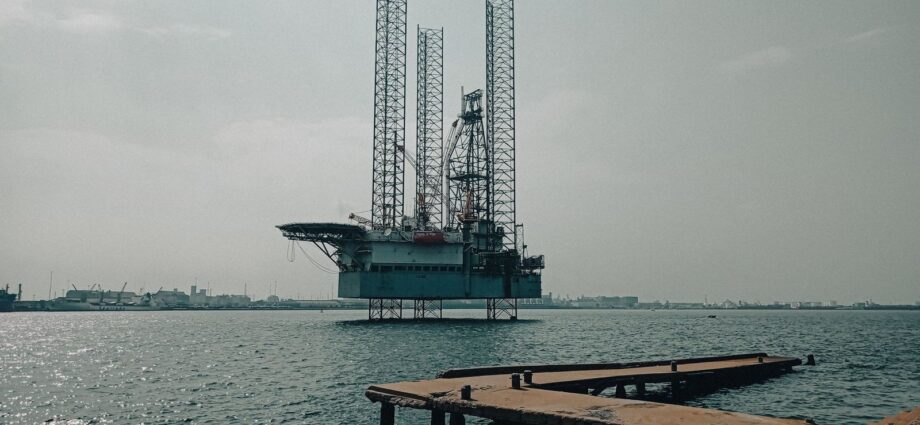
Gabon’s interim president Brice Oligui Nguema has taken a decisive step by publicly confronting BW Energy, the Norwegian oil major operating off Gabon’s coast, following the Prospector 5 disaster. By directly holding the company accountable, the transitional leader reshapes the narrative from a maritime incident to a pivotal political moment, signaling Gabon’s new era of asserting control over its hydrocarbon sector.
From maritime accident to political turning point
The president’s intervention marks a sharp departure from Gabon’s traditional approach to foreign oil companies. Since seizing power in August 2023, the transitional authorities have been steadily tightening their grip on extractive industries—renegotiating asset sales, reviewing mining contracts, and now taking center stage in crisis management. The Prospector 5 incident is no longer just a technical failure; it has become a test of Gabon’s resolve to shed its image as a passive partner in resource exploitation.
By bypassing conventional channels—such as the Ministry of Petroleum or maritime authorities—the president ensures the crisis remains under direct executive control. This move also ties the government’s credibility to the outcome, demanding swift and transparent action to avoid eroding public trust amid rising expectations for accountability.
BW Energy: a linchpin in Gabon’s offshore ambitions
BW Energy is far from a minor player. A spin-off of Oslo-based BW Offshore, the company operates Gabon’s Dussafu offshore field, a jewel in the country’s production crown. With output measured in tens of thousands of barrels per day, Dussafu stands as one of Gabon’s most prolific offshore assets, alongside projects in Brazil and Namibia. For Libreville, the field’s royalties are critical, especially as national oil output hovers around 200,000 barrels daily—nowhere near the peak of the early 1990s. For BW Energy, Gabon represents a cornerstone of its market valuation, where prolonged disputes could rattle investor confidence.
The interdependence between Libreville and the Norwegian firm makes the president’s move a high-stakes gamble. A mishandled response could strain relations, while firm oversight could redefine Gabon’s leverage in future contract negotiations, including talks on partial nationalization.
Why offshore disasters rewrite industry rules
Historical precedents show that offshore disasters often redraw the power balance between host nations and international oil companies. The 2010 Deepwater Horizon explosion in the Gulf of Mexico, which killed 11 workers and caused America’s worst oil spill, reshaped US regulations and shifted the balance of power in favor of federal oversight over BP. Closer to home, Nigeria’s recurring incidents with Shell and ExxonMobil spurred the 2021 Petroleum Industry Act (PIA), a sweeping legal overhaul aimed at tightening operator accountability.
Gabon’s regulatory framework, updated in 2019 with a new hydrocarbons code and later amended to enforce local content and operator responsibilities, has never faced a real-world stress test. The president’s handling of the Prospector 5 fallout—from the investigation’s transparency to the imposition of penalties—will set a precedent for future contracts and ongoing talks about partial nationalization of assets. A rigorous, unbiased process could serve as a blueprint; a lackluster response could undermine Gabon’s push for sovereignty over its resources.
Credibility on the line for Gabon’s transition
More than a maritime tragedy, the Prospector 5 disaster has become a credibility litmus test for Gabon’s transitional government. Having promised a new era of transparency and sovereignty, the administration’s handling of this crisis will either reinforce its reform narrative or expose it as hollow rhetoric. A transparent investigation with proportional consequences for BW Energy—if negligence is proven—could bolster investor confidence and signal Gabon’s readiness to challenge extractive sector norms. Conversely, opacity or leniency risks alienating both citizens and potential partners just months before key political milestones.
The stakes are clear: Gabon’s next moves in this saga will shape its reputation as a sovereign energy player and influence the trajectory of its extractive sector for years to come.
Comments are closed, but trackbacks and pingbacks are open.