GEX 2026 sets new standard for military cooperation in West Africa
In November 2026, Côte d’Ivoire and Gabon will host the most ambitious multinational military exercise ever staged in West Africa. GEX 2026 brings together over 2,000 troops from three nations to test new models of regional security collaboration against growing transnational threats. The exercise signals a deliberate shift from traditional military basing to more flexible partnership models.
Two-phase drill tests interoperability across land and sea
GEX 2026 unfolds in two distinct phases designed to validate multinational coordination across diverse operational environments. The first component, FANGHA 2026, runs in Côte d’Ivoire from November 7-14, while the second, WAIYA 2026, takes place in Gabon from November 24-29. Participating forces will practice integrated operations spanning land, air, and sea domains.
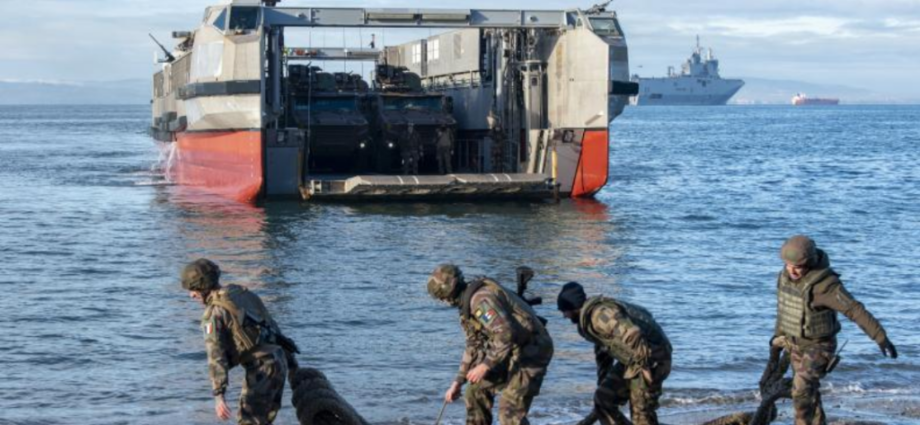
The exercise deploys France’s Mistral amphibious assault ship and Mirage 2000 fighter jets alongside Ivorian and Gabonese units. These assets will simulate combined scenarios including maritime interdiction, amphibious landings, air support, and rapid troop deployment across borders.
Gulf of Guinea emerges as Africa’s security priority
The strategic focus on the Gulf of Guinea reflects the region’s critical importance to West African economies. More than 90% of regional trade passes through its ports, while offshore oil and gas reserves attract international investment. This convergence of economic value and security vulnerabilities makes coordinated defense essential.
Threats range from maritime piracy and illegal fishing to human and weapons trafficking. The exercise specifically targets scenarios where coastal instability could spill over from Sahelian conflicts. Côte d’Ivoire’s northern regions and Gabon’s maritime approaches face identical risks, demanding coordinated responses.
Observer nations signal regional expansion
Benin, Guinea, Liberia and Senegal will participate as observers, indicating potential future enlargement of the security partnership. Their presence suggests an emerging consensus on prioritizing Gulf of Guinea security through shared doctrine and rapid-response protocols.
New era for French military engagement in Africa
GEX 2026 marks a fundamental transformation in France’s African security posture. After withdrawing from Mali, Burkina Faso, and Niger, Paris now emphasizes flexible, partnership-based engagements over permanent bases. The return of Port-Bouët camp to Ivorian control in 2025 exemplifies this new approach.
For Côte d’Ivoire and Gabon, the exercise offers an opportunity to diversify defense partnerships while building autonomous operational capabilities. Both nations prioritize developing indigenous command structures, intelligence-sharing systems, and rapid-deployment forces that can act without external support when needed.
From drills to lasting security architecture
Military observers see GEX 2026 as more than an annual exercise—it could become the foundation for a permanent security framework in West Africa. Key elements include:
- Maritime surveillance networks: Real-time information sharing between coastal states
- Cross-border rapid reaction forces: Airborne and naval units prepared to respond within 48 hours
- Joint training centers: Standardized procedures for multinational operations
- Cyber defense protocols: Protection for critical infrastructure against digital threats
The ultimate test will come when future crises require these new capabilities to be activated. Success hinges on sustaining political commitment among participating states beyond the initial drill cycle.
What’s at stake for West African security
The Gulf of Guinea’s future stability depends on whether GEX 2026’s temporary cooperation can evolve into permanent mechanisms. Coastal nations face common challenges that transcend national borders—piracy off Nigeria’s coast affects trade throughout the region, while armed groups operating in Burkina Faso threaten multiple countries.
For France, the exercise demonstrates continued commitment to regional partners despite reduced permanent presence. For Côte d’Ivoire and Gabon, it presents a chance to reposition as security providers rather than security consumers. The coming year will reveal whether this experiment in collective defense can outlast the training grounds.
Comments are closed, but trackbacks and pingbacks are open.