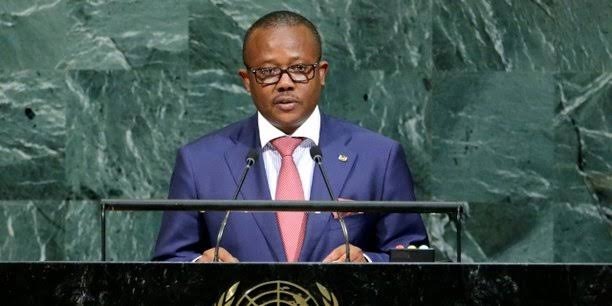
The confirmation from Bissau is now official: Umaro Sissoco Embaló, the incumbent head of state of Guinea-Bissau, will stand for a second presidential term. The long-awaited declaration ends months of speculation and instantly reshapes the national conversation, pushing the country toward a contested and closely watched electoral season.
For weeks, the president had kept the nation guessing, hinting more than once that he might step aside. His eventual decision to answer the calls of loyalists and coalition figures has triggered a wave of reactions across the political spectrum, from relief among supporters to sharp criticism from opponents who see it as a turning point for the country’s fragile democracy.
A presidency defined by diplomacy abroad and turbulence at home
Since his disputed victory in late 2019 and his swearing-in at the start of 2020, Embaló has built a record that mixes international outreach with domestic confrontation. On the world stage, he has sought to raise Guinea-Bissau’s profile, most notably by taking the helm of the Economic Community of West African States (ECOWAS) conference of heads of state and government, a role that gave Bissau unusual visibility.
At home, however, his term has been anything but calm. The political landscape has been repeatedly shaken by disputes between the presidency and other institutions, and by a series of security incidents that kept the capital on edge.
Key episodes that shaped the mandate
- Repeated dissolution of parliament: The president dissolved the National People’s Assembly twice, in 2022 and again in late 2023, citing destabilisation attempts and institutional deadlock.
- Clashes with the opposition: The main opposition coalition, led by the PAIGC (African Party for the Independence of Guinea and Cape Verde), has consistently accused the government of authoritarian drift and of restricting public freedoms.
- Security pressures: The authorities have had to confront several episodes of military tension and alleged coup attempts in the capital, reinforcing a climate of uncertainty.
What comes next: a vote under intense scrutiny
By formalising his candidacy, Embaló has effectively fired the starting gun on the presidential race. The central questions in the months ahead will be whether the electoral machinery can be organised credibly and whether opposition forces will take part in large numbers or choose to contest the process from outside.
Regional bodies and international partners are expected to keep a close watch on the conduct of the vote. Their stated priority is an inclusive, transparent and peaceful process capable of protecting the still-precarious stability of this West African nation.
The debate that will dominate the campaign
The announcement has already sparked a broader public argument about the direction of the country. Supporters present the second-term bid as a guarantee of continuity and of the diplomatic gains of recent years. Critics warn that another mandate could deepen the institutional fractures that have marked the past five years and further erode trust in democratic institutions.
Whatever the outcome, the coming months will test Guinea-Bissau’s capacity to manage a high-stakes election without sliding back into the cycles of instability that have long defined its political life.
Comments are closed, but trackbacks and pingbacks are open.