The military takeover in Guinea-Bissau did more than halt a contested vote — it opened a gap between the promise of a swift return to civilian rule and the reality of a transition whose deadlines may already be slipping. Behind the official announcements lies a deeper question: can a junta that rewrote the rules of the game credibly hand power back to civilians on its own terms?
The election that never finished
The crisis began in November 2025, when voters went to the polls for a presidential election whose outcome was never settled. As the national electoral commission was still tallying ballots, both the incumbent president, Umaro Sissoco Embaló, and opposition candidate Fernando Dias da Costa claimed victory. On 25 November, the army stepped in and froze the process, saying it was acting to prevent the country from being destabilised and to foil an alleged plot. Those claims were never independently verified.
The intervention turned an unsettled vote into a political void. Ballots were later destroyed and opposition figures were jailed, according to the Africa Centre for Strategic Studies. The fundamental question — who actually won the interrupted election — has never been answered.
A transition built on a promise
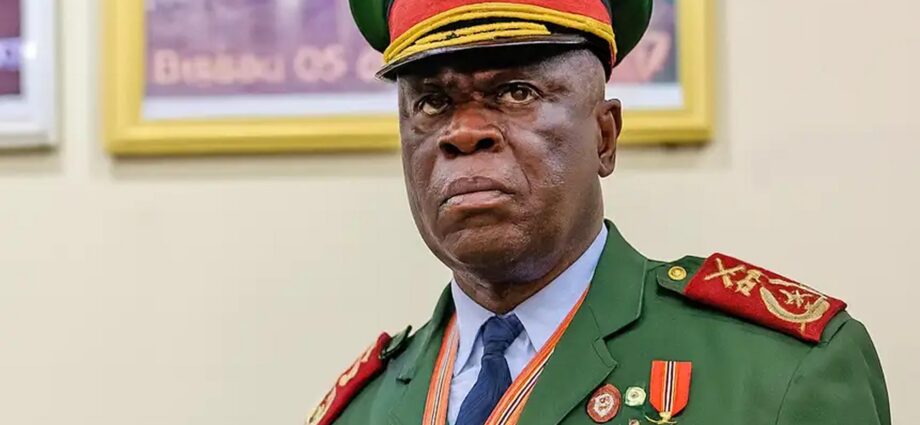
The junta framed its move as a rescue mission. It installed a transition led by General Horta N’Tam and publicly committed to restoring civilian rule through presidential and legislative elections. In January 2026, the transitional authorities set those elections for 6 December 2026. A presidential decree declared that conditions were ripe for a credible vote and stipulated that the junta leader would not be a candidate.
Yet warning signs were already visible. Opposition figures remained in prison or in exile, and a constitutional revision pushed through by the transitional legislature raised legal doubts. The promise of a return to civilian rule was being written on a foundation of unfinished business.
Rewriting the rules of the game
The transition also set out to reshape the country’s institutions. A constitutional referendum held in August 2026 aimed to replace the semi-presidential system with a fully presidential one, concentrating power in the presidency. The proposal also sought to cut the number of lawmakers from 102 to 65 and reduce the number of districts from 29 to 12.
Authorities presented these changes as a step towards institutional stability. The opposition, particularly the PAIGC, saw them differently — as a way to strengthen the executive and entrench the junta’s grip. Several parties and civil society groups boycotted the referendum. The new constitution thus crystallised a contradiction at the heart of the transition: it promises elections, but the political rules are being rewritten by institutions born under military rule.
The electoral calendar under strain
With the vote approaching, the 6 December date looks increasingly fragile. The electoral commission says the technical conditions will not be met in time, and the prime minister asserts that parties are not ready to take part in a reliable election. A postponement would strike directly at the central deadline meant to justify the length of the transition.
Authorities can always cite logistical constraints to explain a delay. But for parts of the opposition and for observers, a postponement would also extend military control over the political process. The real question is not just the date of the vote. It is whether parties can compete freely, whether candidates and voters are safe, whether the media can operate without pressure, and whether security forces will stay neutral.
What credibility will actually require
A return to civilian rule cannot be measured by a calendar alone. It will depend on concrete guarantees: letting the opposition participate, clarifying the fate of those imprisoned or exiled, protecting freedom of expression, and ensuring electoral bodies can work without military interference.
An election held in a climate of fear or exclusion would risk prolonging the crisis rather than resolving it. By contrast, an inclusive process with rules accepted by the main players and a timetable that is actually respected could open a path out of the transition. In Guinea-Bissau, the stakes now come down to one thing: whether the promise made after the coup becomes a genuine transfer of power — or remains an commitment with no certain deadline.
Comments are closed, but trackbacks and pingbacks are open.