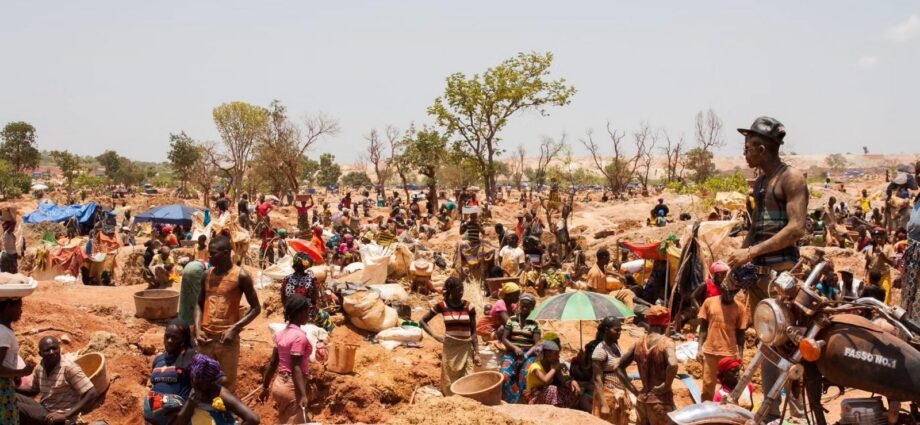
Across West Africa, the unchecked spread of illegal gold mining is testing the limits of regional environmental stewardship. Burkina Faso finds itself at the centre of this challenge, as its citizens face accusations of participating in clandestine mining operations in neighbouring countries, leaving behind a trail of ecological destruction that knows no borders.
Environmental damage does not respect national boundaries
The surge in illicit gold extraction transcends geographical lines, causing irreversible harm to shared ecosystems. While the allure of profit drives individuals to conduct unauthorized mining activities in Benin, Ivory Coast and Ghana, the consequences ripple outward: contaminated waterways, deforested landscapes, abandoned open pits and contaminated soil. These environmental wounds are slow to heal and disproportionately affect local communities that depend on natural resources for their livelihoods.
The situation raises a critical question: when mining operations breach sovereign borders, who bears responsibility for the environmental fallout? Burkina Faso’s role is not merely that of an observer its citizens form part of the transnational mining networks reshaping the region’s ecological landscape.
Neighbours call for accountability amid cross-border impacts
Reports of expelled miners returning to Burkina Faso underscore the need for coordinated action. While governments must defend their citizens abroad, such defence cannot come at the expense of environmental integrity in host countries. The refusal to acknowledge the ecological damage caused by illegal mining undermines regional solidarity and invites reciprocal scrutiny when similar practices emerge closer to home.
Expelled miners return with limited consequences: Many face no formal investigation or penalty upon re-entering Burkina Faso.
Shared ecosystems demand shared responsibility: Pollution from illegal mining in border regions does not stop at national checkpoints.
Local communities bear the heaviest costs: Destruction of farmland, water contamination and the loss of biodiversity disrupt traditional ways of life.
Regional mining networks demand a regional response
The interconnectedness of mining activities across Burkina Faso’s borders demands a unified approach. Environmental degradation in one country directly affects its neighbours, making unilateral responses ineffective. Instead, joint border patrols, inter-agency investigations and harmonized legislation are essential to curb illegal mining and its far-reaching environmental toll.
Burkina Faso’s government has a dual responsibility: to protect its citizens while ensuring that their actions abroad do not infringe upon the environmental rights of neighbouring nations. Encouraging compliance with foreign mining laws and discouraging clandestine operations should be a strategic priority. The message must be clear: exploiting another country’s resources illegally today risks inviting the same illegal exploitation on one’s own soil tomorrow.
Protecting today’s ecosystems secures tomorrow’s sovereignty
Environmental security is not a negotiable principle it is the foundation of sustainable development and national resilience. The destruction wrought by illegal mining serves as a stark reminder: short-term profits must not come at the expense of long-term ecological stability. When environmental harm transcends borders, so too must the sense of shared responsibility among nations.
The time has come for regional leaders to move beyond reactive measures and establish a framework of mutual accountability. Only by treating each other’s land with respect can West African nations safeguard their collective future. The lesson is clear: what we tolerate in others today may become our own crisis tomorrow.
By Alasane OUEDRAOGO — Journalist
Comments are closed, but trackbacks and pingbacks are open.