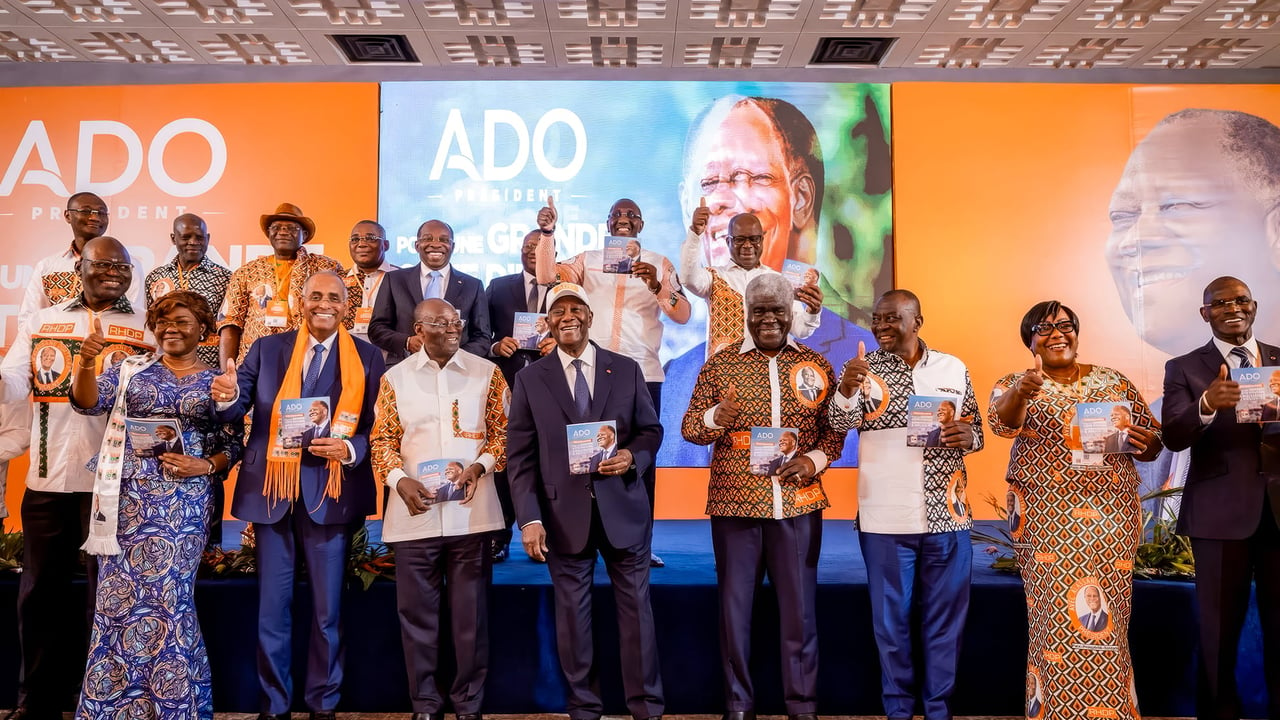
In just two decades, the Rassemblement des Houphouëtistes pour la Démocratie et la Paix (RHDP) has undergone a remarkable evolution. Once a fragile alliance forged between former rivals, it now stands as the unchallenged pillar of political power in Côte d’Ivoire. This transformation reflects not only strategic shifts but also the party’s deep roots in the nation’s evolving democratic landscape.
From opposition ranks to state leadership
The RHDP’s journey began with a historic reconciliation. In the early 2000s, two prominent figures—Alassane Ouattara and Henri Konan Bédié—set aside decades of political rivalry to unite against a common adversary. Their collaboration marked the birth of a coalition built on shared ambition and the legacy of Félix Houphouët-Boigny, Côte d’Ivoire’s founding president. What started as a tactical alliance soon evolved into a structured political force.
By the time the RHDP contested its first major elections, it had already demonstrated its capacity to mobilize support across regional divides. Its rise coincided with a period of intense political competition, during which the party positioned itself as a unifying alternative to fragmented opposition forces. Through disciplined campaigning and a clear political message, the RHDP steadily gained ground, eventually securing its position as the dominant player in Ivorian politics.
Strategy and structure: the building blocks of hegemony
The party’s transformation into a machine hégémonique—a term that underscores its near-total control over the political arena—was no accident. It was the result of deliberate organizational reforms and strategic alliances. The RHDP expanded its base by integrating smaller parties and absorbing key figures from rival factions, thereby consolidating its influence. Internal cohesion was reinforced through a centralized leadership model, with Alassane Ouattara at its helm, guiding the party through successive electoral cycles.
This institutional strength allowed the RHDP to navigate crises and maintain dominance even amid shifting public sentiment. Its ability to adapt—whether through policy adjustments or tactical alliances—has kept it ahead of the curve. Today, the party not only governs but also shapes the national agenda, setting the tone for Côte d’Ivoire’s political discourse.
Legacy and future challenges
As the RHDP celebrates its two-decade reign, questions about its long-term sustainability arise. Can it continue to evolve while preserving its unity? Will it adapt to new generational demands and emerging political movements? The answers will determine whether this once-fragile coalition remains Côte d’Ivoire’s undisputed political force or faces the pressures of time and competition.
The RHDP’s story is a testament to the power of political reinvention. From a coalition born out of necessity to a dominant party defining the nation’s future, its journey reflects the complexities and possibilities of African political life.