Ivory Coast’s justice system is tightening its collaboration with U.S. authorities as a team of Federal Bureau of Investigation (FBI) agents arrives in Abidjan to support local investigators. The move follows growing concerns over transnational sextortion networks operating from Ivorian soil, targeting victims primarily in North America.
Why the FBI is working side by side with Ivory Coast’s economic crimes unit
The partnership is coordinated through the Economic and Financial Crimes Unit (Pôle pénal économique et financier, or PPEF), Ivory Coast’s specialized court for financial and cybercrime cases. Unlike earlier suggestions of internal investigations, authorities confirm that FBI agents are not pursuing Ivorian magistrates but are assisting in dismantling criminal networks linked to sextortion and money laundering.
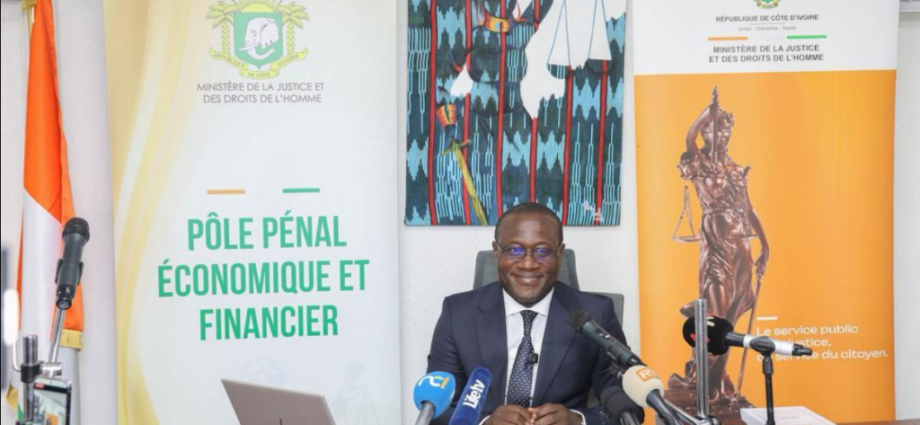
According to Ivory Coast’s Minister of Justice and Human Rights, Jean Sansan Kambilé, the FBI’s involvement was requested after U.S. victims reported extortion by suspects believed to be based in Abidjan. Twelve individuals have already been arrested and prosecuted under this joint effort, with investigations ongoing.
How sextortion rings operate across borders
Sextortion, a form of cyber extortion, involves perpetrators posing as romantic interests online to obtain intimate images or videos. They then threaten to release the material unless victims pay large sums. The emotional and economic toll on victims—including reports of suicide—has intensified calls from U.S. authorities for cross-border collaboration.
Ivorian authorities confirmed that multiple American victims were targeted by networks headquartered in Abidjan. The FBI’s expertise in digital forensics and international jurisdictional navigation has become a critical resource in tracking down suspects and recovering stolen funds.
Inside the Task Force: A joint Ivorian-U.S. investigation unit
A dedicated Task Force now operates within the PPEF, including Ivorian prosecutors, local investigators, and FBI agents. This structure enables real-time evidence sharing and coordinated raids across multiple jurisdictions.
The collaboration extends beyond sextortion. Authorities emphasize its role in dismantling money laundering rings that often finance cybercrime operations. Since implementation, the Task Force has contributed to the removal of Ivory Coast from the Financial Action Task Force (FATF) grey list, a significant step in strengthening the country’s financial integrity.
Key achievements reported by authorities
- Twelve suspects arrested and prosecuted
- Three international payment networks disrupted
- Enhanced training for local investigators in digital crime detection
Addressing sovereignty concerns and legal boundaries
Critics question the extent of FBI involvement within an Ivorian judicial institution. Authorities stress that the agents do not hold independent investigative powers in Ivory Coast but act under strict supervision of local prosecutors. All arrests and prosecutions remain under the authority of Ivorian courts.
The transparency of this collaboration is central to maintaining public trust. Regular briefings and public reports aim to clarify the legal framework governing the Task Force’s operations and the limits of foreign involvement.
Economic impact: Ivory Coast’s fight against financial blacklisting
Beyond crime-fighting, Ivory Coast has linked this cooperation to broader economic goals. Following the joint Task Force’s efforts, the country regained compliance status with FATF standards, facilitating international trade and investment. Authorities view this development as evidence that targeted foreign partnerships can bolster national security without compromising institutional sovereignty.
The debate continues over balancing international cooperation with national jurisdiction. Yet, for now, Ivory Coast and the FBI remain united in dismantling networks that threaten both local and global security.
Comments are closed, but trackbacks and pingbacks are open.