- News
- Politics
Ivory Coast: legal expert argues Ouattara’s political longevity should no longer be questioned
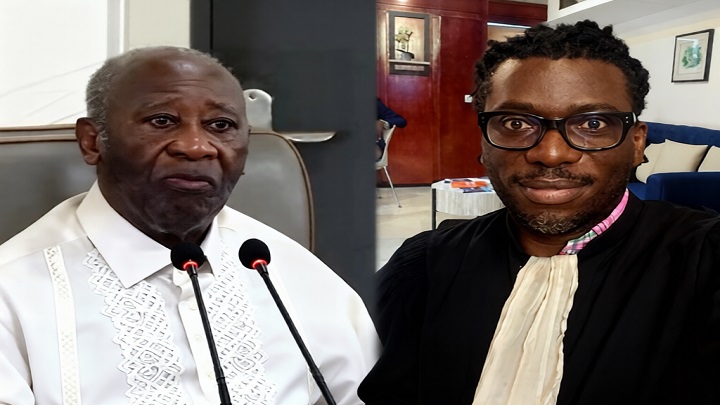
Ivorian political circles are abuzz following the re-election of Laurent Gbagbo as leader of the African People’s Party of Côte d’Ivoire (PPA-CI) during the party’s first ordinary congress in Abidjan. Legal expert Ange Rodrigue Dadjé has forcefully argued that criticisms against President Alassane Ouattara for remaining in politics despite retirement pledges have lost their validity.
“We can no longer criticize President Ouattara for choosing to stay in politics after announcing his retirement,” Dadjé declared on May 15, 2026, a statement that has sparked significant debate among political analysts and social media users.
This commentary comes at a pivotal moment when Laurent Gbagbo, long considered by many to be easing into political retirement, has firmly reasserted his leadership role. Just months ago, the former president had signaled his intention to step back from active politics. In an October 22, 2025 interview with journalist Alain Foka on AFO Media, Gbagbo had stated, “There is no retirement in politics, but I will refrain from holding political office within my party or in government. I have given enough.” At 81 years old and following his 2021 acquittal by the International Criminal Court, the former leader appeared ready to gradually pass the torch to a new generation within PPA-CI.
However, the party’s first ordinary congress, held May 14-15, 2026, took a different course. Facing party militants and officials, Gbagbo ultimately accepted to continue the political struggle, declaring, “I remain for the fight” to thunderous applause, effectively ending speculation about his definitive withdrawal. Many observers see this decision as reigniting debates about the permanence of Ivory Coast’s political heavyweights, particularly regarding Alassane Ouattara’s continued presence in politics.
Ouattara faced similar controversy in 2020 when he ran for a third term after previously suggesting he would step aside for a new generation. At the time, the opposition, including Gbagbo’s PPA-CI, condemned this reversal as a betrayal of his word. Dadjé now contends that the PPA-CI’s current situation demonstrates how political realities often override initial commitments made by leaders.
In July 2025, Ouattara officially announced his candidacy for the October 2025 presidential election, seeking a fourth term at age 83. He justified this decision as necessary to ensure national stability amid regional security and economic challenges. “This carefully considered decision is a duty,” the president stated, emphasizing that he was acting in “the supreme interest of the Nation.”
political realities trump retirement promises
Gbagbo’s re-election at the PPA-CI congress appears to have reshaped the contours of Ivorian political discourse. Many now view this as evidence of the decisive influence wielded by party militants and political realities over leadership decisions, even when leaders have previously announced their withdrawal. This development has reignited a longstanding question in Ivory Coast: can prominent political figures ever truly leave the political stage when their supporters continue to demand their leadership?
a shifting political landscape
The events surrounding both Gbagbo’s re-election and Ouattara’s continued leadership underscore a fundamental truth about Ivorian politics: retirement pledges often prove temporary in the face of persistent public demand and party dynamics. As one observer noted, “Politics is not a career you simply walk away from—it’s a calling that refuses to let go.”
Comments are closed, but trackbacks and pingbacks are open.