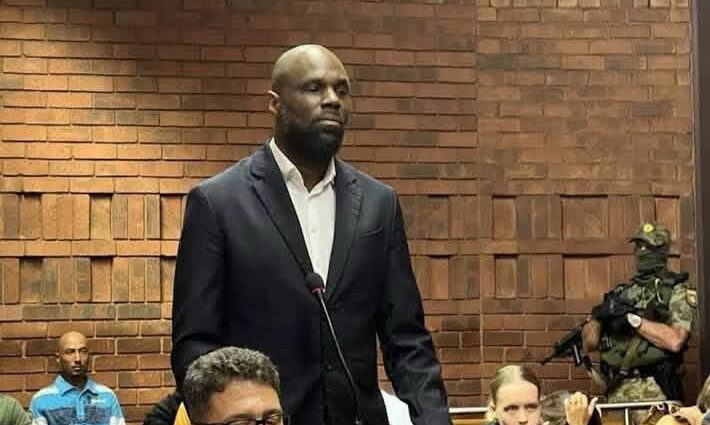
The judge presiding over the case of Kémi Séba has rejected the activist’s request for bail, citing credible evidence of an ongoing plot to facilitate his escape. Prosecutors allege that preparations for an international exfiltration operation were at an advanced stage when authorities intervened, raising serious concerns about flight risks and judicial obstruction.
Héry Djehuty’s pivotal role in the suspected escape network
Investigators have identified Héry Djehuty, coordinator of Urgences Panafricanistes and a long-time associate of Kémi Séba, as the individual who initiated contact with foreign intermediaries allegedly involved in the alleged escape scheme. According to judicial sources, Djehuty played a central role in establishing early links with individuals presented as Russian nationals and South African military personnel, both cited as potential facilitators in the operation.
The following questions remain unanswered but are critical to the case’s development:
Under whose instruction did Djehuty initiate these exchanges?
Were his actions part of a coordinated effort or an independent initiative?
To what extent was Kémi Séba aware of these preparatory measures?
Establishing Djehuty’s exact role and motivations is essential to determine whether his activities were aligned with broader objectives or pursued on a personal basis.
Financial flows under scrutiny: defense funds or escape logistics?
Another critical dimension of the investigation centers on the financial resources collected in the name of Kémi Séba’s legal defense. Concerns have arisen regarding the actual use of these funds, particularly given the involvement of individuals linked to international facilitation efforts.
Key inquiries include:
Did contributions collected as “defense funds” potentially finance logistical arrangements for an escape?
Who were the recipients of these transfers, and what were the amounts involved?
Do financial records provide clear documentation of all expenditures?
The need for transparency is underscored by allegations that certain funds may have been diverted from their stated purpose, with investigators seeking to verify the origins, destinations, and ultimate beneficiaries of all transactions.
Russian intermediaries and South African rangers: unraveling the international network
Among the most sensitive aspects of the case are the alleged roles of Russian nationals and individuals described as South African rangers in facilitating Kémi Séba’s potential clandestine departure. The prosecution’s case hinges on establishing how these parties were connected and what services they were expected to provide.
Potential responsibilities identified in the investigation include:
Arranging travel documents and safe passage routes
Securing logistical support for transportation
Providing security measures during transit
Determining the extent of coordination between these actors and whether Djehuty acted as their primary liaison is crucial to understanding the structure of the alleged operation.
South African intelligence: what did authorities know?
The case has also brought attention to the role of South African intelligence services. Authorities are examining whether these agencies were aware of the foreign contacts and whether they monitored the movements of individuals linked to the suspected escape plot.
Key questions include:
Did South African intelligence receive prior notice of the suspected operation?
Were any local or international collaborators under surveillance?
Did authorities intercept communications or identify logistical preparations?
The answers to these questions may reveal whether the alleged plot operated beneath the radar of law enforcement or whether existing monitoring systems failed to detect early warning signs.
Bail denial underscores flight risk concerns
The court’s decision to deny Kémi Séba’s bail request reflects growing concerns over his potential flight, compounded by revelations of an organized escape effort. Prosecutors have emphasized the risk of judicial interference and the difficulty of ensuring the defendant’s presence at future hearings.
While the magistrate’s ruling highlights the gravity of the allegations, the precise legal reasoning behind the decision remains under judicial review. Defense teams are expected to challenge the assessment of flight risks and argue for alternative preventive measures.
Establishing responsibility: the missing pieces of the puzzle
Several critical questions remain unaddressed as the investigation deepens:
Who commissioned Héry Djehuty to initiate foreign contacts?
What was the nature of the relationship between Russian intermediaries and South African rangers?
Were external financial backers involved in funding travel and logistical arrangements?
Did Kémi Séba receive prior knowledge of the planned escape?
Resolving these issues will require tracing the timeline of events, reconstructing financial flows, and identifying all individuals whether domestic or international who may have contributed to or facilitated the suspected operation.
An international case with far-reaching implications
This case has evolved from a domestic legal matter into a complex web of international allegations, involving financial transactions, cross-border coordination, and potential state-linked actors. The central figure in the investigation remains Héry Djehuty, whose dual role as coordinator of Urgences Panafricanistes and close associate of Kémi Séba places him at the nexus of the suspected plot.
As prosecutors work to establish the full scope of the operation its financiers, facilitators, and intended beneficiaries the outcome of this case may set a precedent for future prosecutions involving transnational escape efforts. The upcoming hearings will be pivotal in determining whether the alleged preparation amounted to an active conspiracy or remained at the level of preliminary, uncoordinated discussions.
The court’s ruling on bail denial signals a recognition of the risks posed not only by Kémi Séba’s potential flight but also by the broader implications of an organized effort to undermine judicial proceedings.
By AMINATA KABORE — Journalist
Comments are closed, but trackbacks and pingbacks are open.