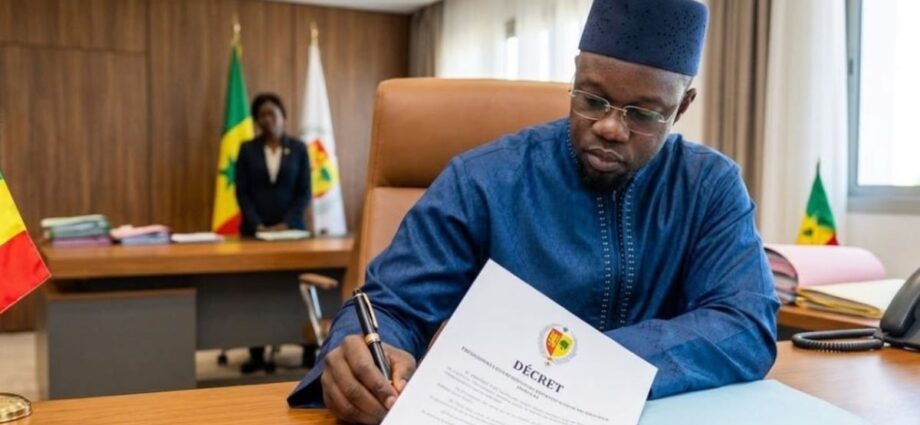
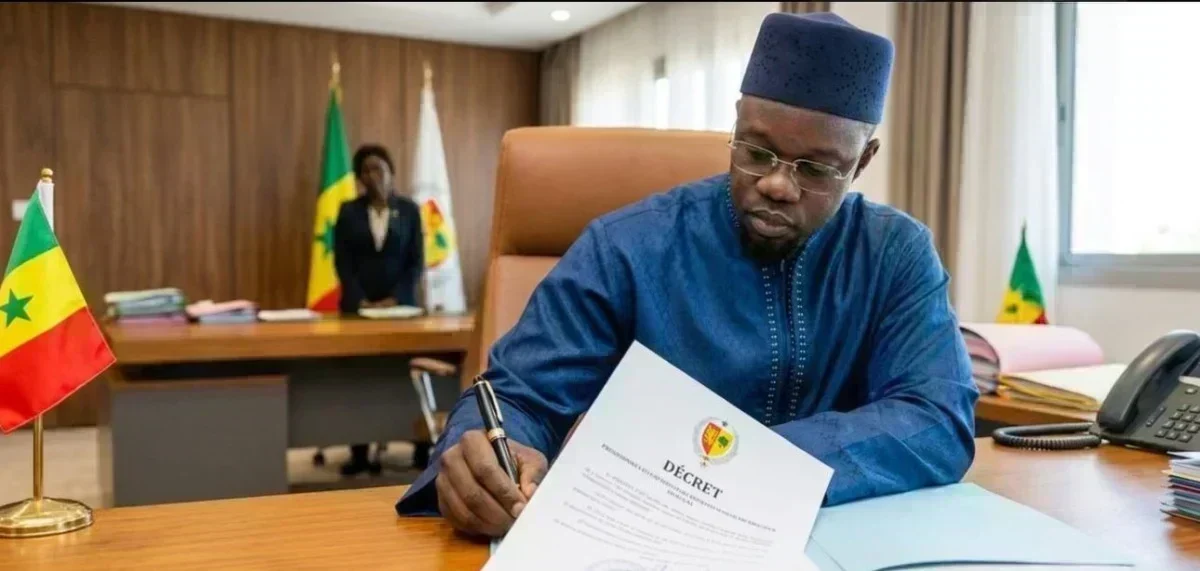
In a decisive show of political foresight, Senegal’s National Assembly Bureau has taken an unprecedented administrative step to safeguard institutional continuity amid escalating legislative tensions. Just five days before President Bassirou Diomaye Faye regains the power to dissolve the Assembly on December 2, 2026, lawmakers have implemented a groundbreaking functional protocol to ensure seamless legislative operations—even in the event of an abrupt parliamentary interruption.
An unprecedented administrative pivot
The Bureau of the National Assembly, led by Ousmane Sonko, convened an emergency session on November 27, 2026, to adopt a landmark functional instruction under Article 3 of the Assembly’s Rules of Procedure. This measure outlines clear operational guidelines for sustaining administrative and logistical services if the legislature is dissolved prematurely. By formalizing these protocols now, the Bureau is not merely preparing for a hypothetical scenario—it is acknowledging the growing likelihood of a constitutional crisis unfolding within weeks.
The timing of this decision is far from coincidental. With the December 2 deadline looming, when the President will regain the constitutional authority to dissolve the Assembly and call for new legislative elections, the Bureau’s proactive stance signals a critical juncture in Senegal’s political trajectory. The move underscores a deliberate preparation for potential upheaval, reflecting both the fragility of the current legislative framework and the high stakes of the impending political reckoning.
A legislature trapped in deadlock
The political deadlock gripping the National Assembly has reached a breaking point. Repeated clashes between the executive branch and the parliamentary majority have paralyzed legislative progress, culminating in the rejection of key financial texts by lawmakers earlier this month. In response, the government invoked Article 68 of the Constitution to enforce the 2026 supplementary budget by decree—a decision that underscored the executive’s willingness to bypass legislative opposition at all costs.
This institutional impasse has left no room for compromise. As the December 2 dissolution window approaches, the Bureau’s adoption of dissolution contingency measures suggests that both the legislature and the executive are bracing for a potential return to the polls. The preparation of these protocols is not just bureaucratic diligence; it is an unmistakable signal that political actors are treating the dissolution as an imminent reality rather than a distant possibility.
Constitutional clock ticking toward high-stakes decisions
Under Senegal’s constitutional framework, President Bassirou Diomaye Faye will regain the power to dissolve the National Assembly on December 2, 2026—a date now etched into the nation’s political calendar. This constitutional reset, occurring two years after the current legislature was seated, holds profound implications for the country’s democratic trajectory. The Bureau’s early intervention demonstrates a rare alignment between institutional pragmatism and political urgency, reflecting a shared recognition that the status quo is unsustainable.
The adoption of these functional instructions serves as both a shield and a sword. It shields the Assembly from administrative collapse in the event of dissolution while simultaneously sharpening the political stakes ahead. By formalizing continuity plans now, the Bureau is ensuring that if the President exercises his constitutional prerogative, the transition—however abrupt—will not trigger a vacuum in governance. At the same time, the move amplifies the pressure on all stakeholders to resolve their differences before the December deadline, lest they risk an electoral reckoning they may not be prepared to face.
What comes next? A nation at a crossroads
The coming days will determine whether Senegal’s political crisis escalates or de-escalates. The Bureau’s proactive measures have set the stage for one of three possible outcomes: a last-minute political compromise that averts dissolution, an orderly transition to new elections if the Assembly is dissolved, or a prolonged period of legislative paralysis culminating in constitutional uncertainty. Each path carries profound consequences for the country’s stability, governance, and democratic reputation.
The stakes could not be higher. With the December 2 deadline fast approaching, the nation stands on the precipice of a turning point—one that will redefine the balance of power, the trajectory of reforms, and the very fabric of Senegal’s political future. The Bureau’s bold move is more than a contingency plan; it is a clarion call to all actors involved to act decisively, lest the moment slip through their fingers and leave the country to navigate uncharted waters.
Comments are closed, but trackbacks and pingbacks are open.