The Alliance of Sahel States (AES) faces its first operational credibility crisis after Burkina Faso and Niger failed to dispatch troops to support Mali during major offensives in late April 2026. The coordinated attacks targeted northern and central Mali, striking military positions and suspected foreign-backed facilities. Despite the Liptako-Gourma Charter—signed in September 2023—mandating mutual defense, both neighbors abstained, leaving Bamako to confront the crisis alone.
The offensive, involving the Jama’at Nusrat al-Islam wal-Muslimin (JNIM)—an Al-Qaeda affiliate—and the Permanent Strategic Framework for the Defense of the Azawad People (CSP-DPA), exposed critical vulnerabilities in Mali’s security apparatus. The simultaneous assaults, executed without apparent coordination between the two armed factions, signaled a tactical convergence that further strained the Malian army’s already stretched resources.
Defense pact exists on paper, but solidarity remains elusive
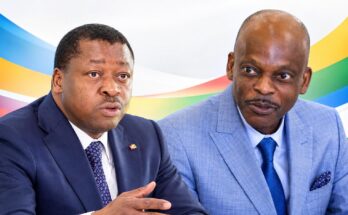
The AES founding charter is unambiguous: any armed aggression against one member constitutes a threat to all, obligating collective response measures, including military deployment. Yet, in practice, Ouagadougou and Niamey prioritize their own security challenges. Burkina Faso’s transitional leader, Captain Ibrahim Traoré, grapples with a relentless jihadist insurgency eroding state control, while Niger’s General Abdourahamane Tiani consolidates power by redeploying forces along southern borders. Neither nation possesses the strategic depth to commit troops to Mali without compromising their own defenses.
The absence of even symbolic gestures—such as joint reconnaissance missions or material support—underscores a disconnect between diplomatic rhetoric and action. Since the alliance’s formal proclamation in Niamey in July 2024, the AES has struggled to establish functional decision-making bodies capable of rapid, unified responses.
Mali’s isolation deepens as security threats intensify
Colonel Assimi Goïta’s government confronts an increasingly precarious security equation. The withdrawal of the UN Multidimensional Integrated Stabilization Mission in Mali (MINUSMA) in late 2023, coupled with severed ties to Western partners, has left Mali reliant on a shifting Russian support structure. The now-defunct Wagner Group’s remnants have been replaced by the Africa Corps, a Kremlin-aligned force operating under stricter institutional oversight—yet with a still-reconfiguring troop presence.
The late April losses reignited concerns over the army’s ability to hold recaptured territories. Regional analysts note that jihadist groups exploited gaps in coordination between Malian forces and Russian auxiliaries. The simultaneous offensives, though originating from distinct ideological camps, revealed a troubling tactical alignment that threatens to overwhelm Mali’s weakened defenses.
Political alliance overshadows military cooperation
The AES’s military shortcomings reveal its true purpose: a diplomatic shield to legitimize military-led transitions and facilitate withdrawal from the Economic Community of West African States (ECOWAS), formalized in January 2025. While economic integration—including a proposed common currency and biometric passport—garner attention from regional diplomats, operational defense cooperation remains underdeveloped.
The April precedent serves as a cautionary tale for neighboring capitals. If military solidarity remains theoretical, each nation must increasingly depend on domestic resources and non-regional allies. Military strategists across the Sahel now question whether the AES risks evolving into a purely political framework, stripped of its defensive mandate.