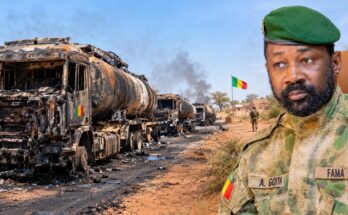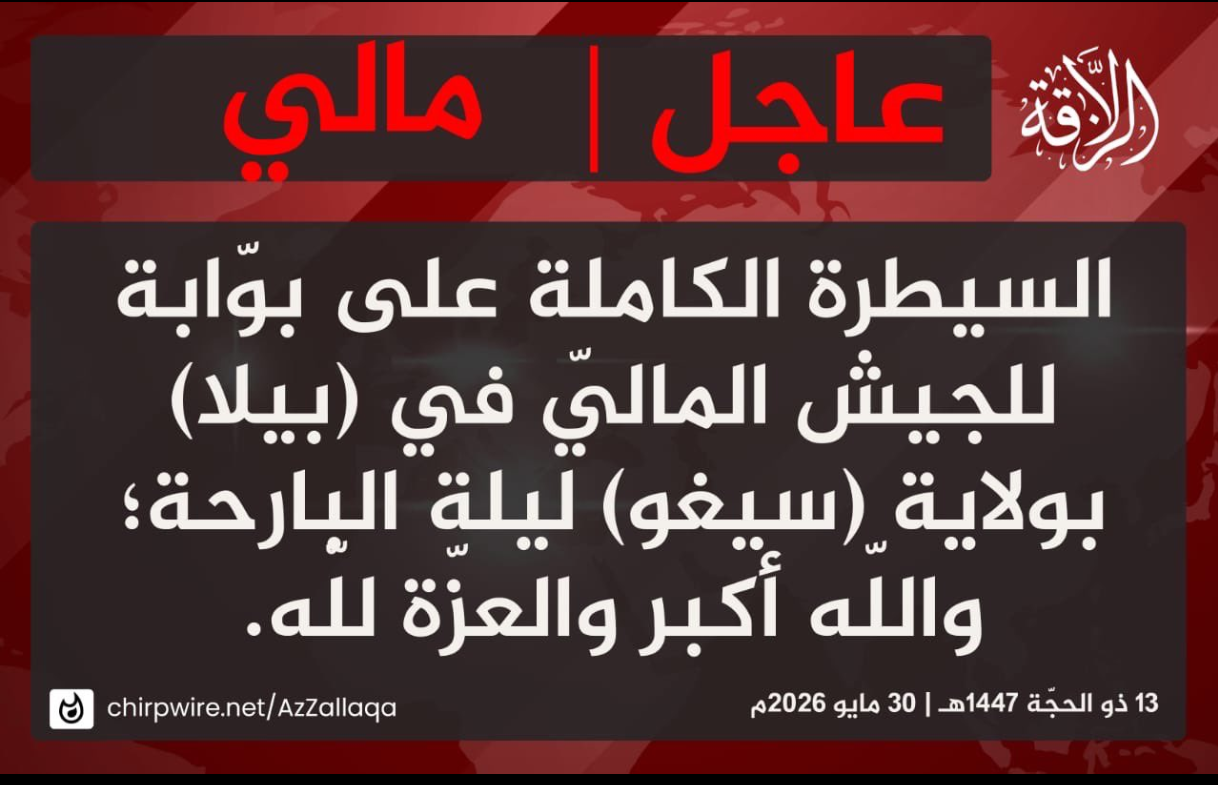
The night of May 29 to 30 saw a brutal assault on a Malian military outpost in the Ségou region, claimed by the Group for the Support of Islam and Muslims (JNIM), an al-Qaeda-affiliated jihadist coalition. According to the group’s propaganda channels, their fighters overran the strategically vital base, seizing heavy weaponry and ammunition in the process.
Ségou’s night of terror
Local reports confirmed intense gunfire and explosions throughout the night, though Bamako’s initial silence quickly shifted to guarded official statements. Independent verification of casualties and damages remains elusive, but the attack underscores a harsh truth: armed groups still wield significant power in central Mali, even in areas heavily fortified by military forces.
Security strategy crumbles under jihadist pressure
Since seizing power, the Malian junta has pledged to reclaim full control of the nation, pivoting away from Western partners in favor of a controversial alliance with Russian security contractors. Yet the Ségou assault reveals the glaring flaws in this approach. Russian-backed operations, focused on aerial strikes and large-scale raids, have failed to counter the JNIM’s mobile warfare tactics. Instead of weakening, insurgent activity has deepened, with militants exploiting gaps in the state’s crumbling defenses.
From insecurity to famine: a devastating cycle
The surge in violence has triggered a cascading humanitarian crisis. Ségou, once a breadbasket due to its proximity to the Niger River, now faces severe food shortages as jihadists block farmlands, loot livestock markets, and detonate improvised explosives along trade routes. Unable to cultivate their fields or transport goods safely, farmers face starvation. The JNIM’s deliberate sabotage of food systems compounds the crisis, with state-led aid efforts falling woefully short of addressing the emergency.
Displaced families abandoned by the state
With violence intensifying and hunger spreading, civilians are fleeing in droves. Entire villages in Ségou have emptied, as residents seek refuge in urban centers or Bamako, hoping to escape the dual threats of war and famine. These internally displaced persons (IDPs) crowd into overcrowded, under-resourced camps, where women and children bear the brunt of the suffering. The government’s preoccupation with military campaigns has left social services in shambles, forcing local NGOs to shoulder the burden of survival for thousands.
The JNIM’s brazen raid on Ségou serves as a stark reminder of Mali’s unraveling stability. The junta’s reliance on a purely military solution and an ineffective foreign partnership has left the nation teetering on the edge of collapse. Without urgent action to protect civilians, restore public services, and combat famine, Mali’s social fabric risks being torn apart by relentless conflict.