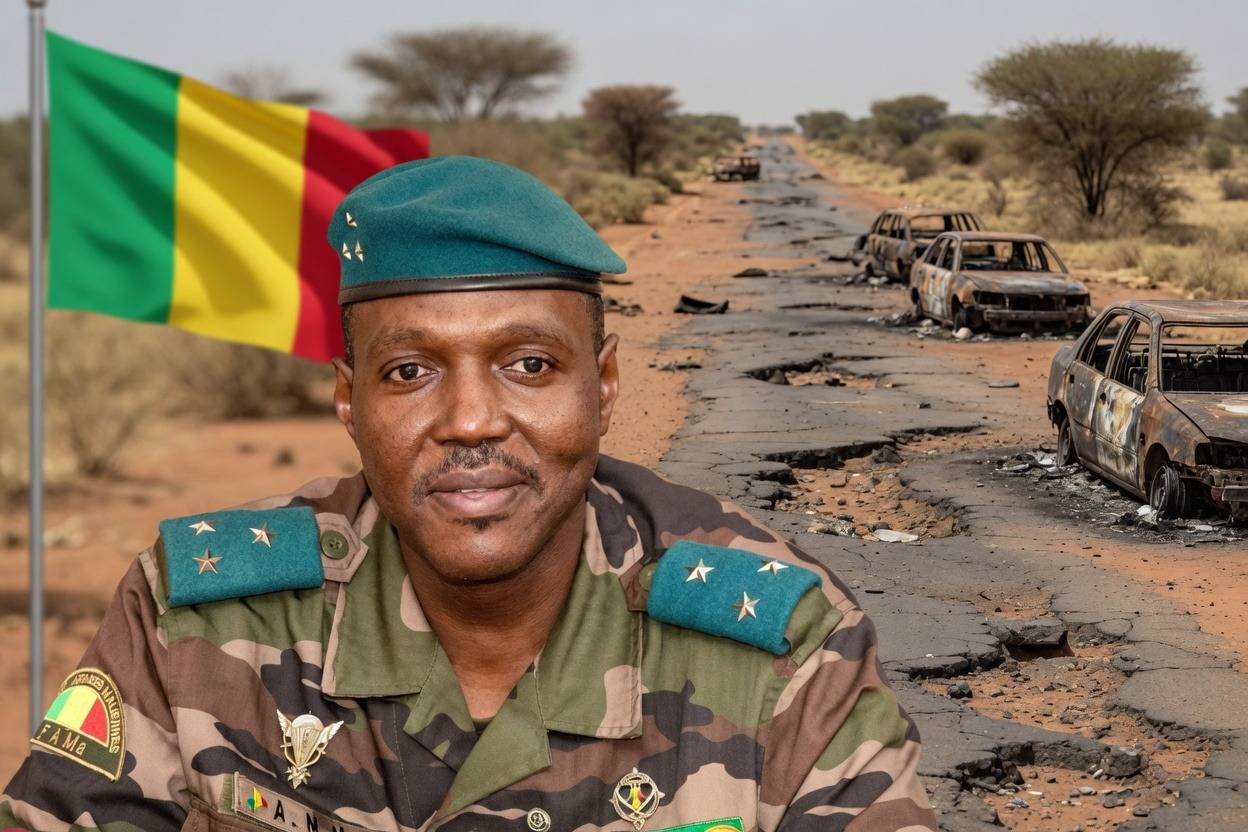
The desolate landscape along Mali’s northern supply arteries paints a harrowing picture: charred vehicle remains, decaying food provisions, and lifeless bodies discarded by the roadside. A pervasive stench of death hangs heavy, a grim testament to the pervasive violence gripping the nation. Yet, confronted with this profound humanitarian and security catastrophe, the transitional government appears to inhabit an alternate reality. Prime Minister Abdoulaye Maïga’s assertions, "There are no blockades on the roads. Everyone travels freely in Mali," serve as a stark verbal attempt to obscure the state’s escalating collapse.
This persistent narrative of denial highlights an ever-widening chasm between the military leadership and the lived experiences of ordinary citizens. While Bamako frequently issues declarations of triumph, the critical supply corridors connecting southern and northern Mali have tragically transformed into open-air graveyards. The current administration appears to have prioritized an aggressive communication strategy over genuinely safeguarding its territory, treating any acknowledgment of Malian suffering as an act of defiance. By championing an image of restored sovereignty above the physical well-being of its populace, the ruling junta isolates itself in an ivory tower, with human lives bearing the ultimate cost.
The strategic shortcomings are equally stark. The abrupt decision to sever ties with longstanding international partners in favor of new alliances has, thus far, failed to deliver the promised security improvements. Instead, the departure of international forces created a power vacuum that armed terrorist groups swiftly exploited, imposing brutal sieges on communities across Mali’s Nord and Centre regions. The government, demonstrably unable to secure vital supply convoys, appears to have forfeited its operational initiative, resorting to sporadic airstrikes where a sustained territorial presence is critically needed to alleviate the economic suffocation.
Ultimately, political stagnation and severe restrictions on individual liberties further undermine the nation’s stability. By silencing journalists, opposition figures, and civil society groups who courageously speak out about the crisis, the government deprives itself of essential mechanisms for genuine national resilience. The lack of clear electoral pathways and the regime’s increasing authoritarianism indicate that resolving the security crisis is no longer the primary concern. Instead, the focus has shifted to perpetuating a power structure that, lacking tangible achievements on the ground, sustains itself through a superficial nationalism. While fervent speeches echo within the halls of Bamako, the real Mali continues to decay along its desolate roadways.