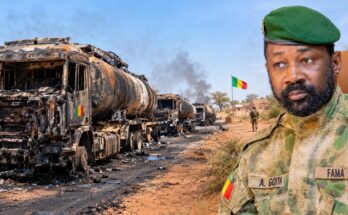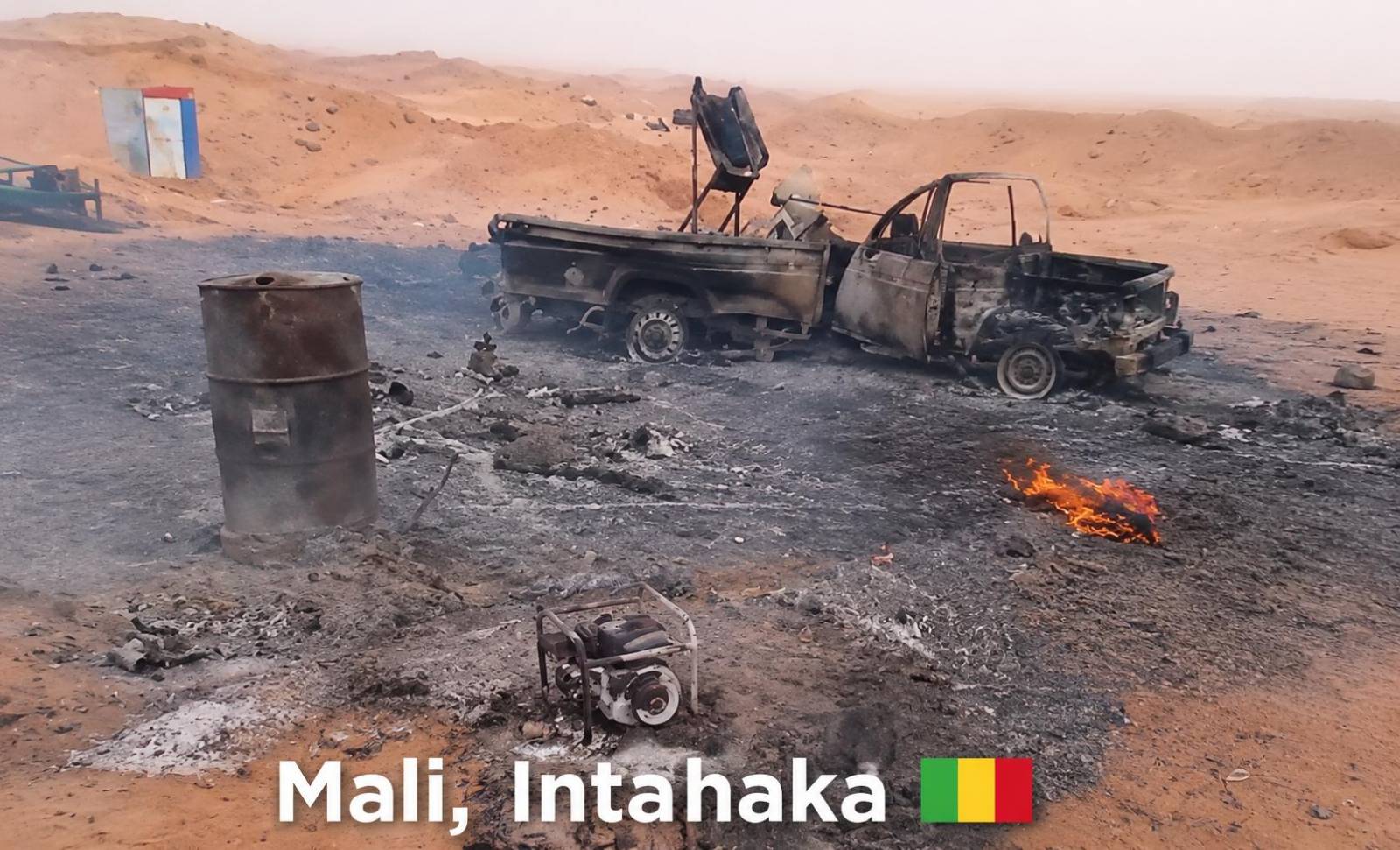
On the morning of May 18, a drone operated by the Malian Armed Forces (FAMa) tragically struck a vehicle belonging to the GATIA, an armed movement that has consistently demonstrated loyalty to Bamako. This devastating ‘error’ occurred within the crucial Intahaka mining zone, near Gao. This latest bloody incident starkly illuminates the profound strategic disarray of the ruling military junta. As the nation grapples with coordinated assaults from various rebel factions and terrorist groups, the advanced technologies, ostensibly acquired to bolster security, are instead exacerbating the chaos, plunging local populations into an unprecedented economic and humanitarian crisis.
The Intahaka fiasco: when technology falters
The news, emerging at dawn on Monday, sent shockwaves across northern Mali. Multiple consistent local accounts confirm that a Malian army drone strike obliterated a pickup truck associated with the Groupe autodéfense touareg Imghad et alliés (GATIA). Preliminary reports indicate several fatalities and severe injuries among this militia, which, ironically, has for years fought alongside Bamako to contain regional instability.
Initially framed by official communications as the “neutralization of terrorists,” this strike was swiftly exposed as a tragic operational blunder. This glaring lack of coordination on the ground reveals significant technical deficiencies and a critical foresight deficit within an army that appears to be prosecuting its war blindly, even under the gaze of its Russian Africa Corps partners.
Technological illusion versus ground reality
For several months, the military junta led by Colonel Assimi Goïta has promoted its “all-drone” strategy as a miraculous solution for reclaiming national territory. However, the reality on the ground presents a starkly different picture. Far from pacifying the country, these aerial assets are frequently responsible for dramatic targeting errors, regularly impacting civilians, as seen in the recent tragedy in San, or, as now, striking their own operational allies.
While Bamako struggles with its technological miscalculations, the threat itself continues to strengthen. The Permanent Strategic Framework, now rebranded as the Azawad Liberation Front (FLA), alongside the jihadists of the Groupe de soutien à l’islam et aux musulmans (JNIM), are conducting offensives of unprecedented scale. The de facto alliance of these groups has routed government forces in several key localities, proving that the junta’s asymmetric strategy is utterly ineffective against mobile insurgents who are now also equipped with jamming technologies and kamikaze drones.
Blood gold: Intahaka, a suffocating economic lung
The choice of location for this blunder is far from coincidental. The Intahaka site hosts the largest artisanal gold mine in the Gao region, a true economic lifeline for northern Mali. This vital mining zone is the subject of a fierce struggle for control among the state, various armed groups, and smuggling networks.
The economic impact of this persistent instability is devastating for the local economy. Gold panning activities, which sustain thousands of families, are constantly interrupted by clashes and indiscriminate firing. “We no longer know where to flee. Roads are already blocked by terrorists, and food prices have tripled in Gao; if even the sky, controlled by Bamako, bombs us, it’s the end,” confided a local resident from the area, speaking on condition of anonymity. For the civilian population, the presence of the army and its aerial vectors has become synonymous with terror rather than liberation, a tragic piece of African society news.
The Intahaka incident is symptomatic of a deeper malaise: the political and military impasse into which the junta has plunged Mali. By reneging on peace agreements and relying exclusively on a military response disconnected from human realities, Bamako is alienating its last remaining on-the-ground supporters, such as the GATIA.
Today, as the North and Centre increasingly slip from state control, the slogan of “restoring national sovereignty” rings terribly hollow. If Mali’s military leadership continues to confuse wartime communication with strategic effectiveness, it risks not only mistakenly eliminating its allies but also jeopardizing the very future of an entire nation.