Mali is currently grappling with an escalating security crisis, with recent attacks resulting in significant civilian and military casualties, as reported by credible security sources.
Northern Mali: a pivotal region in Sahelian geopolitics
Strategic analysts highlight that Northern Mali holds the key to political transformations across Mali, Niger, Burkina Faso, Chad, and Mauritania. This vast territory, encompassing cities like Kidal, Gao, and Timbuktu, serves as a critical hub for trade routes, alliances, and regional power balances.
Imam Mahmoud Dicko: from moral authority to political influencer
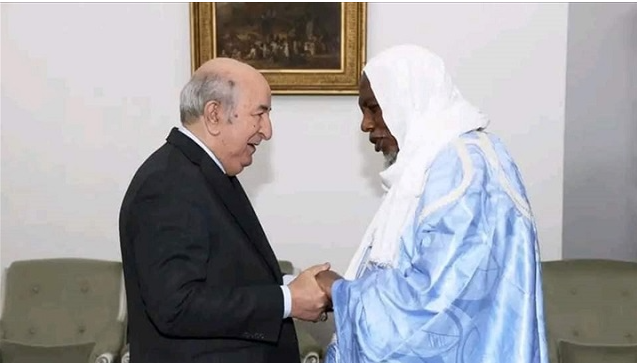
Based in Algeria, Imam Mahmoud Dicko has evolved beyond his traditional role as a spiritual leader. His supporters now perceive him as a quasi-caliphal figure, wielding authority that transcends conventional religious boundaries. Some observers compare his influence to a centralized religious leadership model, reminiscent of historical or regional paradigms.
Algerian intelligence reportedly directs his strategic focus toward Northern Mali, where his efforts aim to consolidate control over key territories. This shift has raised concerns among regional observers about the potential consolidation of power under a religious-political framework.
Algeria’s alleged covert operations in the Sahel
Local reports from Tamanrasset indicate that Algeria’s military has intensified its involvement in the region. A battalion from the Algerian army’s 4th Military Region reportedly relocated to the 6th Military Region, deploying in smaller units to evade satellite surveillance. These maneuvers suggest a calculated strategy to expand influence in Northern Mali.
The Algerian regime, under the leadership of General Saïd Chengriha and President Abdelmadjid Tebboune, is accused of backing Imam Mahmoud Dicko’s militias and certain armed jihadist groups. The objective, according to insiders, is to secure Northern Mali before targeting political leaders in neighboring Sahel nations. This alleged campaign coincides with geopolitical shifts, including U.S. and Israeli operations against Iranian proxies.
Contradictions in official narratives
While Imam Mahmoud Dicko remains officially in exile in Algeria, his unconfirmed presence in decision-making circles suggests a growing shadow influence. This dynamic highlights the Algerian state’s struggle to assert control, prompting its covert support for external actors to safeguard its interests.
The French Foreign Ministry has expressed grave concerns over the deteriorating security situation in Mali. Following coordinated attacks on April 25 in multiple locations, including Bamako, the ministry urged French nationals to depart the country temporarily via available commercial flights.
Mali’s leadership responds to escalating threats
General Assimi Goïta, Mali’s transitional leader, addressed the nation in a televised speech on state broadcaster ORTM. He asserted that the country’s security situation was under control, just days after unprecedented attacks by jihadist factions, including the Jama’at Nusrat al-Islam wal-Muslimin (JNIM) and Tuareg separatists from the Azawad Liberation Front (FLA).
Comments are closed, but trackbacks and pingbacks are open.