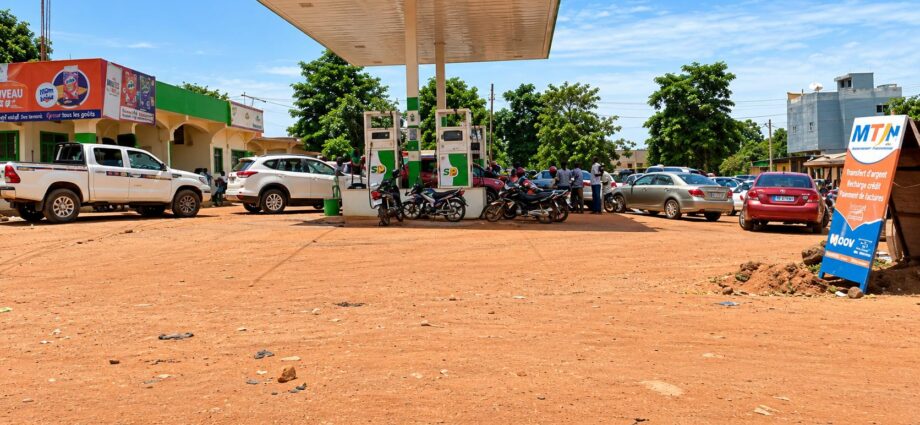
Daily life in Niamey paralyzed by fuel scarcity
Long, agonizing queues stretch outside nearly every gas station in Niamey, as Niger’s capital grapples with a worsening fuel shortage. Since commercial stations began rationing gasoline and diesel, the city’s once-vibrant rhythm has ground to a halt. Commuters, small business owners, and transport workers now face a stark reality: fuel, the lifeblood of the economy, is becoming harder to find with each passing day.
Rationing backfires as government’s list fuels chaos
The government’s attempt to guide drivers to the few operational stations only made matters worse. Publicizing a limited list of fuel outlets attracted waves of desperate motorists, turning already strained supply points into battlegrounds of frustration. With no reliable system to track deliveries, drivers now spend hours in traffic, hoping against hope that a tanker might arrive.
Broken supply chain leaves Niger dependent on costly imports
Despite the presence of the Soraz refinery in Zinder, Niger remains dangerously reliant on imported fuel. Official figures reveal a staggering deficit: 196.62 million liters of gasoline and 52.60 million liters of diesel shortfall in the first eight months of the year. When Nigeria ended fuel subsidies, smuggling routes that once supplied cheap gasoline to Niger dried up overnight, shifting an unsustainable burden onto local distribution networks.
Soraz refinery fails to meet national demand
The Zinder facility, theoretically capable of processing 20,000 barrels per day, prioritizes diesel production, leaving gasoline supply critically low. Meanwhile, expensive emergency imports have become the go-to solution, masking deeper systemic failures in energy planning and distribution.
Government scrambles for stopgap measures
Current efforts—limited sales and public station lists—offer no real relief. Instead of addressing root causes, these measures merely relocate shortages, plunging neighborhoods into uncertainty over when fuel will next be available. Citizens demand transparency: clear stock reports, verified delivery schedules, and accountability for mismanagement. Yet, official responses remain vague and evasive.
Black market thrives as mistrust grows
With no trust in government transparency, informal sellers proliferate, peddling adulterated fuel at inflated prices. Many Nigeriens feel abandoned—forced to choose between lost workdays, crippling transport costs, and the risk of buying tainted gasoline. This black market does not solve the crisis; it exposes it, showing how a vital public service has been privatized by default.
Economic ripple effects threaten households and businesses
For the average citizen, the fuel shortage is not just an inconvenience—it’s a financial and operational nightmare. Daily commuters, street vendors, and transport workers are feeling the pinch. As transport costs surge, prices for basic goods are expected to follow, pushing inflation to dangerous levels and squeezing household budgets even further.
The longer this crisis persists, the more severe its impact on Niger’s already fragile economy. Without decisive action to stabilize supply and restore public trust, the human and economic toll will only deepen.
Comments are closed, but trackbacks and pingbacks are open.