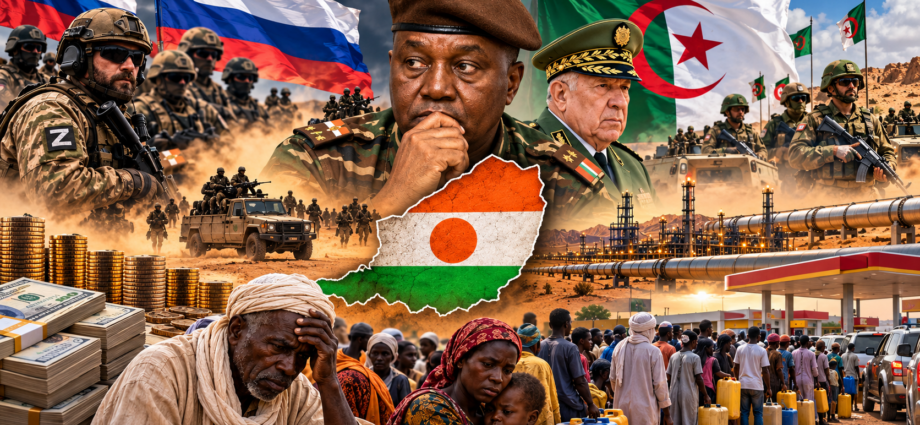
After initially relying on Russian military contractors to bolster its security, Niger’s ruling junta has now turned to Algeria for direct military intervention. On October 25, 2026, Algeria’s parliament approved the deployment of troops to Niger, marking a significant shift in Algiers’ traditionally cautious foreign military engagements. But as Niamey doubles down on foreign security partnerships, questions mount: what exactly is being negotiated, who will bear the financial burden, and will this new alliance translate into tangible protection for Nigerien civilians?
Why Niger is expanding its military partnerships despite reservations
The Nigerien government, led by General Abdourahamane Tiani, has long prioritized national sovereignty and the rejection of former alliances. Yet its escalating reliance on foreign security partners first Russian mercenaries and now Algerian troops raises critical questions about the viability of its current security strategy.
The deployment of Russian contractors, particularly those linked to Africa Corps, has been presented as essential to restoring stability. However, concrete outcomes remain elusive: attacks continue, civilian protection remains inadequate, and major infrastructure remains vulnerable. These shortcomings have forced Niamey to seek additional support, despite the financial and political costs.
Controversial costs and unclear benefits of Russian military cooperation
Reports suggest Russian mercenaries are paid up to $10,000 monthly, though no public contracts confirm these figures. Such expenditures raise concerns about value for money especially when security improvements have not materialized. With the national budget already strained by economic and social challenges, citizens deserve clarity on how these funds are allocated and what results they deliver.
While military cooperation is not inherently contradictory to sovereignty, it must serve national interests in measurable ways. The Nigerien government must justify these expenses not through rhetoric but through demonstrable improvements in public safety and infrastructure protection.
Algiers’ strategic calculus: security, energy, or both?
Algeria’s decision to send troops reflects a convergence of security and economic interests. Officials cite the threat of transnational armed groups as a primary concern, but Algeria’s energy investments in Niger including oil fields and the proposed Trans-Saharan Gas Pipeline undeniably shape its involvement.
This dual focus raises a pivotal question: will Algeria’s military presence prioritize Nigerien civilians, its own economic assets, or both? The ambiguity of current agreements leaves room for concern particularly if local communities derive little benefit from deployed troops while critical resources are diverted to secure foreign-owned infrastructure.
Financial unknowns: who pays for Algeria’s military support?
The terms of Algeria’s deployment remain undisclosed, including cost-sharing, logistical responsibilities, and operational scope. Without transparency, Niger’s population faces uncertainty: will these expenditures strain the national budget, reduce funding for essential services, or create new dependencies on foreign partners?
Public disclosure is not optional; it is a democratic obligation. Citizens have the right to know whether their government is committing national resources to a strategy with measurable benefits or simply expanding military alliances without accountability.
Sovereignty demands transparency, not just new alliances
General Tiani’s government has framed sovereignty as a cornerstone of its legitimacy. Yet the repeated turn to foreign military partners first Moscow, now Algiers undermines that narrative if not paired with clear outcomes. Sovereignty is not measured by the number of allies, but by the state’s ability to protect its people and manage resources responsibly.
If Russian contractors fail to deliver security, and Algerian troops are deployed without defined objectives, Niger risks substituting external partnerships for a coherent, transparent national strategy. The true test of governance will not be the volume of agreements signed, but the safety and welfare of its citizens.
What success looks like: concrete results, not just military presence
A military partnership’s value lies in its impact. Have attacks diminished? Are civilians safer? Are roads and infrastructure better protected? More importantly, are these gains achieved without sacrificing development spending or deepening financial dependence?
The Nigerien public deserves answers. Behind every diplomatic announcement and troop deployment are lives, livelihoods, and the credibility of a government that must ultimately answer to its people not to foreign capitals.
By Alasane OUEDRAOGO — Journalist
Comments are closed, but trackbacks and pingbacks are open.