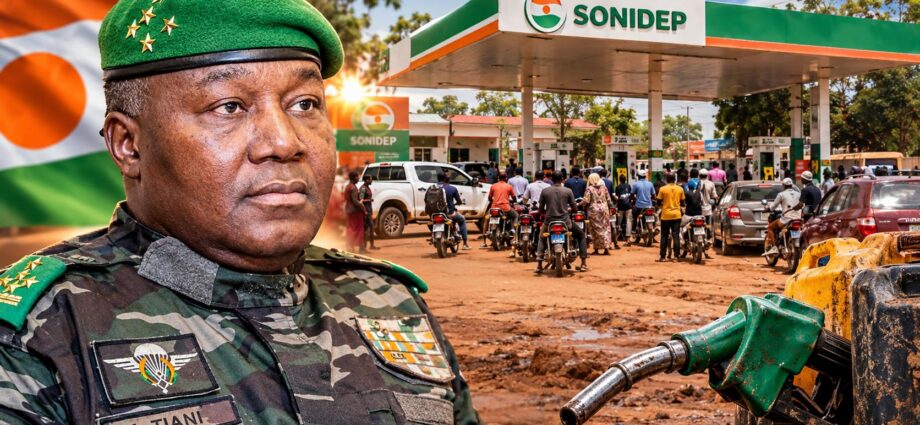
In Niger today, an intriguing paradox is unfolding: fuel queues are visible on the streets, yet they seem to vanish from official statements. This discrepancy raises profound questions about the nature of governance and communication in times of strain.
The roots of the denial
Behind the scenes, the dynamics are complex. The military authorities, who have consistently projected an image of resilience and sovereignty, appear reluctant to acknowledge any shortfall. On state television, the situation is dismissed as a mere rumor, with officials insisting that no part of the country is affected. This stance, however, clashes with the lived experiences of citizens who wait for hours at filling stations.
A regional pattern of resistance
This scenario is not unique to Niger. Across the Sahel Alliance states Mali, Burkina Faso, and Niger military governments face a similar challenge: how to reconcile difficult realities with a narrative that emphasizes progress and self-reliance. In Mali, for instance, the authorities have publicly recognized supply disruptions, with President Assimi Goïta acknowledging months of turbulence while claiming that measures prevented major shortages. Such admissions highlight the tension between transparency and image management.
Lessons unheeded
Mali’s experience could have served as a cautionary tale for Niamey. A fuel crisis does not disappear simply because it is not officially labeled as such. Its effects are felt in transport, commerce, agriculture, and everyday life. The Nigerien government has long touted low fuel prices, but affordability means little when supply is unreliable. Cheap fuel that is hard to find ultimately imposes heavy costs on the entire economy.
The transparency imperative
The core issue is not the terminology used but the commitment to honesty. If there is no shortage, the authorities could easily publish data on stock levels, available volumes, and distribution. Numbers, after all, carry more weight than slogans. The problem arises when official communication contradicts what people see daily.
The cost of mistrust
In the Sahel, populations already grapple with economic, security, and energy challenges. Governments often denounce disinformation campaigns, underscoring the centrality of narrative control. Yet the first casualty of a poorly explained crisis is public trust. Niger can maintain that no shortage exists, but as long as queues persist and citizens struggle to find fuel, the question lingers: is this truly a rumor, or a reality that the authorities are unwilling to confront?
By Alasane OUEDRAOGO — Journalist
Comments are closed, but trackbacks and pingbacks are open.