From self-sufficiency to emergency imports: A paradox in Niger’s fuel strategy
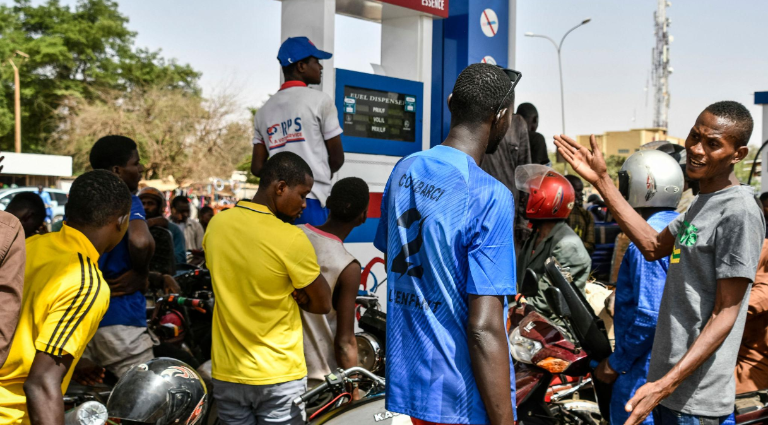
The arrival of 53 Algerian tanker trucks at Agadez’s SONIDEP depot last November wasn’t just a delivery of fuel—it was a policy reversal. With Algeria as the supplier, Niger, a country with active refineries, now finds itself depending on foreign deliveries to meet domestic fuel demand. This shift exposes deep flaws in the national petroleum supply chain, raising urgent questions about storage management, financial oversight, and strategic planning.
How did a nation producing millions of liters of gasoline daily resort to imports to sustain its own market? The paradox deepened when the shipment was celebrated as a diplomatic victory, while behind the ceremony lay a stark reality: the country’s ability to secure its energy independence is under severe strain.
Production data reveals troubling trends in Niger’s fuel availability
The Société de Raffinage de Zinder (SORAZ) has long been a cornerstone of Niger’s energy sector. In 2023, the refinery produced 365.95 million liters of premium gasoline, delivering 328.25 million liters to SONIDEP and exporting the remaining 37.69 million liters. But by 2024, the surplus vanished. The entire 345.34 million liters produced were diverted to SONIDEP, and by early 2025, production of 56.88 million liters matched deliveries exactly. No exportable surplus remained.
This disappearance coincides with an official declaration from SORAZ stating that gasoline and LPG were entirely reserved for domestic consumption, while diesel continued to be exported. The implication? While Niger still exports some petroleum products, the nation’s ability to build national reserves for future shortages has been compromised. The data signals a system stretched to its limits, with no buffer left for emergencies.
Financial troubles at SONIDEP cast shadow over fuel distribution
At the heart of the crisis is SONIDEP, the state-owned entity responsible for fuel distribution. Reports indicate a debt exceeding 418 billion West African CFA francs—an amount that calls into question the company’s fiscal health and operational integrity. How can an agency receiving hundreds of millions of liters annually accumulate such a massive deficit? Are sales fully collected? Are receivables from distributors and customers under control? Most critically, what portion of revenue actually reaches the company’s coffers?
These financial irregularities are not just numbers on a balance sheet—they directly affect the country’s ability to stockpile fuel and respond to shortages. Without transparent auditing and accountable management, even adequate production levels fail to translate into reliable national supply.
Did national reserves become a cash reserve instead of a safety net?
Another troubling possibility emerges: the liquidation of strategic reserves. According to reports in petroleum industry circles, SONIDEP may have sold portions of emergency fuel stocks at preferential prices to generate quick cash. Worse still, these actions could have undermined planned maintenance cycles for SORAZ, jeopardizing the refinery’s long-term operability.
A refinery cannot function without planned shutdowns for upkeep. Similarly, a country cannot claim energy sovereignty if it depletes its precautionary reserves without a credible replenishment strategy. Were these reserve reductions temporary measures or a desperate response to structural cash flow problems? The lack of clarity around contracts, pricing, and beneficiary identities only deepens the uncertainty.Nigeria’s informal fuel trade collapse leaves Niger exposed
An often-overlooked factor is the collapse of informal fuel supply from Nigeria. For years, a substantial portion of Niger’s fuel market was met by smuggled gasoline and diesel entering from its southern neighbor. The removal of Nigerian fuel subsidies in 2025 made cross-border imports less profitable, and stricter border enforcement reduced smuggling flows.
By March 2025, SONIDEP reported receiving only 25 tankers per day from SORAZ, despite national demand estimated at 50 tankers. Officials explicitly cited the decline in illegal imports as a key driver of the shortage. The market had become dependent on these parallel circuits—illicit but effective. Their collapse exposed the absence of sufficient formal import capacity and storage infrastructure.
This raises a critical question: Why were substitute supply channels not developed proactively? Why weren’t storage and import capabilities expanded in anticipation of this shift?
Political considerations: Sharing fuel with Mali while reserves dwindle
In November 2025, Niger sent approximately 82 tankers of fuel to Bamako during a severe blockade imposed by armed groups in Mali. While the act demonstrated regional solidarity, it also triggered sanctions against truckers who refused government-mandated transport. Fourteen operators lost their hydrocarbon transport licenses, and 19 drivers had their licenses revoked.
The timing of this operation raises serious concerns. At a moment when Niger was exporting fuel to support Mali’s besieged market, was there sufficient strategic reserve in place to protect domestic supplies? Or was this a miscalculation that further strained already fragile reserves?
The contrast is striking: transporters penalized for refusing to send fuel to Mali, while a convoy of Algerian tankers was received with full official honors in Agadez. Both events highlight a single, unresolved issue: What is Niger’s actual national strategy for securing fuel supply?
Is Algeria a strategic partner—or a last-resort supplier?
The October 2026 government decision to ban gasoline and diesel exports reflects the urgency of the situation. The arrival of 1.65 million liters from Algeria, while welcomed, cannot substitute for a long-term energy security framework. Proximity and existing trans-Saharan cooperation make Algeria a natural partner, but this emergency delivery underscores a deeper failure: Niger’s inability to manage its own supply chain reliably.
What remains to be seen is whether recent control measures on stock levels and deliveries will restore balance. Or whether they represent merely a temporary fix masking systemic weaknesses.
An independent audit is long overdue across the entire chain
This crisis demands more than policy meetings and public announcements. It demands transparency. Where did the surplus from previous years disappear? What is the actual level of national strategic reserves today? Why did the gasoline shortfall surge from 47.25 million liters in 2024 to 196.62 million liters in the first eight months of 2026? What is SONIDEP’s true financial position? Are maintenance funds for SORAZ intact? Under what financial and logistical terms was the Algerian fuel procured, and what losses might this transaction incur?
These are not rhetorical questions. They are demands for accountability. Niger is not devoid of oil or refining capacity. It has resources, infrastructure, and market experience. Yet in 2026, its government must turn to a foreign supplier to stabilize an internal crisis.
The real scandal, if proven, is not the act of importing fuel. It is the inability to explain how a producer nation allowed such a gap to develop between its output, its reserves, and the needs of its people. Energy sovereignty isn’t measured by refinery output alone—it’s proven by consistent, transparent supply. And right now, that foundation is cracking.
Comments are closed, but trackbacks and pingbacks are open.