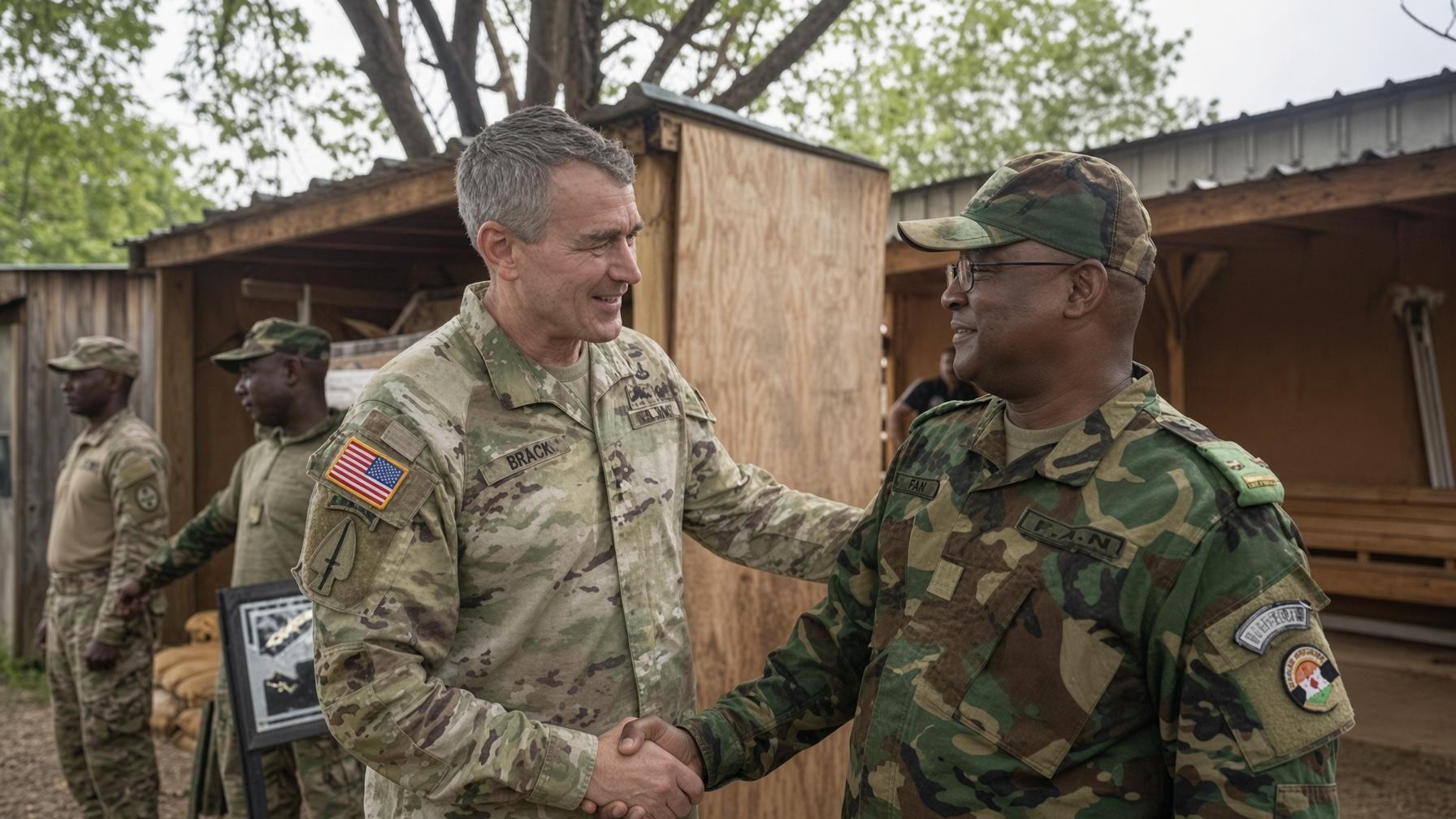
The abrupt downfall of one of Niger’s most powerful generals isn’t just a military shake-up—it’s sending shockwaves through everyday life, business operations, and the national economy. General Moussa Salaou Barmou, once a central figure in Niamey’s ruling junta, has been placed under house arrest following his removal as Chief of General Staff of the Niger Armed Forces (FAN) on September 11, 2026. His sudden disgrace comes just two weeks after a failed mutiny at Air Base 101 in late August, and while no direct link has been proven, suspicion alone was enough to trigger swift punitive action.
Economic uncertainty deepens amid military infighting
As internal power struggles intensify within Niger’s military leadership, the ripple effects are being felt far beyond barracks and command centers. Investors—already wary since the 2023 coup that ousted President Mohamed Bazoum—are now pulling back further. Local businesses report delays in cross-border trade, disrupted supply chains, and heightened operational risks due to unpredictable security directives. The Central Bank of West African States (BCEAO) has noted declining foreign reserves and capital flight, directly tied to perceptions of political instability at the highest levels of government.
Citizens bear the brunt of regime paranoia
For ordinary Nigeriens, the consequences are immediate and tangible. Increased military checkpoints, arbitrary detentions, and communication blackouts have become more frequent since the August unrest. Public services are strained as state resources are diverted toward internal surveillance and loyalty enforcement rather than infrastructure or social programs. In Niamey’s markets and neighborhoods, fear of association—even by rumor—with disgraced figures like Barmou has led to self-censorship and social fragmentation.
From coup architect to cautionary tale
General Barmou played a key role in the July 2023 overthrow of President Bazoum and was long seen as the operational backbone of the junta, commanding elite special forces and shaping security policy. Yet his removal—replaced by Army Chief General Mamane Sani Kiaou under decree by junta leader General Abdourahamane Tiani—reveals a regime increasingly consumed by internal distrust. Analysts warn this pattern of purging former allies signals not strength, but systemic fragility.
A self-destructive cycle with real costs
The junta’s reliance on Russian-backed Africa Corps units to quell the August mutiny only deepened divisions within Niger’s own security apparatus. Now, by sidelining a top commander without trial or transparency, the regime is fueling a climate of fear that undermines military cohesion and public trust alike. History shows that regimes born from coups often turn on their founders—but in Niger’s case, the collateral damage extends to economic stagnation, investor flight, and daily hardship for millions who never chose this path.
Comments are closed, but trackbacks and pingbacks are open.