New power game unfolds as regional players reposition around Niger
The Sahel is witnessing a rapid reshaping of alliances, with Niger emerging as the new focal point of a high-stakes diplomatic and military jostling. In the span of just days, key actors have repositioned themselves, signaling a broader contest for influence that extends well beyond the country’s borders.
On November 1, 2026, Niger’s Prime Minister Ali Mahaman Lamine Zeine traveled to Benghazi, Libya, where he met with Saddam Haftar, deputy commander of the Libyan National Army under Marshal Khalifa Haftar. The meeting culminated in a strategic cooperation agreement, though its specific contents remain undisclosed. This move underscores Niamey’s push to diversify its security and political partnerships in an increasingly volatile neighborhood.
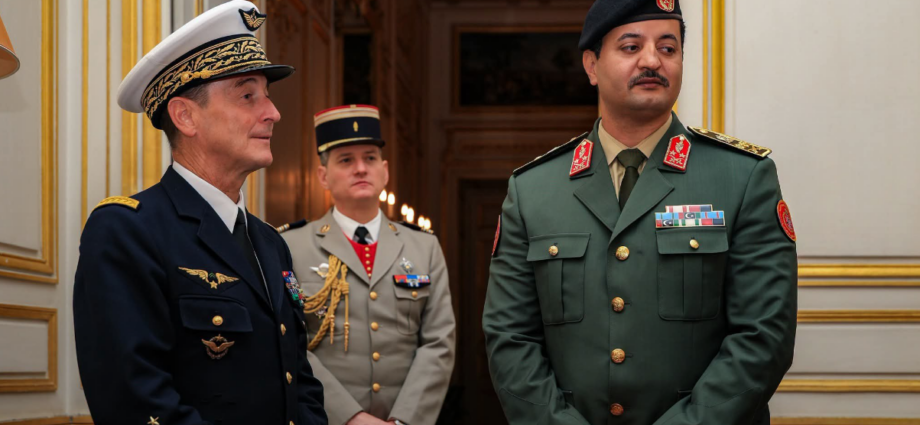
Two days later, General Khaled Haftar, Chief of Staff of the Libyan National Army’s eastern forces, was received in Paris for talks with France’s Chief of the Defence Staff, General Fabien Mandon. While details were scarce, discussions reportedly centered on military cooperation, intelligence-sharing and training programs, highlighting France’s continued engagement despite its reduced presence across the region.
What does this timing reveal? The synchronization of these diplomatic and military exchanges suggests a deliberate strategy to redefine the Sahel’s geopolitical landscape, with Niger at its core. While no single alliance is being forged against the country, the flurry of activity reflects a broader recalibration of regional power dynamics.
Algeria doubles down on Sahel strategy amid rising competition
In parallel, Algeria has intensified its diplomatic outreach, sending Foreign Minister Ahmed Attaf to N’Djamena on November 3 as a special envoy of President Abdelmadjid Tebboune. The visit, which included a meeting with Chadian President Mahamat Idriss Déby Itno, focused on bilateral cooperation, security challenges and the implementation of 27 previously signed agreements. The timing is significant—Algiers is seeking to assert its role as a stabilizing force in the region while countering the growing influence of other actors.
This push comes as Niger-Chad relations remain strained, with Niamey alleging—without public evidence—Chadian involvement in a destabilization plot allegedly backed by France. Chad and France, for their part, have moved to repair military and diplomatic ties following the collapse of a 2024 defence cooperation agreement. For Algeria, strengthening ties with Chad is not just about bilateral security—it’s about maintaining leverage over the evolving dynamics around Niger and Libya.
UAE and Haftar’s camp: A Libyan-Egyptian axis with regional implications
Abou Dhabi’s long-standing ties with the Libyan National Army, particularly under Marshal Haftar’s command, add another layer of complexity. While the UAE’s current level of military support remains unclear, its historical alignment with the eastern Libyan faction has raised concerns in Algiers. Algeria views Libya’s stability as directly tied to its own national security and is wary of any foreign military presence near its southern borders.
The Haftar camp’s push into southern Libya—particularly in the Fezzan and along key corridors connecting to Niger—further intensifies Algeria’s strategic concerns. These areas are critical for trade, energy flows, population movements, and illicit trafficking networks. With Benghazi and Niamey deepening cooperation, Algiers sees a potential corridor for Haftar to expand influence southward, prompting a more assertive Algerian posture.
Morocco-Algeria rivalry spills into the Sahel
The North African rivalry between Algeria and Morocco has spilled beyond the Maghreb, influencing Sahelian geopolitics. Since the break in relations in August 2021, the two countries have pursued divergent strategies—Algeria consolidating its historical role in the Sahel, while Morocco expands its footprint across multiple Sahelian states.
Observers note that General Khaled Haftar’s recent visit to Morocco (October 11–15, 2026), where he met General Mohammed Berrid, Inspector General of Morocco’s Royal Armed Forces, has not gone unnoticed in Algiers. This alignment—combined with Morocco’s growing ties to the UAE and Haftar’s forces—raises questions about emerging regional convergences that could marginalize Algeria’s influence.
While not a formal bloc, these overlapping relationships suggest a fluid network of alliances whose interests may align on certain fronts—particularly in shaping the future of Libya and the Sahel.
Niger: The new strategic pivot in the Sahara-Sahel zone
Niger’s central position—geographically, economically, and politically—has made it a coveted partner in this evolving landscape. Bordering seven countries, including Libya, Algeria, Mali, and Burkina Faso, it serves as a crossroads between North Africa and Sub-Saharan Africa. Its vast uranium reserves and role as a transit hub for trade and migration amplify its strategic value.
On October 25, 2026, the Algerian Parliament approved the deployment of military forces to Niger, reflecting a major shift in Algiers’ security posture. Coupled with the Benghazi-Niamey cooperation agreement and Algeria’s outreach to Chad, this move signals Niamey’s strategy to avoid overreliance on a single partner and instead cultivate multiple alliances.
The question of France remains. Though Paris has significantly scaled back its military footprint in the Sahel, it continues to engage with regional actors. The meeting between General Haftar and France’s top military official in Paris underscores ongoing efforts to maintain influence, even if it no longer dominates the regional security agenda.
What emerges from these developments is a Sahel no longer defined solely by counterterrorism. It is now a battleground for control over trade routes, energy resources, political allegiances, and regional influence. In this rapidly shifting environment, Niger has moved from being a crisis-hit nation to a pivotal player in the remaking of Sahel-Saharan geopolitics.
Key takeaways
- Niger as a diplomatic crossroads: Its central location and resources make it a key prize for regional powers.
- Algeria’s counter-move: Algiers is reinforcing its presence through military agreements and regional partnerships.
- Libya-EAU-Morocco axis: Haftar’s camp, backed by Abu Dhabi and Morocco, is expanding influence toward the Sahel.
- France’s receding but persistent role: Paris maintains channels with key actors, though with reduced direct military engagement.
- A new Great Game: The Sahel is becoming a theatre of competition, where old alliances are tested and new ones formed.
Comments are closed, but trackbacks and pingbacks are open.