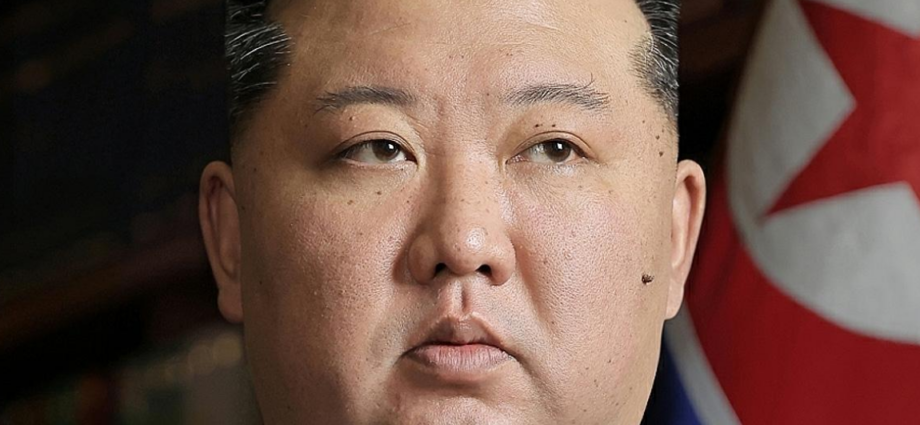
Unverified claims of Kim Jong-un’s severe health crisis
North Korea’s supreme leader Kim Jong-un is reportedly in critical condition after suffering a suspected cerebral hemorrhage, according to unverified claims circulating online. Rumors suggest he was rushed to China for emergency medical treatment at Beijing’s prestigious Peking Union Medical College Hospital. However, no official confirmation has been issued by authorities in Pyongyang or Beijing.
These claims emerged from social media posts, particularly from Chinese dissident Wanjun Xie, who alleged Kim Jong-un collapsed following a severe stroke. The alleged transfer to China is said to be motivated by insufficient medical facilities in North Korea. Despite the rapid spread of these assertions, no independent verification has been made public to date.
Official silence fuels speculation amid conflicting reports
The opacity surrounding North Korea’s leadership complicates efforts to verify health-related claims about its top officials. Any unusual absence from public events by Kim Jong-un typically triggers immediate speculation about his condition and the regime’s stability. However, the absence of official statements does not confirm hospitalization or a coma—prudent reporting requires treating these claims as unverified.
On October 20, state-run media in Pyongyang released photos reportedly showing Kim Jong-un visiting a clothing and footwear exhibition the previous day, accompanied by his daughter Ju-ae. While this provides a rare public glimpse at his recent activities, it does not independently validate his medical condition or confirm the date of the images.
Health concerns around Kim Jong-un: a pattern of speculation
Speculation about Kim Jong-un’s health is not new. Since assuming power in 2011, international observers have frequently scrutinized his physical appearance, weight, and lifestyle—factors often linked to cardiovascular risks in South Korean intelligence assessments. Yet, no reliable evidence connects these observations to a recent cerebral hemorrhage.
The historical context adds to the intrigue. Kim Jong-un’s father, Kim Jong-il, died in 2011 after years in power, and his grandfather, Kim Il-sung—the regime’s founder—passed away in 1994. While these events may fuel theories about hereditary health risks, they do not confirm any current medical emergency involving Kim Jong-un.
Potential political fallout in North Korea’s tightly controlled regime
A prolonged absence or incapacitation of Kim Jong-un could plunge North Korea into political uncertainty, given its highly centralized power structure. His sister, Kim Yo-jong, holds significant influence within the regime, while his daughter Ju-ae has increasingly appeared alongside him at official events—raising questions about succession without definitive answers.
The stakes are high for regional powers. South Korea, China, the United States, and Japan will closely monitor developments, particularly concerning North Korea’s nuclear program and regional security. For now, however, the critical distinction remains: the reported cerebral hemorrhage, coma, and medical transfer to China remain unverified. Until credible evidence emerges, these claims must be treated as speculative, not factual.
Comments are closed, but trackbacks and pingbacks are open.