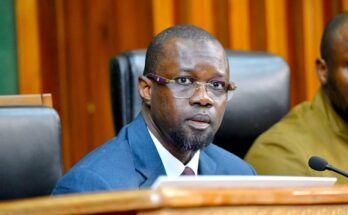
As Senegal marks a historic milestone, the nation’s political landscape pauses to celebrate Abdoulaye Wade, the former President who turns 100 today. Ousmane Sonko, President of the National Assembly and leader of the PASTEF movement, delivered a heartfelt tribute to the elder statesman, whom he described as a towering figure in the country’s democratic journey.


In a poignant message shared on the platform X, Sonko reflected on Wade’s century-long legacy, framing it as “a century of meaningful life”. He acknowledged the challenge posed by the coincidence of this centenary with the Tabaski celebration, which limited the scope for grand national festivities. Yet, he insisted that the true commemoration unfolded in the quiet, heartfelt gestures of millions of Senegalese citizens.
The tribute took a deeper turn as Sonko recounted Wade’s pivotal role in shaping Senegal’s democratic foundations. He highlighted the former president’s decades-long political career, from his entry into the National Assembly in 1978 to the historic 2000 electoral transition that marked Senegal’s first peaceful transfer of power. “Abdoulaye Wade stands as one of the most illustrious architects of Senegalese democracy,” Sonko declared.
Beyond politics, Sonko shared personal reflections, recalling moments of mentorship and trust bestowed upon him by Wade. He recounted how, in 2017 and again in 2019, the elder leader extended gestures of confidence that transcended mere political alliances. “He placed on my path a rare and precious gift: not the transfer of power, but the transmission of trust—something only great leaders understand,” Sonko remarked.
Concluding his message, the National Assembly President invoked a blessing for Wade, whom he affectionately addressed as “his grandfather.” He prayed for the former president’s eternal protection under the divine, while urging Senegal to continue its pursuit of progress without forsaking its core values. “May the nation, as he always envisioned, move forward in modernity while preserving its guiding principles,” Sonko expressed.