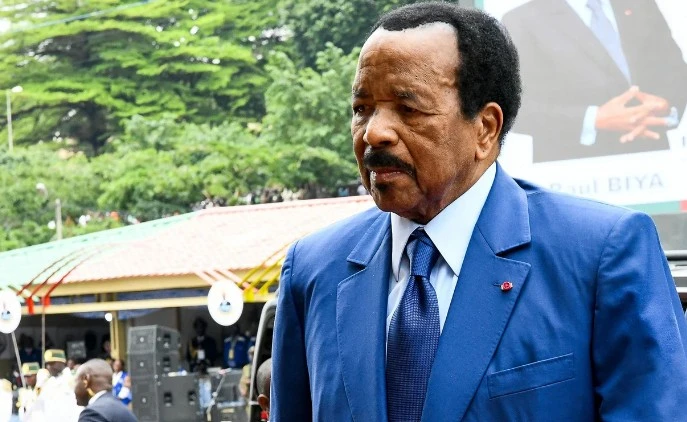
Forty-nine days. That is how long Cameroon’s President Paul Biya has remained outside the country—matching his longest absence in 2024. Departing on June 7 for what was initially described as a private trip to Europe, the 93-year-old leader has not appeared in public since. Within newsrooms in Yaoundé, the ticking clock is amplifying concerns among observers and citizens alike.
An absence reminiscent of 2024
The president is reportedly staying at a Geneva hotel, just as he did last year. The government swiftly moved to dismiss speculation, with Communications Minister René Emmanuel Sadi stating on June 18 that Paul Biya was not hospitalized in a Geneva clinic.
Yet, no recent images or official footage have emerged to validate these claims. The absence of visual proof only deepens the skepticism surrounding the official narrative.
On Sunday, during a segment on Droit de Réponse broadcast on Equinoxe TV, an RDPC party activist, Lucien Bidima, asserted he had personally visited the InterContinental Hotel in Geneva and witnessed the president in “excellent health,” actively engaged. However, no photographs or videos accompanied his statement, leaving many unconvinced by what appears to be a carefully staged reassurance.
Chantal Biya’s rising influence and a looming constitutional gap
What sets this absence apart is the growing role of First Lady Chantal Biya. Multiple reports suggest she is increasingly involved in state affairs, with her name linked to key government appointments. Her consistent presence alongside the president during Swiss visits fuels speculation that access to the head of state is now mediated through her.
Compounding the unease is Cameroon’s lack of a vice president—a position that has remained vacant throughout Paul Biya’s tenure. In the event of a power vacuum, the Senate President, Aboubakary Abdoulaye, is constitutionally required to step in. Yet, this contingency has never been tested in reality, and political analysts warn that the current climate of uncertainty is far from reassuring.
As the days pass without clarity, the nation remains suspended between quiet diplomacy and mounting public anxiety. Whether this prolonged absence signals a deeper shift in the country’s leadership or merely another chapter in an extended presidency remains to be seen—but the tension is palpable.