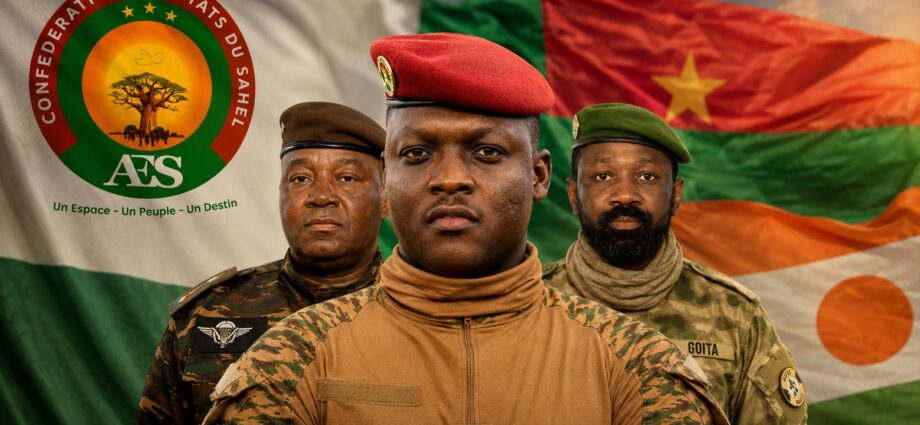
The military regimes in Mali, Burkina Faso, and Niger once vowed to reclaim sovereignty by expelling French and Western forces. Yet the arrival of Russia’s Africa Corps—officially tied to the Wagner paramilitary network—has quietly shifted their dependence from Paris to Moscow. The result: a steep price paid in currency, lives, and national credibility.
From rhetoric to reality: sovereignty at a price
After coups led by Colonel Assimi Goïta in Mali, Captain Ibrahim Traoré in Burkina Faso, and General Abdourahamane Tiani in Niger between 2021 and 2023, the trio of juntas framed their revolts as acts of decolonization. The withdrawal of French troops was hailed as liberation from neocolonial influence and a stand against jihadist expansion.
In September 2023, the three nations formalized their alliance under the Sahel States Alliance (AES), a pact promising collective defense and shared resistance to foreign interference. While political messaging aimed to rally public support, the operational consequences tell a different story.
Mali’s bill: over $1 billion for Russian boots on the ground
Mali bears the heaviest financial burden. Since 2021, Bamako has transferred more than one billion dollars to Wagner contractors—now rebranded as the Africa Corps—at an estimated monthly outlay of ten million dollars. Far from mere advisory roles, Africa Corps operatives have been documented fighting alongside Malian forces in frontline engagements.
No large-scale mining concessions have been officially granted in return, according to field investigations by regional security analysts. That leaves Mali’s treasury bearing the full weight of the arrangement without visible economic return.
Security gains elusive as insurgents regroup
Despite a Russian force estimated between 1,000 and 1,500 personnel, progress on the battlefield remains limited. Reports indicate Africa Corps units have struggled to secure key areas. After withdrawing from the Kidal region in early 2026, rebel factions reclaimed strategic localities such as Tessalit, Anéfis, and Aguelhok. In southern zones near Gao and Ber, state control continues to erode as rural communities slip beyond government reach.
Analysts at the Montaigne Institute have begun warning that the current trajectory may require a future political negotiation to stabilize large parts of the country.
Protectors or patrons? The illusion of independence
Some think tanks now describe the Sahel regimes as moving toward a status of ‘de facto protectorates,’ where military sovereignty has been traded for financial and operational reliance on Moscow. While the juntas have diversified suppliers—turning to Turkey, Iran, and China for drones, weapons, and training—the core reality remains unchanged: battlefield control still depends on foreign fighters.
The Africa Corps may not formally occupy state territory like colonial armies once did, but its role increasingly resembles that of an expeditionary force securing allies rather than empowering them.
Lessons from history: when foreign saviors become foreign masters
This pattern echoes Cold War interventions across Africa, from Angola to Ethiopia, where Soviet and Cuban support propped up regimes that later collapsed when external funding dried up. The Sahel’s current alignment with Russia risks repeating that cycle: dependence on a new patron may deliver short-term security, but it could ultimately weaken long-term stability when Moscow’s priorities shift or costs rise.
Can the Sahel break the cycle?
The central question facing the region is no longer about rejecting the West—it is whether the Sahel’s military rulers can build genuinely autonomous defense institutions instead of swapping one foreign master for another. Time will reveal whether Moscow’s cash and guns can secure lasting sovereignty or merely deepen a cycle of external control.
Comments are closed, but trackbacks and pingbacks are open.