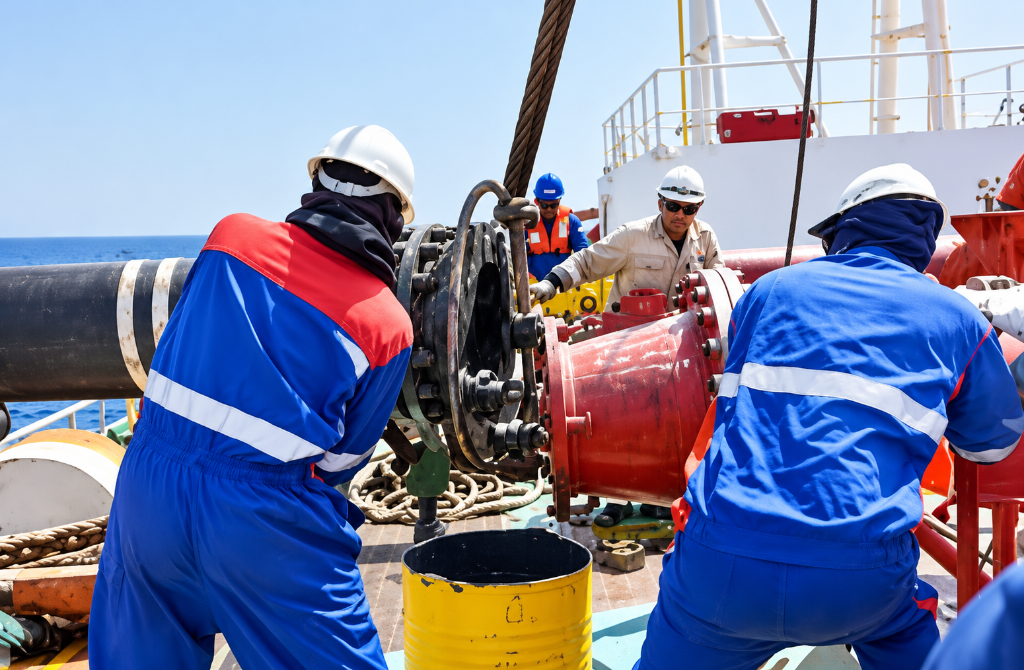
In October 2026, Benin will send its first 250,000-barrel crude cargo to international buyers, and the reaction has been swift. From Cotonou’s business districts to coastal communities near Sèmè, the question on many lips is not whether the shipment will happen, but what it will leave behind. The relaunch of the offshore Sèmè field has triggered a lively public conversation about revenue management, environmental risk and whether a single cargo can truly signal an economic turning point.
Why this first shipment is more than a commercial transaction
For years, Benin’s economic identity has rested on trade corridors and agriculture. The return of crude exports adds a new layer. The 250,000-barrel cargo is small by global standards, yet it functions as a calling card. Refiners and trading houses will test the crude’s density and sulphur content, then compare it with benchmarks such as Brent. The results will shape future pricing and buyer interest.
Beyond the laboratory, the sale brings immediate financial oxygen. Foreign exchange inflows can steady the balance of payments, while production-sharing rules guarantee the state a direct slice of the volumes. A new stream of predictable revenue also strengthens Benin’s standing with lenders and rating agencies — a buffer in a world of volatile commodity prices.
What the public debate reveals
Not everyone is celebrating. Civil society groups and local officials have raised pointed questions about transparency. They point to the fate of past extractive revenues in other countries and ask how Benin will avoid the same traps. The government’s answer has been to emphasise regulatory oversight and earmarked development funds for education, health, roads and agriculture. Yet the debate continues, and it is shaping expectations.
Residents near the coastal zone want to know about jobs and environmental safeguards. Maritime service firms, construction companies and logistics providers have already begun to feel the ripple effects of the relaunch, but the scale of local hiring remains a matter of public scrutiny. The government says subcontracting will transfer skills and create qualified positions for young Beninese, though critics urge faster and more visible results.
Linking Sèmè to the wider energy map
Benin’s oil comeback does not happen in isolation. The country also hosts the maritime terminal for the pipeline that carries crude from Niger’s Agadem fields to the port of Sèmè-Kpodji. The two projects are legally and operationally separate, but the synergy is hard to miss. Managing transit infrastructure has sharpened local technical expertise, and that know-how now supports the handling of Benin’s own offshore resources.
This dual role — producer and transit hub — gives Benin more visibility in regional energy discussions. It also raises the stakes. Any operational hiccup or governance failure could damage that reputation, which is why officials are keen to present Sèmè as a model of rigorous management.
What comes after the first cargo
The October shipment is not an end point. It is the opening chapter of a longer industrial strategy. Future cargoes will depend on reservoir performance, investment in extraction infrastructure and the pace of offshore technology upgrades. The government’s stated goal is to use this exhaustible resource as a catalyst for structural transformation, not as a short-term windfall.
For now, the reactions paint a picture of cautious hope. The 250,000 barrels may be modest, but the debate they have sparked is anything but. How Benin manages the next steps — from revenue transparency to local content — will determine whether this first cargo is remembered as a footnote or a foundation.
Comments are closed, but trackbacks and pingbacks are open.