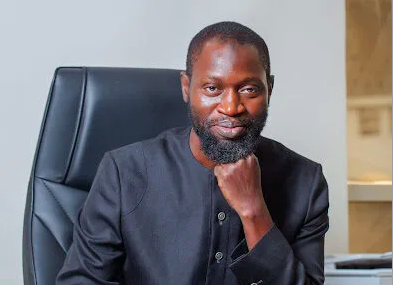
The Managing Director of Senegal’s State Property Management and Development Company (SOGEPA), Elimane Pouye, has strongly contested assertions that former Prime Minister Ousmane Sonko is the sole beneficiary of political funds in the country’s recent history.
In a sharply worded opinion piece, Mr. Pouye challenges the narrative that suggests Sonko’s case is unprecedented. He argues that the claim lacks factual grounding and urges a more nuanced examination of budgetary records from successive governments rather than relying on political rhetoric.
Budget records reveal no special treatment
Mr. Pouye emphasizes that the budgets of the Prime Minister’s Office for 2023, 2024, and 2025 show a consistent allocation structure. Any variations, he notes, are largely due to administrative reorganizations rather than differences in funding mechanisms.
He highlights what he considers the real novelty in the debate: the public acknowledgment by Ousmane Sonko himself regarding the existence of political funds within the Prime Minister’s budget, including details on their allocation and usage.
This admission, according to Pouye, raises a critical question: if such funds existed in previous administrations, to what extent were they utilized by former Prime Ministers and for what purposes? He contends that this line of inquiry is far more substantive than debates over daily allocations or periodic disbursements.
Call for evidence-based debate
The SOGEPA chief advocates for a transparent and fact-driven discussion on the use of public funds. He asserts that political financing, like any public resource, should be subject to democratic scrutiny—but only when grounded in verifiable data rather than speculative claims.
In his piece, Pouye also notes that both the majority parliamentary bloc and the Head of State have publicly addressed the issue. He encourages a structured, adversarial debate among stakeholders, viewing it as essential for strengthening Senegal’s democratic institutions and upholding the rule of law.
He concludes by defending the vibrancy of Senegal’s institutional discourse while warning against attempts by certain political actors to revive old divisions or derail the conversation from its core issues.
Comments are closed, but trackbacks and pingbacks are open.