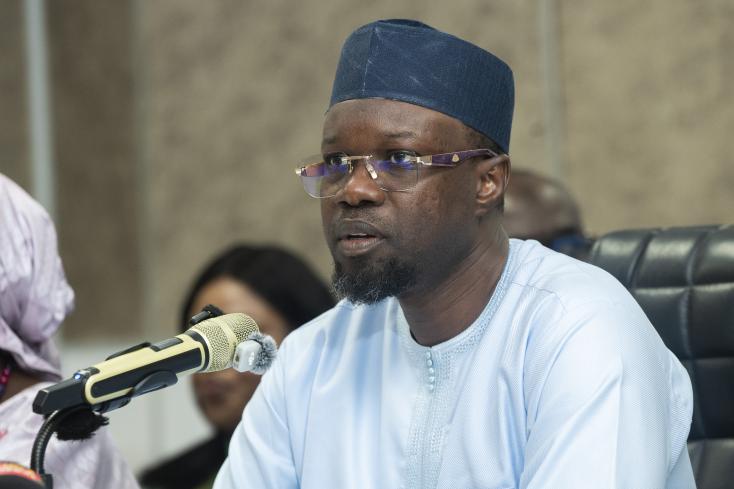
Ousmane Sonko, the influential leader of the Pastef party, recently sent shockwaves through Senegalese politics by declaring his party’s capacity to trigger a government collapse through a parliamentary censure motion. During a press briefing, he underscored the numerical strength of his party in the National Assembly, positioning it as a formidable force capable of reshaping the country’s political landscape.
This bold statement has ignited intense discussions about the potential consequences for Senegal’s governance, raising questions about the stability of current leadership and the shifting dynamics within the legislative body. As the nation watches closely, the possibility of a political upheaval looms large, with Sonko’s announcement serving as a catalyst for broader debates on democratic processes and institutional balance.
The timing of Sonko’s declaration has drawn particular attention, as it coincides with a period of heightened public scrutiny over governance issues in Senegal. His assertion that his party could act “as early as tomorrow” underscores the urgency and seriousness of the matter, leaving many to ponder the implications for both the ruling administration and the broader political ecosystem.
How a censure motion could reshape Senegal’s political future
A motion of censure, if successfully passed, would require a majority vote in the National Assembly—a threshold Sonko claims his party is well-positioned to meet. This parliamentary maneuver, though rare, carries immense weight, as it could lead to the resignation of the government or even trigger early legislative elections. The stakes are high, and the political arena is abuzz with speculation about the potential fallout.
Sonko’s party, Pastef, has positioned itself as a vocal advocate for reform, and its growing influence in the Assembly reflects a broader shift in the country’s political climate. The proposed motion of censure is not just a tactical move but a statement of intent, signaling that opposition forces are ready to challenge the status quo with decisive action.
What happens next?
The coming days and weeks will be critical in determining whether Sonko’s threat of a government collapse materializes. Political observers are closely monitoring the Assembly’s proceedings, as the balance of power remains precarious. If the motion gains traction, it could set off a chain reaction of political realignments, reshaping alliances and priorities within the legislature.
For now, the nation remains on edge, with citizens and analysts alike speculating about the potential outcomes. One thing is clear: Senegal stands at a crossroads, and the actions taken in the National Assembly in the coming days could redefine the country’s political trajectory for years to come.