In the bustling streets of Dakar, K. blends seamlessly into the crowd. He walks briskly, phone in hand, exchanging greetings with acquaintances. Nothing about his appearance suggests anything unusual. Yet every move is deliberate. “Here, you have to know how to protect yourself,” he admits.
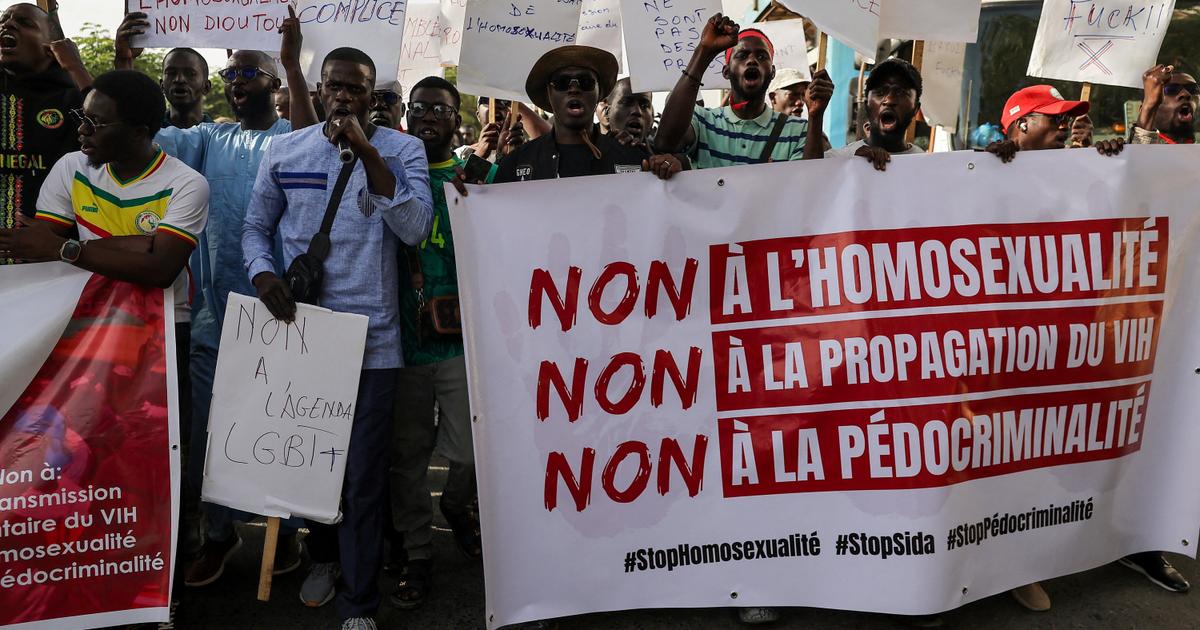
A French citizen in his thirties, residing in Dakar, was arrested in February during a wave of crackdowns targeting individuals suspected of homosexuality. The arrest came at a critical time—just as parliament was debating a new law passed in early March, which now imposes five to ten years in prison for same-sex relations.
He faces charges including “unnatural acts,” criminal association, money laundering, and attempted transmission of HIV. Since the law’s adoption, reports indicate a surge in arrests, with dozens recorded daily.
France has publicly reaffirmed its commitment to the universal decriminalization of homosexuality and expressed support for those affected by Senegal’s new legislation. Diplomatic sources confirm that the French embassy in Dakar is closely monitoring the situation, with consular officials visiting the detained citizen.
K. is gay. In a country where deep-seated homophobia persists, simply living an authentic life is far from straightforward.
In Senegal, resistance doesn’t always manifest in protests or public declarations. More often, it unfolds in subtle, almost imperceptible ways—in what is said, and especially in what is left unsaid.
In his neighborhood, K. has learned to decipher hidden meanings in silences, glances, and innuendos. “You quickly learn what you can and cannot say.” Like many, he adapts. He compartmentalizes. One life at home, another beyond its walls. Homosexuality remains heavily stigmatized, with real consequences for those who dare live openly.
In a discreet apartment in Dakar, M. speaks in hushed tones, instinctively glancing toward the door. “You can never let your guard down,” he remarks. His story is far from unique—and that’s precisely the problem.
“She won’t judge”
M.’s daily life is governed by caution. At work, certain topics are avoided. Within his family, he adopts a carefully constructed persona. “I know what I can say and to whom.” This mental calculus has become second nature.
Yet in safer spaces, voices find a way to emerge. Small groups gather to share experiences, discuss rights, justice, and dignity—not always openly, but enough to keep hope alive.
For M., resistance is not about grand gestures. It lies in refusing to accept his life as illegitimate.
Awa, a nurse, is not directly affected by the issue. Yet in her health clinic, she has made a choice: she refuses to judge. “I’ve seen patients too afraid to even walk through the door,” she says. Some arrive too late. Others suppress the truth—complicating treatment. She listens carefully, weighs her words, and adapts. She doesn’t see herself as an activist, but in today’s climate, her stance is far from neutral.
Elsewhere in the city, I. remembers a neighbor accused of homosexuality. Rumors spread rapidly, followed by violence: insults, threats, social ostracization. “That’s when I realized it could happen to anyone,” he reflects. Since then, he has become more vigilant—not just for himself, but for others. He listens differently. And sometimes, he intervenes: a remark, a question—not confrontational, but meaningful.
Resistance in the shadows
Aminata, a student with no direct involvement in the issue, refuses to stay silent. One day, after hearing violent remarks, she calmly responded, “Everyone deserves to live as they choose.” The stunned silence that followed left a mark on her. “It unsettled people.” Such moments don’t change everything—but they chip away at ingrained prejudice.
The writer Fatou Diome often reflects on how societies evolve—not in leaps, but in quiet shifts. Thinking independently, she argues, is itself an act of courage.
Mohamed Mbougar Sarr, the Senegalese author awarded the Goncourt Prize in 2021, sees literature as a space of liberation—a place where dominant narratives can be challenged and certainties questioned.
Resistance in Senegal doesn’t always take organized forms. It thrives in the margins: in professional practices, friendships, and even silence. Some refuse to amplify hate. Others protect, listen, and support. Individually, these acts may seem small—but collectively, they carve out fragile yet tangible spaces of dignity.
At its core, the message is simple: every person deserves respect. It sounds obvious—but in reality, it’s anything but. Standing against homophobia in Senegal often means embracing discomfort, going against the tide, and sometimes doing so quietly, almost invisibly.
K., M., Awa, Aminata, I. and others like them don’t necessarily identify as activists. Yet their choices matter. Slowly, they are shifting perceptions. Courage here is not about spectacle—it’s about persistence, often in silence.