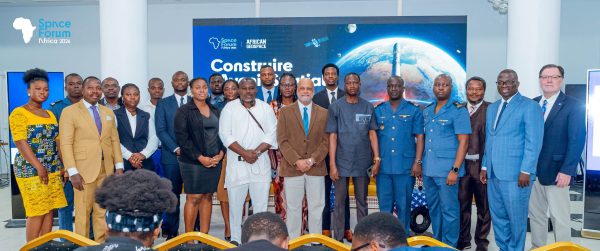
From July 28 to 30, Lomé became the epicenter of a groundbreaking conversation about Africa’s future. Public officials, researchers, investors, and entrepreneurs gathered at Space Forum Africa 2026 to explore an evolving narrative: space technologies are no longer just about gazing at Earth from afar. They now serve as powerful tools for boosting productivity, predicting disasters, enhancing communications, and unlocking new economic frontiers.
The African space narrative has long centered on distant ambitions—launching satellites, funding scientific programs, and training talent. But in Lomé, the dialogue shifted. The focus was no longer on whether Africa could conquer space, but on how space could conquer challenges on the ground.
This shift in perspective was amplified by the U.S. Embassy in Lomé, which played a pivotal role in organizing the forum. The event brought together diverse stakeholders from across the space sector to address a shared mission: turning space science and technology into actionable solutions for the continent’s most pressing needs.
From orbit to earth: harnessing satellite data for ground-level decisions
One of the most transformative takeaways from the discussions was the realization that space is no longer just a domain of scientific curiosity or technological prestige. Satellite data is now a critical asset for sectors as varied as agriculture, climate monitoring, communications, and disaster prevention.
The true challenge, however, lies not in space itself but in the real-world applications of these technologies. For African economies grappling with climate change, information gaps, and the need for better forecasting, space-derived data offers a vital tool for smarter decision-making. This evolution also presents an unprecedented opportunity for African tech startups to develop high-value solutions tailored to local and regional needs.
Jim Adams and the American legacy in African space innovation
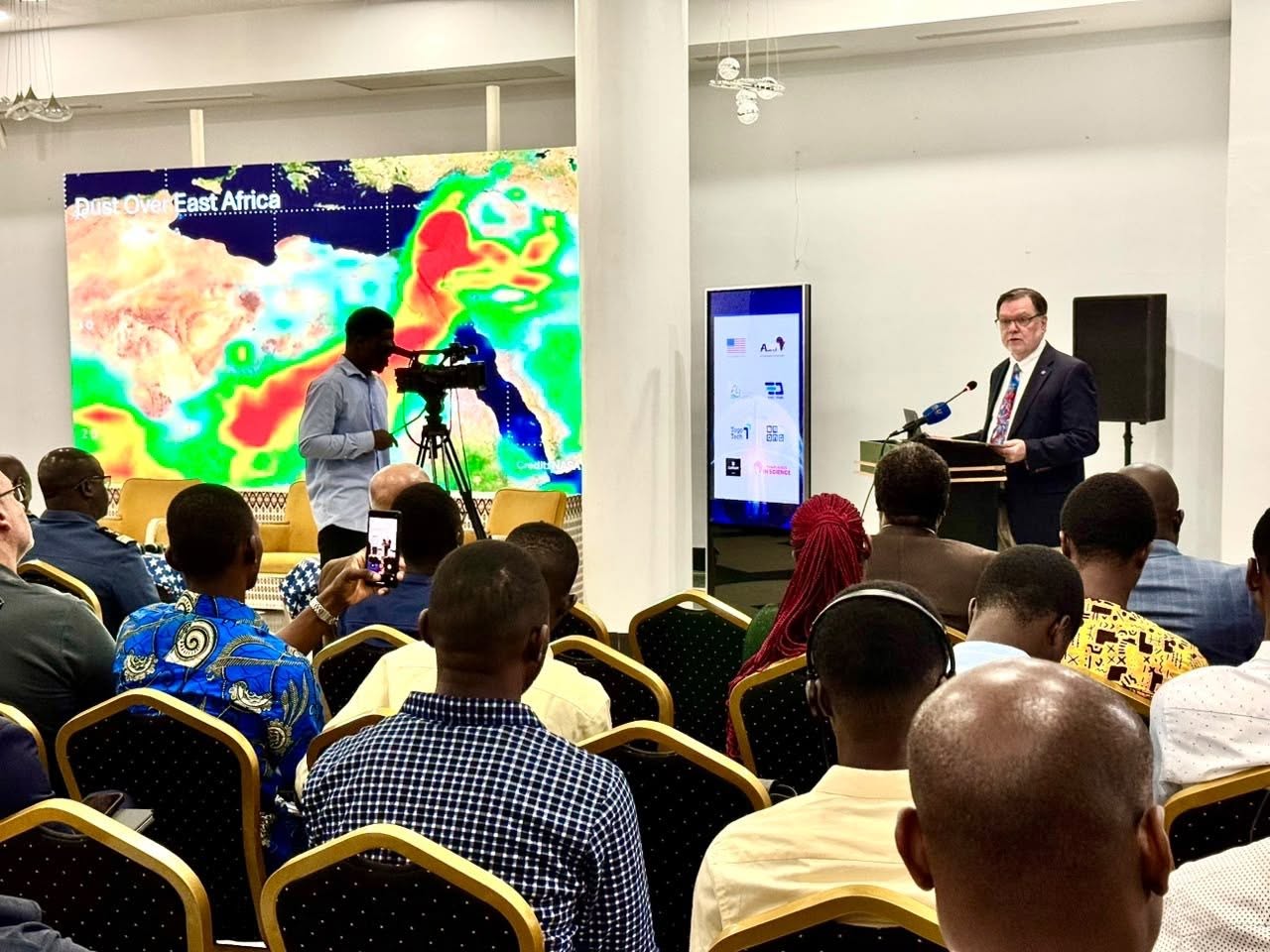
The forum featured a keynote address by Jim Adams, a NASA veteran with over four decades of experience in space exploration and satellite technologies. His presence underscored the tangible ways space capabilities are reshaping industries like agriculture, climate resilience, communications, and disaster management. Yet his insights went beyond technical applications, raising a critical question: who will lead the development of tomorrow’s space technologies, and who will benefit from their economic value?
Building bridges: fostering US-Africa partnerships in space technology
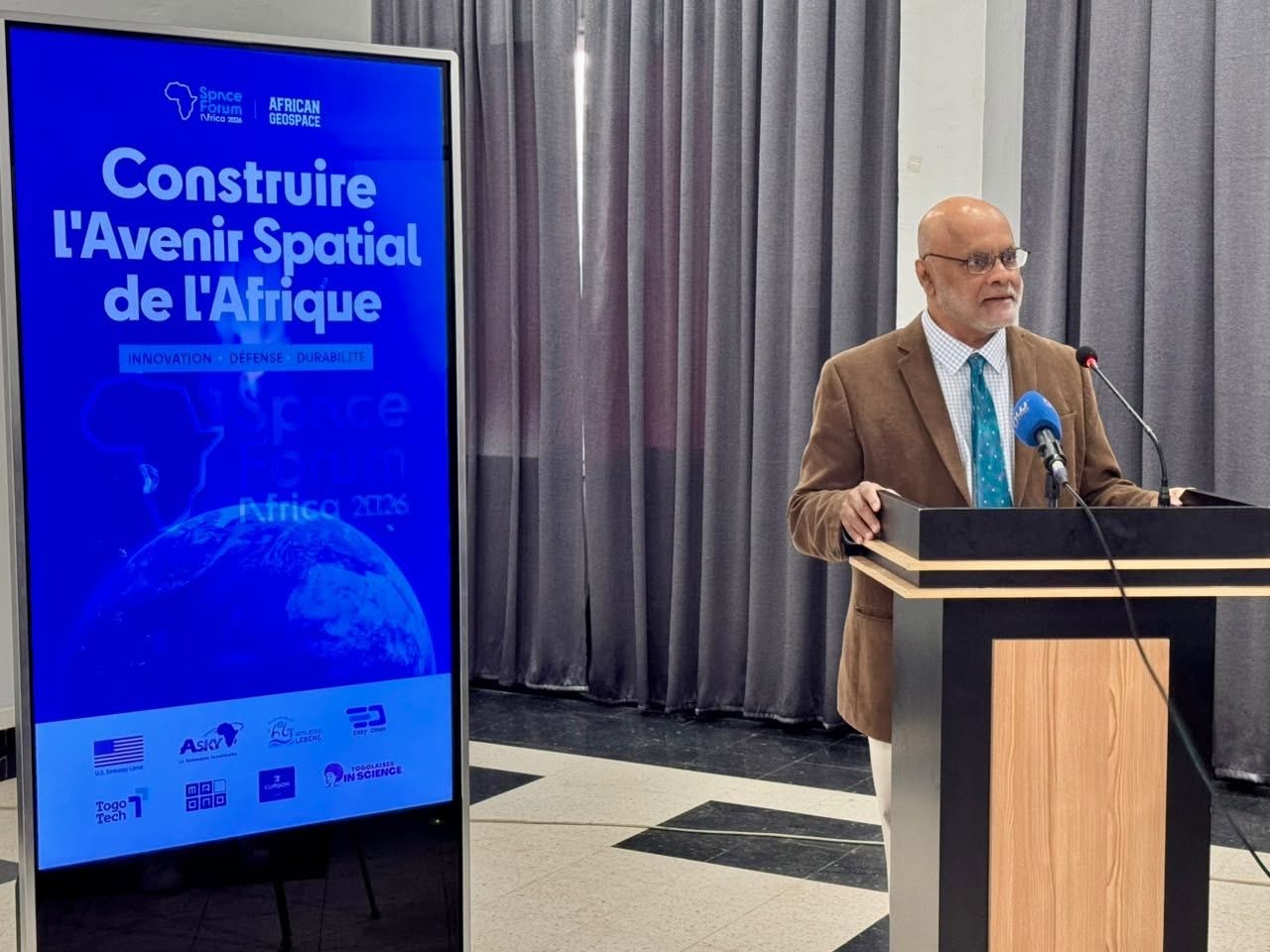
The growth of Africa’s space economy hinges not only on infrastructure or scientific expertise but also on the ability to forge strong connections between innovation ecosystems. This is where cooperation between African actors and American enterprises takes on special significance. The forum facilitated exchanges that could pave the way for collaborations between African institutions, local innovators, and U.S. companies specializing in space technologies and services.
The discussions transcended mere scientific cooperation, delving into the realms of commercial diplomacy, investment, knowledge transfer, and market creation. For African entrepreneurs, the goal is to move beyond being mere consumers of foreign technologies. For international partners, the opportunity lies in discovering local talent, unmet needs, and untapped markets across the continent.
Space as an invisible infrastructure for economic and social resilience
This transformation challenges the way we perceive space in Africa. A satellite can help optimize crop yields. A climate observation dataset can enable early warnings for extreme weather. A communication technology can bridge connectivity gaps in remote areas. A piece of orbital data can streamline disaster response efforts.
In essence, space is becoming an invisible infrastructure whose impact is measured not in the stars but on the ground. Space Forum Africa 2026 in Lomé championed this mindset, shifting the focus from the wonder of space exploration to the practical utility of space technologies in driving economic and social progress.
Washington and Lomé: expanding the frontier of peaceful space innovation
By supporting the forum, the U.S. Embassy in Lomé reinforced a broader commitment to fostering peaceful and responsible space exploration. As the United States marks a milestone in innovation, this partnership reflects a shared vision: the next chapter of Africa’s space journey will be defined not by rocket launches alone, but by turning satellite data into solutions, research into enterprises, and cooperation into markets.
In Lomé, the sky was not just observed—it was reimagined as a new frontier for development.
Comments are closed, but trackbacks and pingbacks are open.