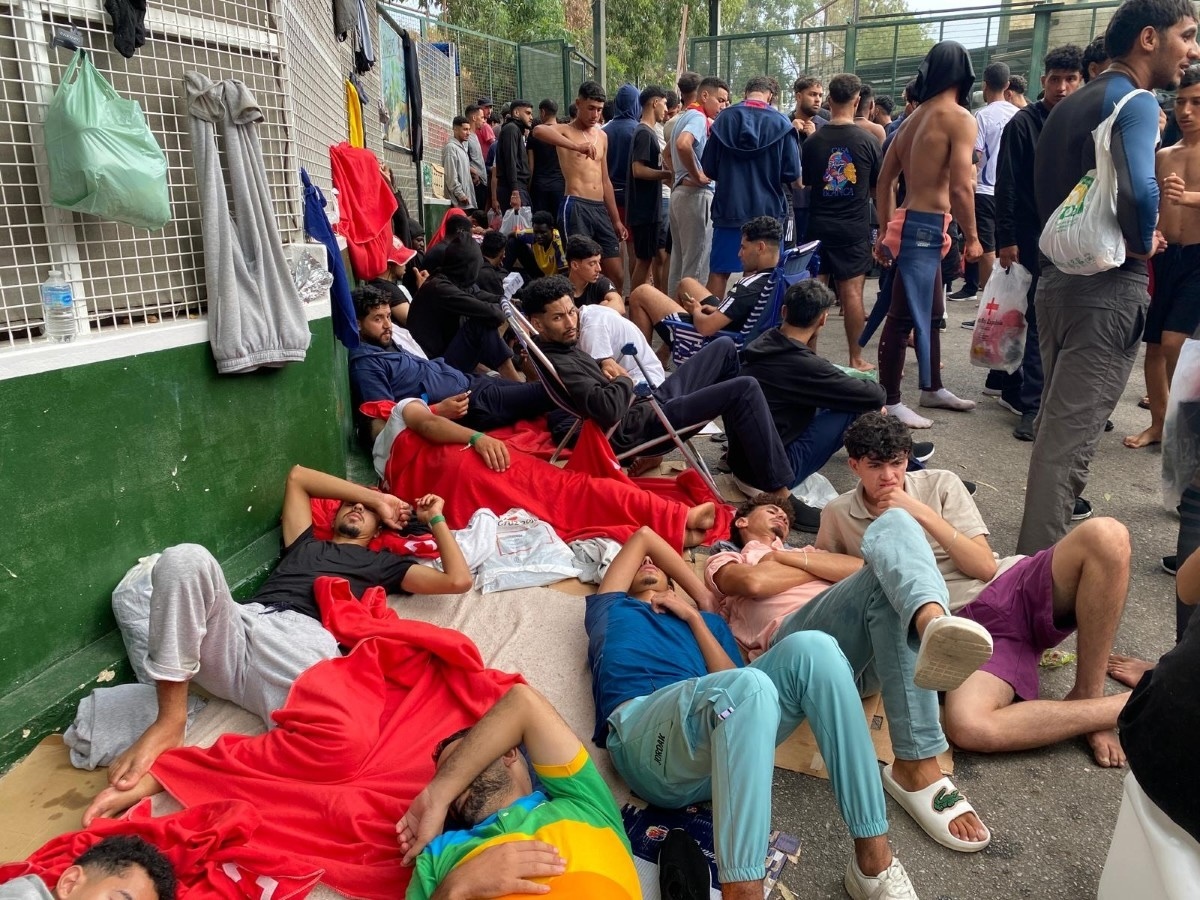
Spain and Morocco agree on returning irregular migrants to Ceuta and Melilla
The recent migration crisis in Ceuta has prompted swift diplomatic and security responses from both Spain and Morocco, with a commitment to repatriate all irregular migrants who entered Ceuta « as soon as possible, » under existing collaboration frameworks. This decision also applies to Melilla.
In response to the surge in irregular maritime and even pedestrian crossings, the two governments have ramped up coordination efforts to control migration flows and manage the border situation.
Spanish and Moroccan authorities link this migration surge to human trafficking networks, which are allegedly exploiting a recent Supreme Court ruling to encourage irregular crossings into Ceuta and Melilla.
In this tense environment, Brussels is stepping up support for Spain through Frontex in Ceuta and urging Morocco to take immediate action, while emphasizing the EU’s commitment to addressing migratory pressure to « regain control of the situation » in the city. The EU is also maintaining close contact with Moroccan officials to ensure swift measures are taken to curb dangerous crossings and deter further irregular entries.
Rabat and Madrid deepen bilateral cooperation
Facing the massive influx of migrants into the autonomous city of Ceuta—where thousands arrived via the Tarajal border post—Spain and Morocco have agreed to strengthen bilateral cooperation and repatriate all irregular migrants who entered Ceuta « as soon as possible, » in line with existing collaboration mechanisms.
Spain’s Interior Minister, Fernando Grande-Marlaska, is set to visit Ceuta to oversee crisis management on the ground, remaining in constant contact with his Moroccan counterpart, Abdelouafi Laftit, to enhance bilateral cooperation in overcoming this unexpected crisis.
Sources within Morocco’s Interior Ministry have expressed concerns about the event’s potential to undermine cooperation between the two countries and cast doubt on security within the strategic triangle formed by Morocco, Spain, and the European Union.
Meanwhile, the Spanish government has dismissed claims that the migration surge is linked to Prime Minister Pedro Sánchez’s July 20 visit to Algeria. The Foreign Ministry denied any connection between the two events, emphasizing that « cooperation with Morocco on migration continues to develop within the framework of the strategic partnership uniting the two nations. »
Spanish Prime Minister Pedro Sánchez has stated that his administration is working tirelessly to restore normalcy in Ceuta amid the massive influx of irregular migrants. He explained that the government is mobilizing all available resources and coordinating with Moroccan authorities and international partners to address the situation.
In a post on X, Sánchez assured that the government is preparing « the necessary measures » to restore normalcy « as soon as possible » and underscored that close cooperation with Morocco is a cornerstone for managing the current migratory pressure in Ceuta.
Both the Spanish government, through the Interior Ministry, and Moroccan authorities attribute the migration crisis to human trafficking networks, which are reportedly exploiting a recent Supreme Court ruling banning immediate repatriation of migrants who reach Ceuta and Melilla by swimming. This judicial decision is being exploited by human trafficking organizations to encourage irregular crossing attempts.
Tension and emergency in Ceuta
Following the unprecedented May 2021 migration crisis, Ceuta is once again facing an unparalleled migration surge, compounded by the recent recovery of eleven bodies of young people who drowned at sea.
While official figures from Spanish and Moroccan authorities are pending, irregular entries from Morocco into Ceuta continue unabated—both by swimming and through the Tarajal border zone—keeping emergency and security services stretched to their limits.
Overnight from Wednesday to Thursday, swimming attempts into Ceuta persisted, overwhelming the Civil Guard’s response capacity. Amid the arrival of hundreds, including several minors, another body was recovered, according to El Faro de Ceuta reports.
The migration crisis engulfing Ceuta is the most severe since 2021.
Local Ceuta authorities have called for a state of emergency—a request rejected by Sánchez’s government—along with increased police resources and « the deployment of the military to regain control of the city, » where security forces stationed along the breakwater separating Ceuta from Morocco are exhausted and stretched beyond capacity. The situation is further exacerbated by overwhelmed reception centers.
The migratory waves toward Ceuta are worsening the crisis, with a human caravan of migrants attempting to reach Spanish territory by breaching the fence, despite Moroccan police efforts to block routes leading to the city.
Fueled by misinformation on social media, increasing numbers of people attempt to access the city hourly, lured by the promise of a « better life » in Spain. Many of those who arrived in Ceuta have set up makeshift camps while awaiting placement in assistance centers.
Ceuta and the questions Morocco can no longer avoid
The crisis in Ceuta, marked by the massive arrival of mostly young people, has ignited debate over Morocco’s ability to contain the frustration of these fleeing migrants, as noted by both Moroccan and Spanish media. They point to unemployment and precarity as driving forces behind their pursuit of a better future across the Mediterranean, calling for a reassessment of social integration programs for these desperate youth.
The new arrivals in Ceuta celebrate their entry into Spanish territory with jubilant shouts, echoing cries like « viva España » and « amigo, vamos, vamos, » giving the impression that they have reached a lost paradise offering dignity and long-awaited opportunities.
When death at sea seems preferable to continuing life in one’s own country, it becomes urgent to conduct a diagnosis that goes beyond blaming those who leave. A pressing question arises: are these young people merely seeking rights (work, dignity, a future) without being willing to meet the efforts or obligations required to build a nation? Or is the absence of real opportunities to deploy such effort what drives them to leave?
This situation, described by many as a « collective exodus, » is not a marginal phenomenon but an unprecedented tragedy fueled by structural causes such as youth unemployment, regional inequalities, and institutional distrust. This leads us to ask: what changes should Morocco make so that staying is no longer the worst option and building a future within its borders becomes viable? Given the significant resources mobilized to ensure security during Throne Day celebrations—the first under King Mohammed VI’s reign— the lack of diligence by regional authorities in detecting, controlling, and preventing gatherings before they reach the Ceuta border is notable. The involvement of Algerians and Sub-Saharan individuals, alongside the organizers of this massive initiative to enter Ceuta, suggests financial and logistical means far exceeding local grievances, with external objectives of destabilizing Morocco and its relations with Spain and the European Union. Above all, spoiling Throne Day celebrations and attempting to undermine the achievements highlighted in King Mohammed VI’s speech, which presents a positive assessment of Morocco’s situation.
Behind every person who reaches Ceuta, many more fail in their attempts, risking or losing their lives at sea, far from media attention. Given the reality of migration marked by desperation, vulnerability, and the high human cost behind these perilous crossings, seeing so many young people brandish victory signs upon arrival in Ceuta speaks volumes and raises countless questions Morocco cannot ignore.
By Aïssata Issa — Analyst
Comments are closed, but trackbacks and pingbacks are open.