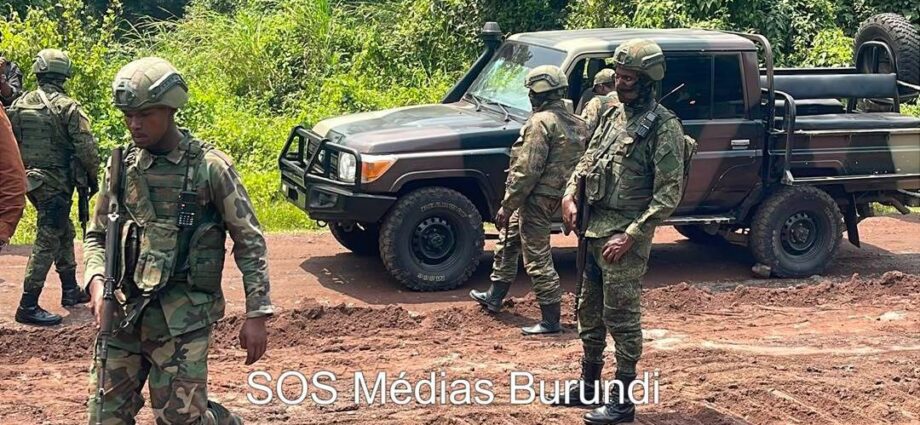
Rebel breakthrough reshapes South Kivu’s security landscape
Uvira, November 25, 2026 — A dramatic shift in the conflict gripping South Kivu’s Uvira highlands has seen the Front for National Rebirth (FRN) seize control of Rurambo and Munanira, two strategically critical locations. The mountainous region, already tense from clashes between FRN fighters, Democratic Republic of Congo (DRC) government forces, Burundian troops, and local allied militias, is now experiencing a significant power realignment as the rebel group consolidates its gains.
From regional tensions to civilian displacement
The FRN’s offensive follows its emergence as a successor to the former Alliance Fleuve Congo (AFC-M23) in October 2026. Led by former DRC President Joseph Kabila, the movement has intensified operations across eastern DRC, where Kinshasa alleges Rwanda provides covert support—a claim consistently denied by Kigali. The escalation has drawn Burundi directly into the conflict, with Burundian troops joining FARDC operations against the FRN.
Local reports confirm the FRN now controls additional high-ground positions, including Muhungu Hill and Kahiya (also spelled Kahya), straddling the Uvira and Walungu territories. These advances underscore the FRN’s growing momentum, raising concerns about further territorial expansion toward Kahololo, Bijombo, and Minembwe—key hubs in the region’s fragile security architecture.
The military gains have triggered a humanitarian crisis, with civilians fleeing toward Lubarika or seeking refuge in the rugged mountains overlooking the Ruzizi Plain. Displaced residents describe harrowing journeys to escape relentless combat, leaving behind homes and livelihoods in a province already strained by years of instability.
Local and national calls for accountability
The FRN’s advances have exposed vulnerabilities within FARDC’s operational strategy, sparking criticism from civil society and political figures. André Byaduniya, a prominent activist and former civil society representative in South Kivu, has publicly demanded the removal of the Uvira-based FARDC military commander, citing the unit’s repeated setbacks against the FRN.
Criticism isn’t confined to the military command. Vital Kamerhe, former President of the DRC National Assembly and head of the Union for the Congolese Nation (UNC), recently questioned why billions allocated to the armed forces have failed to retake lost territory. Speaking at a UNC conference in Kinshasa, Kamerhe highlighted the widening gap between military spending and operational effectiveness—a sentiment echoed by residents and analysts alike.
Military buildup and regional stakes
The FRN’s control of Rurambo could dismantle the current standoff in the highlands, where Burundian Defense Forces (BDF), FARDC, and allied Wazalendo militias have established overlapping defensive lines around Malimba, Masango, and Ruhuha. These forces are actively working to sever FRN supply routes between Bijombo and Rurambo, but the rebel group’s recent successes suggest their efforts may be insufficient.
The conflict’s regional dimensions continue to deepen, with Burundi aligning with Kinshasa against the FRN. Meanwhile, civilians bear the brunt of the violence, caught in crossfire between armed groups and foreign troops. As diplomatic tensions simmer and humanitarian needs mount, the South Kivu highlands stand at a crossroads—one where decisive action, or inaction, will determine the trajectory of the crisis for months to come.
Comments are closed, but trackbacks and pingbacks are open.