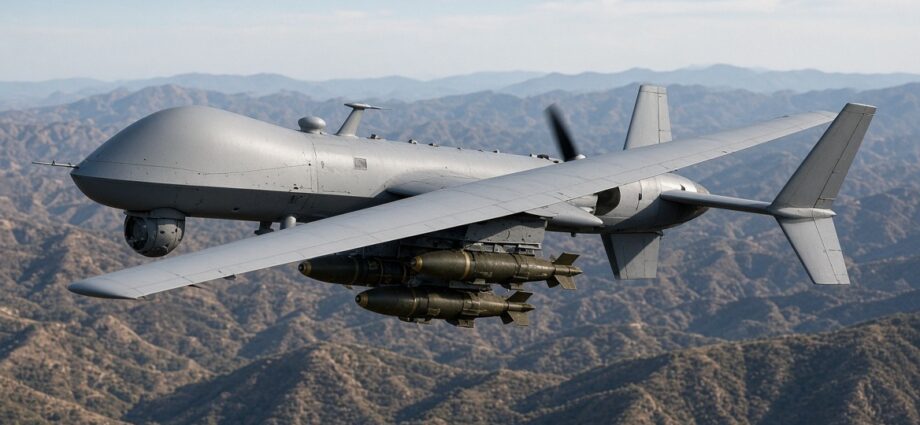
As the brutal civil war in Sudan escalates, a new wave of violence has emerged, with drone strikes becoming the deadliest threat to civilians. United Nations data reveals that more than 1,630 non-combatants have been killed in drone attacks between January and October 2026—a figure representing over 75% of all civilian casualties recorded in the country during this period.
Civilian infrastructure deliberately targeted
The UN report exposes a systematic campaign of destruction aimed at critical infrastructure that sustains life. Analysts have documented numerous attacks on everyday civilian zones, including:
- Markets and public gatherings: densely populated areas where civilians shop and socialize have been repeatedly hit.
- Medical and educational facilities: hospitals, clinics, and schools have been struck, depriving communities of essential services.
- Essential services attacked: fuel depots, power grids, and water stations have been bombed, cutting off electricity, clean water, and healthcare for millions.
Kordofan and Darfur bear the brunt of drone warfare
The regions hardest hit are Kordofan—where over two-thirds of all recorded civilian deaths have occurred—and Darfur. These areas, once distant from traditional battlefronts, now face relentless aerial assaults that turn homes, fields, and hospitals into potential targets. The use of armed drones has shifted the war from open combat to indiscriminate terror, leaving entire communities trapped in a cycle of displacement and suffering.
Human rights advocates and UN agencies warn that the deliberate targeting of civilians and civilian infrastructure constitutes clear violations of international humanitarian law. High Commissioner for Human Rights Volker Türk has condemned the actions as tantamount to war crimes, emphasizing the flagrant disregard for global norms.
The roots of a devastating decade of conflict
The current military escalation did not emerge in isolation. The roots of this crisis trace back to Sudan’s political upheaval following the 2019 revolution:
From revolution to military rule
In April 2019, after decades of authoritarian rule under Omar al-Bashir, a popular uprising forced the dictator’s removal. A transitional government was formed, led by a mixed civil-military council. Its two most powerful figures were General Abdel Fattah al-Burhan, head of the regular army, and General Mohamed Hamdane Daglo, known as “Hemetti,” leader of the Rapid Support Forces (RSF).
Hemetti rose to prominence as a commander of the Janjaweed militias, notorious for atrocities in Darfur during the 2000s. Through control of gold mining and other enterprises, he built a powerful parallel military and financial empire outside state oversight.
Military coup derails democratic transition
In October 2021, the two generals jointly staged a coup, seizing power from civilian leaders and halting Sudan’s fragile democratic transition. What followed was a consolidation of military control and a rapid increase in foreign arms supplies.
War erupts in Khartoum, spreads nationwide
On April 15, 2023, tensions between the two factions exploded into open war in Khartoum. The dispute centered on the integration of approximately 100,000 RSF fighters into the national army—a move opposed by Hemetti. What began as a power struggle in the capital quickly spread to Darfur and Kordofan, fueled by ethnic violence and mass displacement.
Drones escalate warfare, deepening humanitarian catastrophe
By late 2025, both sides had deployed armed drones extensively. Once a tactic reserved for frontline battles, drone warfare now blankets entire regions in terror. Cities like El-Fasher fell under siege, and nearly 25 million Sudanese now face extreme food and water shortages. With no clear end in sight, the conflict has evolved into a high-tech war of annihilation, sustained by external military backing.
Comments are closed, but trackbacks and pingbacks are open.