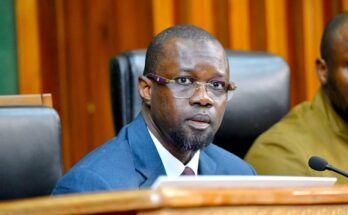
The anticipated rupture between Diomaye Faye and Ousmane Sonko has finally occurred in Sénégal. Following his departure from the executive branch, Sonko has retreated to the National Assembly to rebuild his political base.
Had he possessed greater foresight, Ousmane Sonko might have recognized the National Assembly as the ideal sanctuary to wait for the 2029 elections. This was particularly true following the landslide victory of his party, Pastef, during the legislative polls in November 2024.
It appears Sonko believed that by maintaining a close watch on the presidency, he could ensure Diomaye Faye did not grow too fond of his position. He likely intended to exercise executive authority directly, with Faye acting as a ceremonial figurehead, at least initially. However, power is a transformative force, and as Machiavelli once cautioned, the person responsible for making another a king often paves the way for their own downfall.
A predictable outcome in the halls of power
The presidential system in Sénégal is designed to center authority on the head of state, leaving little room for anyone else. Even a Prime Minister with significant influence remains a subordinate in the grand hierarchy. Eventually, Sonko found himself constrained within the government structure.
The situation grew more dire on July 1, 2025, when the Supreme Court declined to overturn a ruling that renders him ineligible for the 2029 presidential race. With his political horizon darkening and sensing a lack of support from Diomaye Faye, Sonko’s political instincts took over. As institutional avenues narrowed, he turned back to grassroots agitation, even pushing legal boundaries to secure his position in the National Assembly. He now leads a powerful parliamentary majority, seemingly indifferent to the accusations of misconduct from a fractured opposition. At this stage, only Diomaye Faye has the authority to ask the Constitutional Council to review the legality of Sonko’s parliamentary takeover, yet the President has remained silent.
Strategic patience from the presidency
In the historical home of Lat Dior Diop, the 19th-century monarch of Cayor who fought against colonial rule, political maneuvers are never simple. To understand the current climate, one must look past the legal jargon and focus on the two main figures and their shared objective: the 2029 presidency. Diomaye Faye is the shrewd strategist, while Ousmane Sonko is the “Djambar,” the political storm.
Each man possesses different weapons. President Bassirou Diomaye Faye holds the power of the law and the state institutions. Ousmane Sonko commands a disciplined party and a base of loyal supporters, showing a growing willingness to bypass traditional norms.
The battle for political survival
By controlling the National Assembly, Ousmane Sonko has secured a formidable stronghold. However, his position is precarious, facing threats of parliamentary dissolution or potential legal challenges regarding his eligibility to serve as a deputy. If the Constitutional Council were to intervene, his return to the Assembly could be deemed illegal.
On the other hand, Diomaye Faye appears to be playing a long game. Now distanced from the influential Sonko, the President is working with his new Prime Minister, Ahmadou Al Aminou Lô, to stabilize the nation’s economy alongside international financial bodies. He seems to be preparing for an inevitable showdown, surrounding himself with a capable team as he waits for the right moment to act.