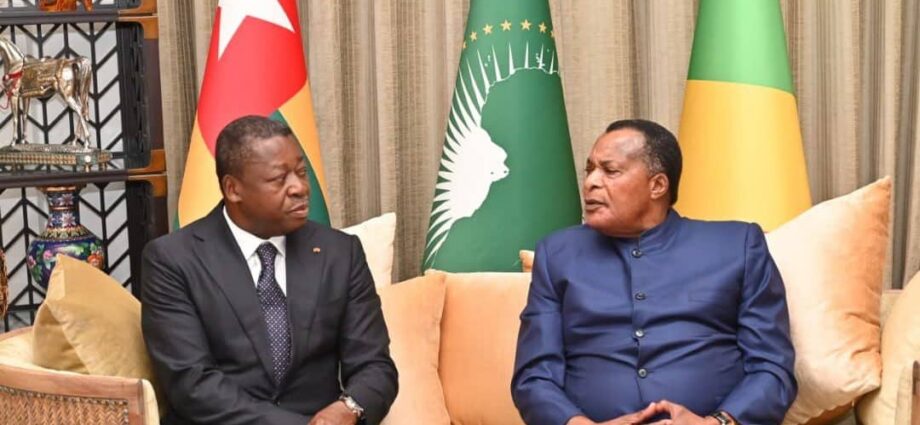
The President of Togo, Faure Gnassingbé, is making waves on the global stage as he participates in a groundbreaking quadrilateral summit in Oyo, Republic of the Congo. Scheduled for November 22, 2026, this high-stakes meeting brings together leaders from Togo, the Republic of the Congo, Kenya, and the Democratic Republic of the Congo (DRC). The gathering, spearheaded by Congolese President Denis Sassou N’Guesso, marks a decisive turning point in regional diplomacy.
Why this summit is a game-changer for African diplomacy
This isn’t just another diplomatic gathering—it’s a momentum-building event. The leaders have converged in Oyo to address some of the continent’s most pressing challenges: economic instability, security threats, humanitarian crises, and fractured diplomatic relations. The summit represents a bold step toward unified action, with a focus on the Great Lakes region, where conflicts have long destabilized nations and communities.
The timing couldn’t be more critical. With tensions simmering in the DRC and neighboring states, the summit offers a rare opportunity for African leaders to reset their approach. The goal? To foster peace not through force, but through dialogue, cooperation, and shared responsibility. This initiative aligns with the African Union’s vision of conflict prevention and resolution—a vision Togo is actively championing.
Gnassingbé’s pivotal role in shaping regional stability
President Gnassingbé isn’t just attending this summit—he’s playing a lead role. Appointed by the African Union as a mediator in the DRC’s eastern conflict, his involvement underscores Togo’s commitment to peaceful diplomacy. His presence signals a shift from reactive measures to proactive engagement, aiming to bridge divides and pave the way for sustainable solutions.
The summit is more than a discussion—it’s a platform to reinforce Togo’s diplomatic clout. By aligning with key regional players, Gnassingbé is positioning his country as a stabilizing force in Africa’s most volatile regions. This isn’t just about attending meetings; it’s about driving change.
From dialogue to action: what’s next for African leadership?
The outcomes of the Oyo summit could redefine how African nations tackle shared challenges. With four influential leaders at the table—spanning Central, West, and East Africa—the discussions are set to transcend borders. The focus will be on:
- Strengthening regional cooperation: Creating frameworks to address economic and security threats collectively.
- Humanitarian solidarity: Addressing the growing displacement and suffering in conflict zones.
- Diplomatic innovation: Moving beyond traditional mediation to innovative solutions tailored to Africa’s unique context.
For Togo, this summit is a testament to its evolving role in African geopolitics. It’s not just about being present—it’s about leading, shaping, and delivering results. The decisions made in Oyo could ripple across the continent, offering a blueprint for how nations can unite to overcome crises.
Togo’s commitment to a united, peaceful Africa
The participation of Faure Gnassingbé in Oyo isn’t an isolated event—it’s part of a broader strategy. Togo has consistently advocated for dialogue, preventive diplomacy, and peaceful conflict resolution, principles deeply embedded in the African Union’s agenda. By taking center stage in this summit, Gnassingbé is reinforcing his country’s dedication to these ideals.
As the summit unfolds, one thing is clear: Africa’s future hinges on collaboration. The Oyo gathering isn’t just a meeting—it’s a movement. And Togo is at the heart of it.
Comments are closed, but trackbacks and pingbacks are open.