In any functioning democracy, matters of national defense are inherently sensitive. Military operations, intelligence-sharing, and strategic partnerships often operate behind closed doors. Yet when secrecy becomes the default rather than the exception, it erodes trust rather than reinforcing it.
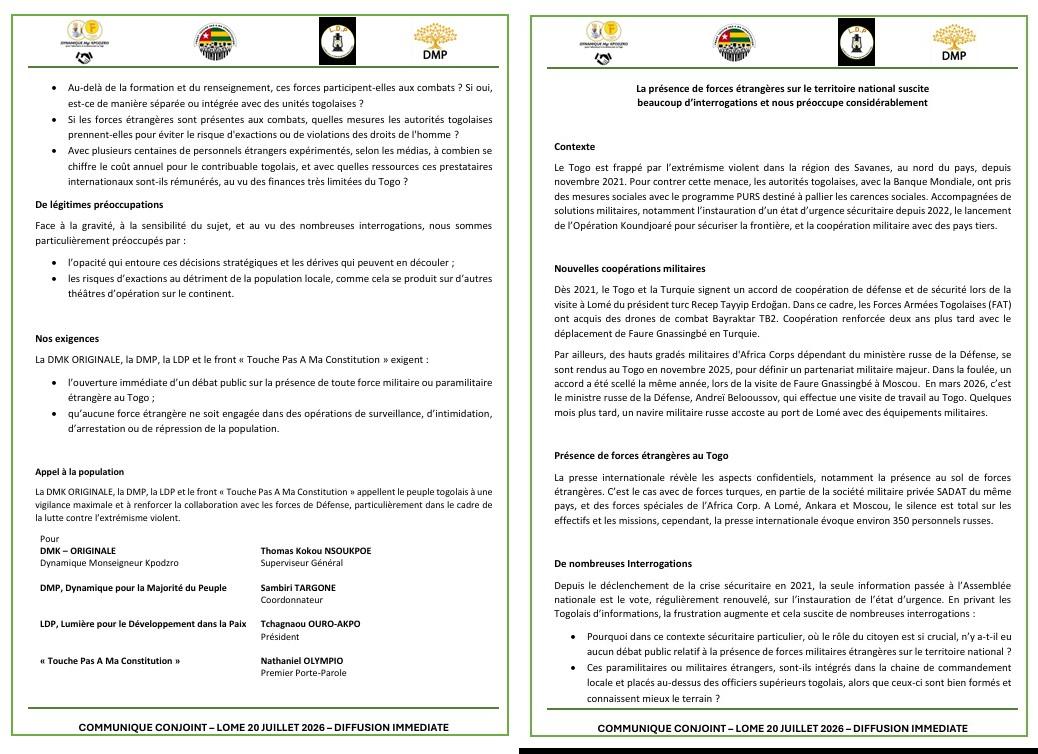
In Togo, reports have increasingly highlighted the presence of foreign military personnel on national soil, including individuals from Russia and Turkey. While such cooperation is not uncommon in international defense relations, the lack of clarity surrounding their roles raises legitimate concerns among citizens and observers alike.
What exactly are these foreign forces doing in Togo? The absence of official details has fueled speculation, with no definitive answers on whether their mission involves training, intelligence support, equipment maintenance, or even the protection of high-ranking officials. Without transparent explanations, the narrative shifts from defense necessity to political safeguarding.
a shield against political dissent?
Beyond defensive imperatives, the opacity surrounding these military partnerships has deepened suspicions about the government’s motives. Critics argue that the engagement of foreign troops may reflect a growing unease within the regime of President Faure Gnassingbé. With persistent allegations of poor governance, economic hardship, and institutional strangulation, fears of both popular uprisings and internal coups looms larger than ever.
To skeptics, the arrival of foreign military personnel is not seen as a safeguard for national security but as a calculated move to prolong the current administration’s grip on power, regardless of democratic cost. The question lingers: are these forces here to protect the country or to protect the regime?
operational and legal ambiguities
The exact nature of their duties remains shrouded in uncertainty. Are these foreign personnel merely advisors, or do they participate in domestic security operations? Do they engage in joint field missions with Togolese forces, or is their role strictly technical and confined to barracks? The distinction is critical, as it shapes the perception of Togo’s sovereignty and the autonomy of its armed forces.
Equally pressing is the issue of legal oversight. When foreign military personnel operate within a host country, international norms typically require clear frameworks governing their rights, responsibilities, and accountability. What legal safeguards has Togo implemented to prevent abuses or ensure compliance with national and international laws? The absence of such details only amplifies concerns about unchecked foreign influence.
the financial burden of secrecy
Beyond operational roles, the financial implications of this cooperation demand scrutiny. How many foreign personnel are currently stationed in Togo? What is the duration of their deployment? Most critically, who bears the financial cost—is it Togolese taxpayers, the partnering nations, or a mix of both? Citizens, whose contributions fund public policies, deserve clarity on how public funds are allocated in these agreements.
This is not to dismiss the necessity of international defense partnerships. Many nations rely on foreign expertise to bolster their military capabilities against shared threats, and Togo faces real security challenges, including the persistent terrorist threat in the Sahel. However, transparency remains the cornerstone of public trust.
transparency as the ultimate response
In a region plagued by political instability and shifting security alliances, the most effective way to address public concerns is through information. Authorities can—and should—provide sufficient details about the objectives, legal frameworks, and oversight mechanisms governing these foreign military engagements, without compromising legitimate national security interests.
Transparency is not an optional luxury in governance; it is the bedrock of legitimacy. When foreign military presence sparks more questions than answers and appears intertwined with efforts to entrench political power, the onus falls on the government to clarify its intentions. In a democracy, silence is not a sustainable policy—it only invites doubt, and doubt, over time, corrodes trust.