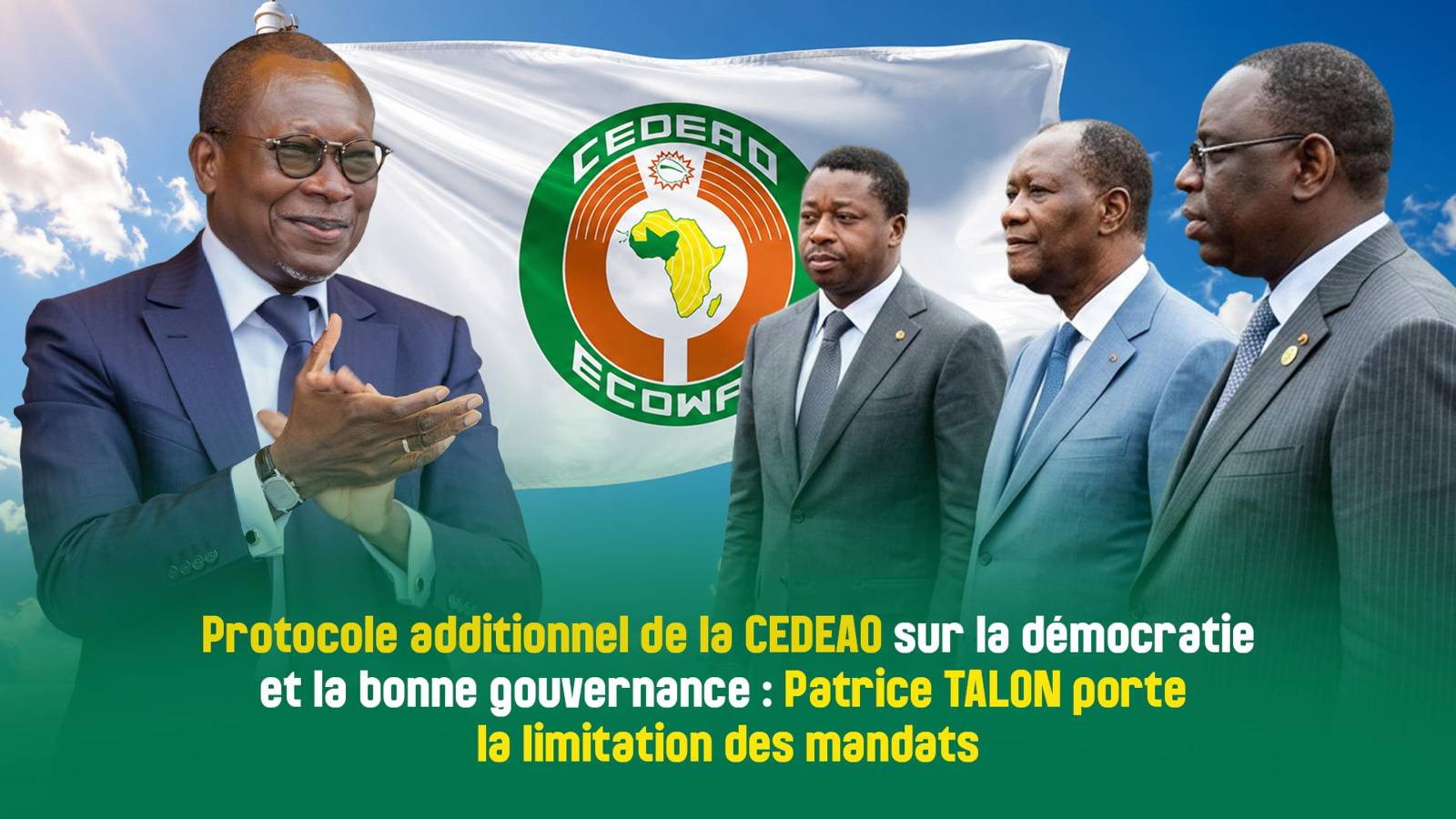
As West Africa grapples with a wave of political instability and military takeovers, a significant ideological rift has emerged within the ECOWAS corridors. At the center of this tension is the controversial issue of presidential term limits. While Bénin‘s President, Patrice Talon, has become a vocal advocate for mandatory power rotation, he faces stiff opposition from a bloc of veteran leaders including Faure Gnassingbé, Alassane Ouattara, and Macky Sall. This diplomatic standoff is currently reshaping Bénin‘s role and influence within the sub-region.
The push from Cotonou for mandatory term limits
Patrice Talon is known for prioritizing his vision over traditional diplomatic niceties. Since taking office in 2016, the Beninese leader has integrated the limitation of presidential mandates into the core of his foreign policy. From the perspective of Cotonou, the recurring instability in the ECOWAS zone—highlighted by recent coups in Mali, Burkina Faso, and Niger—is deeply rooted in the pursuit of third terms.
During debates regarding the ECOWAS Supplementary Protocol on Democracy and Good Governance, Patrice Talon proposed a radical shift: a strict ban on serving more than two terms for any head of state, with no exceptions allowed through constitutional amendments. For the leader of Bénin, this is the only way to restore the institution’s credibility and stop the violent political ruptures that damage the region’s global standing.
A wall of resistance: Lomé, Abidjan, and Dakar stand firm
However, this attempt to institutionalize regional political ethics has met a formidable barrier. Three major regional figures have formally rejected the proposal. In Lomé, the administration of Faure Gnassingbé views such limitations as an infringement on national sovereignty, particularly after Togo transitioned to a parliamentary system that allows for extended leadership.
In Abidjan, Alassane Ouattara maintains that term limits should remain a domestic legal matter. Ouattara, currently serving as the Ivorian president, took a controversial third term in 2020. Similarly, in Dakar, the government under former president Macky Sall remained firmly opposed to supranational constraints, despite Sénégal facing its own internal turmoil over the issue before the 2024 transition. These leaders argue that ECOWAS should prioritize economic integration and the fight against terrorism over acting as a regulator of presidential mandates.
The price of principles: empty chair diplomacy
This deadlock explains Bénin‘s recent tactical withdrawal from certain regional stages. True to his reputation as a man of conviction, Patrice Talon has signaled his disapproval by being noticeably absent from several high-level summits. While some observers interpret this as isolation, Porto-Novo defends it as a necessary stance for consistency. Bénin refuses to validate an organization that appears to use double standards—sanctioning military juntas while ignoring “constitutional coups” carried out by civilian leaders who cling to power.
Patrice Talon: a solitary reformer?
Despite the pushback from regional heavyweights, Patrice Talon‘s stance is finding support among West African civil society. By championing the principle of alternation—and confirming his own intention to step down in 2026—he has positioned himself as one of the few leaders prioritizing institutional strength over personal ambition.
His philosophy is straightforward: without a universal and unbreakable rule on term limits, ECOWAS will remain a “heads of state club,” disconnected from the desires of a younger generation eager for political renewal. Patrice Talon is betting on the long view of history, convinced that true stability can only come from rules that apply to everyone without legal loopholes.
The debate over term limits is more than a legal disagreement; it represents a West Africa at a crossroads. By challenging historical allies like Ouattara and Gnassingbé, Patrice Talon has chosen to prioritize democratic ethics over quiet diplomacy. While the opposition bloc may have won a technical battle, the Beninese model of strict power rotation remains a significant benchmark against regional instability. Only time will tell if democratic principles will eventually triumph over the desire to maintain power.
Comments are closed, but trackbacks and pingbacks are open.