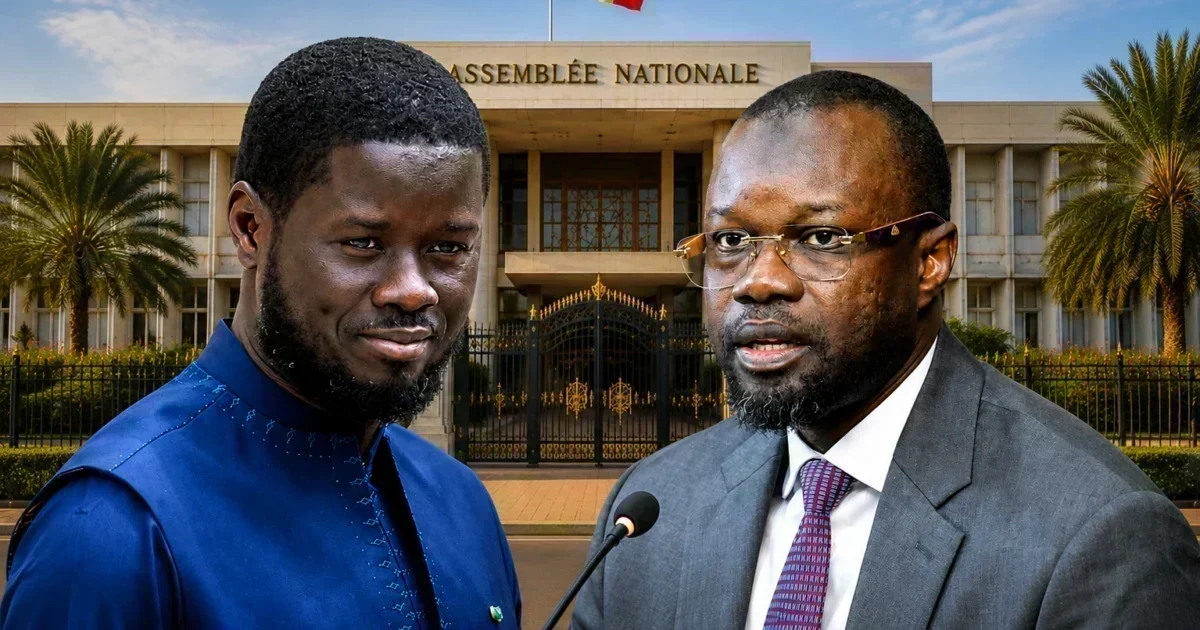
a pivotal moment for Senegal’s institutional stability
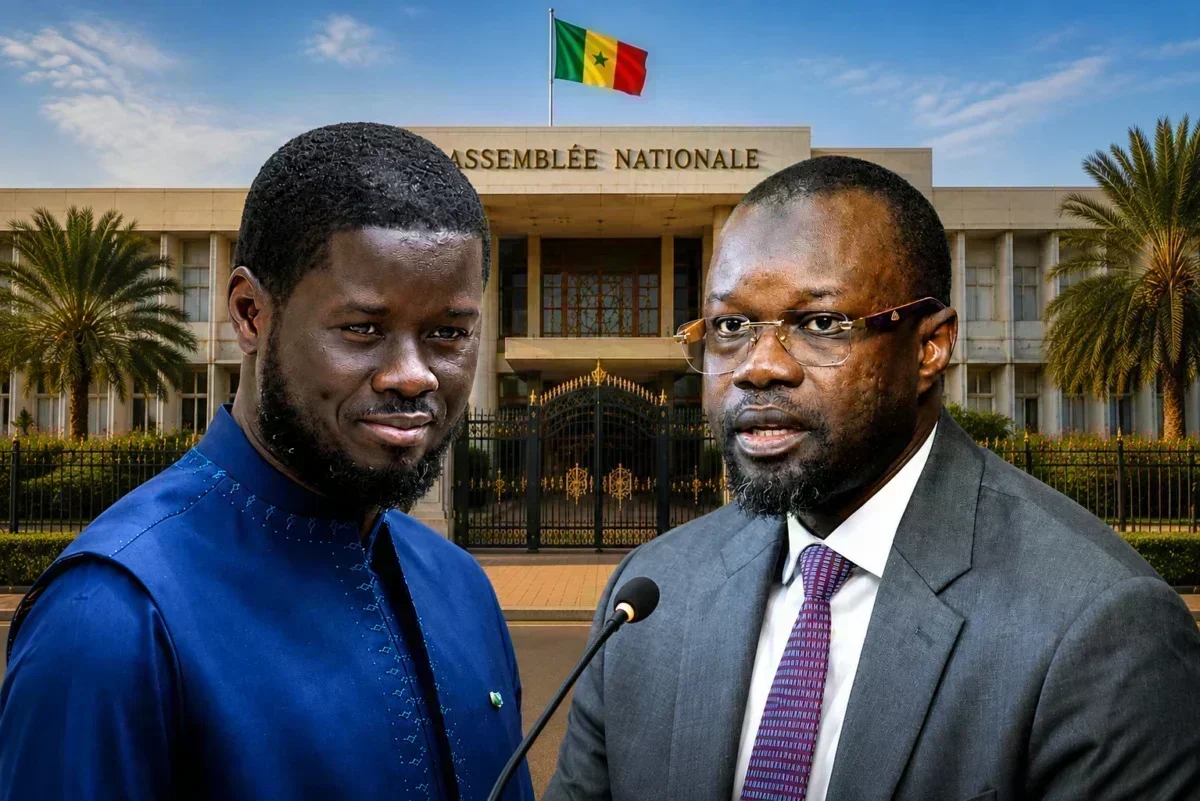
The dynamic between the executive and parliamentary powers inevitably raises a fundamental question: how far can legislative authority go when it seeks to influence the President’s decisions?
Politics often forms the bedrock of alliances, yet yesterday’s allies can swiftly become today’s adversaries, especially when power, its prerogatives, and the ambitions it fuels strain trust. The evolving relationship between President Bassirou Diomaye Faye and his former Prime Minister, Ousmane Sonko, perilously mirrors this age-old dynamic. After enduring shared challenges, the two prominent figures now find themselves in a complex configuration, where every move is scrutinized, every statement analyzed, and each decision seems to hinge on a potential test of wills.
The current extraordinary session of the National Assembly unfolds amidst an exceptionally charged political atmosphere. The parliamentary majority, aligned with Pastef, represents a significant political force. Its engagement with the executive naturally prompts a critical inquiry: to what extent can legislative power assert itself and influence the President of the Republic’s strategic choices?
The intersection of legality and legitimacy
This is where a profound unease begins to manifest. The boundary between what is legally permissible and what is politically legitimate can become perilously narrow. While a parliamentary majority may be entirely within its legal rights to exercise its prerogatives, the lawful application of power must never undermine the institutional balance.
Furthermore, it must not lead to the country becoming entrenched in a perpetual institutional confrontation. Senegal requires stability, clarity, and robust institutions capable of transcending individual disputes, rather than another high-level political standoff.
Indeed, beyond the unfolding narrative involving Diomaye and Sonko, the very foundation of the Republic is at stake. The most concerning outcome would be for political competition to ultimately overshadow the national interest.
President Bassirou Diomaye Faye was elected by universal suffrage for a five-year term, with three years still remaining to fulfill the mandate entrusted to him by the Senegalese people. This democratic reality should impress upon all, both the majority and the opposition, a simple principle: dissent, criticism, oversight, and even opposition are acceptable, but institutions must not be transformed into battlegrounds.
Dangers of a sustained political crisis
Today’s developments demand serious consideration. The focus should not merely be on who emerges victorious from this latest power struggle. Crucially, the nation must avoid sinking into a permanent political crisis where each institution vies for supremacy over the other.
Political friendships can wane, alliances can dissolve, and ambitions can clash. Yet, the Republic must endure. Therefore, the immediate priority might no longer be achieving an understanding between two individuals, but rather safeguarding the Republic from divisive quarrels.
While Diomaye and Sonko may pursue distinct political paths and even engage in a power dynamic, their disagreements must never become those of the State, nor should they jeopardize the three years remaining in the elected President’s mandate.
Senegal deserves more than another chapter in the graveyard of political friendships. It deserves a system where legality serves popular legitimacy, and where institutions consistently prove more resilient than the individuals who temporarily lead them.
Comments are closed, but trackbacks and pingbacks are open.