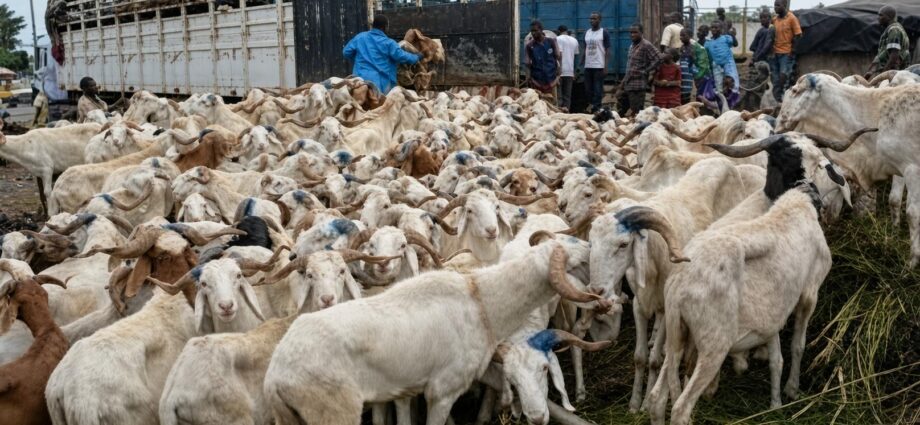
In an abrupt policy shift, Mali’s government has announced plans to suspend livestock exports for a six-month period with the possibility of renewal. The move, framed as a measure to curb soaring meat prices domestically, has ignited widespread concern across the private sector, particularly among cattle breeders, traders, and transporters who form the backbone of the nation’s vital livestock industry.
Export restrictions: a blunt tool with deep consequences
The livestock sector is a cornerstone of Mali’s economy, contributing over 15% to the national GDP and generating more than $150 million annually through exports — primarily to neighboring countries such as Senegal, Côte d’Ivoire, and Guinea. By banning exports, Bamako risks choking off a primary revenue stream for thousands of entrepreneurs who rely on cross-border trade for their livelihoods.
Industry leaders warn that the ban will fuel artificial supply surpluses within Mali, collapsing profit margins for breeders already struggling with rising feed costs and logistical extortion along transport routes. Worse, it undermines the principle of free enterprise and sends a chilling message to investors about the predictability of government policy.
Policy misfires and the real drivers of meat inflation
While the government cites price stabilization as the goal, the root causes of high meat prices tell a different story. Administratively chaotic relocation of cattle markets, spiraling feed costs, persistent insecurity on major transit corridors, and systemic logistical racketeering have all disrupted supply chains. These are the structural issues that inflate costs — not market openness.
History shows that price controls and export bans are blunt instruments that fail to fix underlying economic problems. In fact, they often backfire, discouraging long-term investment in livestock upgrades and pushing high-value trade into informality. If breeders fear sudden government restrictions, they will hesitate to scale operations or adopt modern techniques, deepening tomorrow’s shortages.
Erosion of trust and regional market erosion
With nearly 99% of Mali’s cattle exports destined for regional markets, the ban threatens to sever long-standing trade networks that support livelihoods across West Africa. The suspension signals regulatory unpredictability — a red flag for foreign investors and regional partners who require consistent, transparent trade conditions.
Instead of treating private actors as scapegoats for systemic failures, Mali must restore confidence by guaranteeing secure transport routes, reducing administrative levies, and fostering fair competition. Only then can the livestock sector thrive sustainably — and bring down meat prices through a natural increase in supply.
Conclusion: the cost of coercion
The livestock export suspension is not a solution — it’s a symptom of deeper governance failures. By prioritizing short-term political optics over economic stability, the government risks pushing the sector into long-term decline. For Mali’s entrepreneurs, the message is clear: in the absence of structural reforms, the future of livestock remains hostage to the whims of state policy.
Comments are closed, but trackbacks and pingbacks are open.