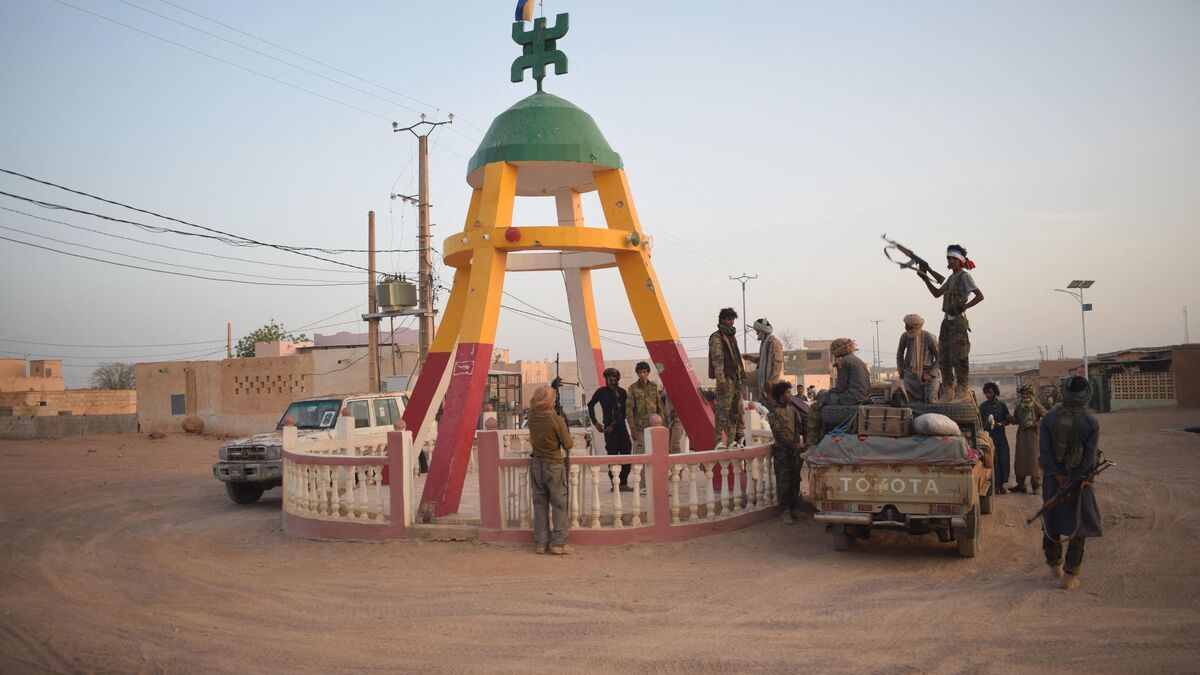
Tensions escalating in northern Mali this past weekend as rebel forces, allied with Touareg factions, launched coordinated strikes against strategic positions held by the Malian junta. The assaults, which unfolded in Bamako and surrounding regions, resulted in the death of Defense Minister Sadio Camara, marking a significant blow to the transitional government’s stability.
In the eastern sector, the rebels achieved a major breakthrough by reclaiming Kidal, a pivotal stronghold that had been under the tight control of the Africa Corps militia for years. After intense clashes and prolonged negotiations, the Russian-backed paramilitary group withdrew its forces, though its influence persists across the Sahel.
From shadowy origins to strategic dominance
The Africa Corps emerged in late 2023 as a successor to the embattled Wagner Group, which had dominated Moscow’s African operations since its inception in 2014. Following the deaths of Wagner’s founders, Evgueni Prigojine and Dmitri Outkine, in a suspicious plane crash in August 2023, the Kremlin sought to consolidate its military outreach through a more structured and less volatile entity.
The organization’s creation was first announced by military blogger Deux Majors on Telegram, quoting statements from Igor Korotchenko, a retired colonel and Kremlin-affiliated journalist. The Africa Corps was reportedly placed under the supervision of Russian Deputy Defense Minister Iounous-bek Evkourov, reflecting its direct alignment with state interests.
Ideological and operational shift
Unlike its predecessor, which operated with relative autonomy, the Africa Corps adheres to a rigid, centrally controlled command structure. Its stated mission is to conduct large-scale military operations across Africa, supporting governments in breaking free from neo-colonial dependencies and expelling Western influence. Korotchenko emphasized its role in helping nations achieve full sovereignty, particularly through the removal of foreign military presences.
The group’s name pays homage to the Afrikakorps, a Nazi-era military unit active in North Africa during World War II. This historical reference underscores its strategic positioning in regions where anti-Western sentiment runs high.
Africa Corps in the Sahel: expanding influence
Since 2024, the Africa Corps has gradually supplanted Wagner’s presence in Mali, deploying hundreds—if not thousands—of fighters to bolster the junta’s grip on power. Many former Wagner commanders and troops have reportedly joined its ranks, further consolidating its regional footprint.
The militia’s operations extend beyond Mali’s borders, with deployments reported in the Burkina Faso, Libya, Sudan, Central African Republic, and Niger. Its strategy focuses on forging alliances with pro-Russian governments by providing military training, equipment, and logistical support. This approach contrasts with Wagner’s more overtly aggressive tactics, which often drew international condemnation for human rights abuses and resource exploitation.
Goals and controversies
While the Africa Corps presents itself as a disciplined alternative to Wagner, it has not escaped scrutiny. The United Kingdom sanctioned the group in 2024, accusing it of systematic human rights violations and exploiting African resources for Moscow’s benefit. These allegations highlight the paradox of a force that positions itself as a liberator while engaging in practices reminiscent of colonial-era exploitation.
The militia’s withdrawal from Kidal may signal a tactical retreat, but its broader objectives remain intact. By embedding itself within local power structures, the Africa Corps aims to secure long-term influence, control migration routes, and gain access to lucrative mineral deposits. In doing so, it serves as a tool for Moscow to challenge Western dominance in a region where traditional alliances are increasingly fragile.
What’s next for Africa Corps?
As the junta in Bamako grapples with internal dissent and external threats, the Africa Corps’ role in shaping Mali’s future appears critical. The group’s ability to balance military effectiveness with diplomatic maneuvering will determine whether it can outlast the instability plaguing the Sahel. One thing is certain: its presence is far from a temporary measure, and its strategies will continue to redefine the geopolitical landscape of West Africa.