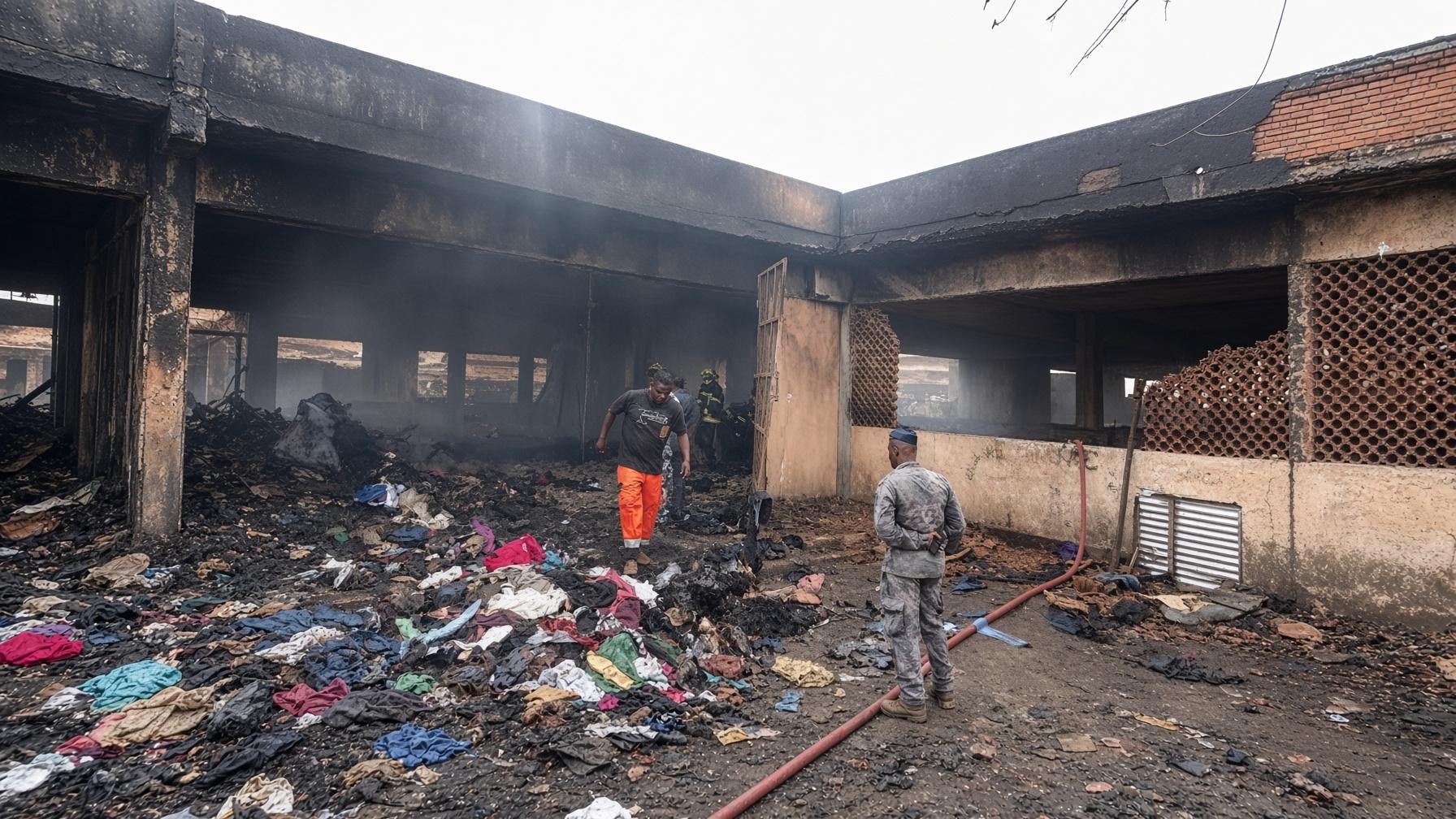
A night that wiped out hundreds of livelihoods in the Plateaux region
The main building of the Grand Marché d’Anié went up in flames overnight, leaving the commercial heart of Togo’s Plateaux region in ruins. Traders stood by helplessly as their stalls, stock and savings turned to ash. No lives were lost, but the material toll is overwhelming: hundreds of families have been plunged into ruin literally overnight.
In the aftermath, the reaction has been swift and bitter. Traders who lost everything are asking why nothing was done to protect them, and their anger is now turning toward a government that has, once again, appeared only after the damage was done.
Why was a market of this size left without even basic fire protection?
How is it possible that in 2026, a market of such strategic importance has no modern firefighting system, no working water points and no clear access routes for emergency vehicles? The answer, for many Togolese, lies in decades of political inertia.
Since taking power in 2005, Faure Gnassingbé’s government has failed to modernise the country’s local infrastructure in any lasting way. More than sixty years after his father, Gnassingbé Eyadéma, seized power, the current administration still relies on structures built last century, without serious investment to adapt them to today’s demographic and economic realities.
Between the ’emerging Togo’ slogan and the daily reality on the ground
Official speeches endlessly praise major construction projects, digitalisation and foreign investment. Yet on the ground, the situation remains dramatically archaic:
- No prevention culture: Most of the country’s major markets — from Lomé to Kara, and now Anié — remain logistical powder kegs, lacking compliant electrical standards and risk prevention plans.
- Under-equipped emergency services: Firefighters, often alerted late or held back by a lack of adapted equipment outside the capital, can only stand by and watch the damage unfold.
- Living off the past: The current leadership coasts on the security reputation and political foundations of the previous regime, without building a modern public policy to protect citizens and their property.
The public debate shifts from sympathy to accountability
After the historic fires that destroyed major markets in Lomé and Kara in previous years, the Anié tragedy proves that no lessons were learned. Sending ministerial delegations to hand out supplies or promising symbolic aid after each disaster is no longer enough — and people are saying so openly.
Public debate across the Plateaux region and beyond is now focused on a single question: who is responsible for the safety of Togo’s informal economy? The traders who drive it have been left for years in ageing, vulnerable buildings, with no protection. A government’s core duty is to protect its citizens before disaster strikes, not after.
What comes next: promises, pressure, or a real break from neglect?
Anié has become a test case. The regime can no longer treat these fires as isolated accidents. By allowing the informal sector to operate in dangerous conditions, the government is exposing the limits of a political model that seems more concerned with its own survival than with the security and well-being of the Togolese people.
Rebuilding the market will take time. Rebuilding trust will take far more. Traders, local officials and ordinary citizens are now waiting to see whether this tragedy finally forces a rupture with the laisser-faire that has cost them so much — or whether Anié will simply be added to the list of disasters that were never supposed to happen again.
Comments are closed, but trackbacks and pingbacks are open.